Dr. Vipulroy Rathod

Author name: Dr. Rathod Medical Foundation

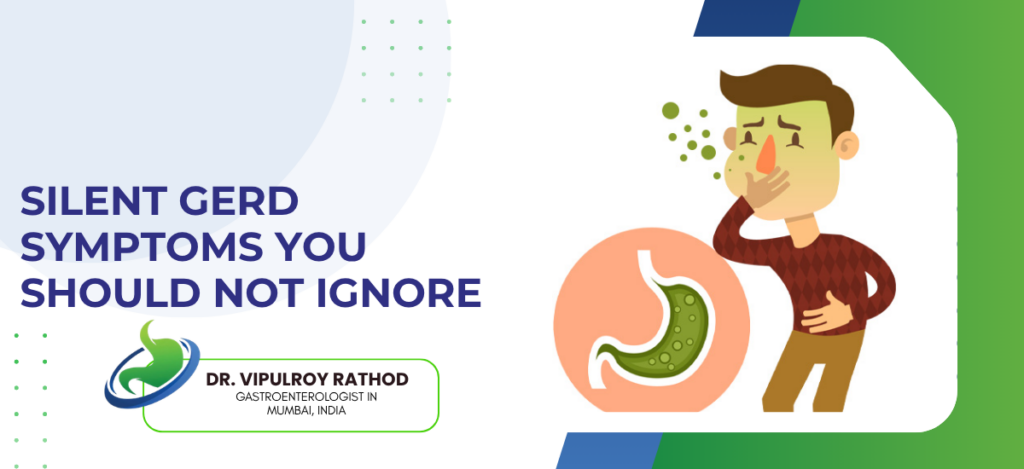
Awareness banner about silent GERD symptoms; left-aligned bold text, right-side illustration of a man covering his mouth with a stomach icon and doctor branding.

Silent GERD Symptoms You Should Not Ignore

Not all acid reflux feels like heartburn. Silent GERD, also called laryngopharyngeal reflux or LPR, causes symptoms that most people would never connect to their stomach. Chronic cough that won’t go away. A hoarse voice with no cold. A lump-like feeling in the throat. Dental erosion nobody can explain. These are acid reflux presentations that fly under the radar because the classic burning chest sensation is completely absent, which is exactly why they get missed for months or even years. According to Dr. Vipulroy Rathod, an experienced Gastroenterologist in Mumbai, “The patients who surprise us most are the ones who show up after seeing ENT specialists and pulmonologists for months without answers, and it turns out acid has been silently damaging their throat and airway the whole time without ever producing the typical heartburn they’d recognise as reflux.” What does silent GERD actually look like? Classic GERD gives you the burning but silent GERD skips that entirely and shows up in places you wouldn’t expect, which is what makes it so easy to blame on something else for a really long time. Chronic cough: Dry, persistent, gets worse at night or right after meals, doesn’t respond to cough medicines, chest X-ray comes back clean, allergy medications don’t touch it, and this cough just keeps bouncing between doctors until someone finally connects it to acid reaching the upper airway which happens way more often than most patients or even some doctors expect. Hoarse voice: Voice turns rough or scratchy without any throat infection behind it and singers or teachers tend to notice it first because their voice is their livelihood, but what’s actually happening is acid vapour rising from the stomach and hitting the vocal cords directly, and sometimes even an ENT looking at inflamed vocal cords doesn’t think stomach right away. Throat clearing: That constant need to clear your throat paired with a feeling like something is stuck there even when nothing actually is, which doctors call globus sensation and patients just call maddening, comes from acid sitting at the upper oesophageal sphincter and irritating the throat lining day after day without producing any chest burn whatsoever. Dental erosion: Dentists sometimes catch this before any GI doctor does because the acid reaches the mouth while you sleep and quietly wears down enamel from the inside, creating a very specific erosion pattern on the inner surfaces of back teeth that by the time it’s visible means the reflux has been running silently for years already. If any of these have been sticking around and nobody’s checked the reflux angle yet, our endoscopic treatment for GERD page covers what a gastroenterologist can actually do once silent reflux is confirmed beyond just handing out another PPI prescription. Why does silent GERD get missed so often? Patients don’t feel heartburn so they don’t think about the stomach, and doctors outside gastroenterology don’t always connect the dots either, which is how months of misdiagnosis pile up before anyone looks in the right direction. No heartburn means no suspicion: Patients genuinely don’t believe acid could be behind their symptoms because they’ve never had that classic chest burn, and it makes complete sense from their perspective, but what most people don’t know is that acid can reflux all the way to the throat and airway without triggering pain receptors in the oesophagus because the nerve pathways involved are completely different. Wrong specialist first: Cough sends you to the pulmonologist, hoarse voice sends you to ENT, dental erosion stays at the dentist, each specialist treats what they see in front of them, and nobody steps back to ask whether all these scattered symptoms might share one root cause until the patient has already been going around in circles for months. Normal endoscopy sometimes: Here’s a part that trips people up, because some silent GERD patients have a perfectly normal-looking oesophagus on standard endoscopy while the real damage sits higher in the larynx and pharynx where a regular scope doesn’t always look carefully, which is why pH monitoring and impedance testing end up catching what the scope missed. Delayed testing: A lot of patients get started on a PPI trial first and if symptoms improve then reflux is assumed, but when they don’t improve some doctors stop thinking about GERD entirely instead of pushing for proper diagnostic workup, and that gap between a failed medication trial and actual testing is exactly where months of answers get lost. Subtle symptoms getting overlooked is a pattern across GI conditions not just reflux, and our pancreatitis vs pancreatic cancer blog covers another situation where similar-sounding symptoms point to very different diagnoses depending on whether the right investigation happens early enough. Why choose Dr. Vipulroy Rathod for silent GERD evaluation? Dr. Vipulroy Rathod has been at advanced endoscopy for over 30 years now with more than 80,000 procedures behind him, and a big chunk of that work involves exactly these patients whose reflux doesn’t look like textbook reflux because catching acid damage in the throat and airway needs a level of clinical suspicion that only builds from seeing it play out repeatedly across thousands of cases over decades. Patients here don’t get a generic PPI prescription and a “let’s see in three months” follow-up, they get proper evaluation with pH monitoring when the situation calls for it, a clear explanation of what testing actually found, and a treatment plan that goes after the root cause rather than just masking symptoms with medication that may or may not be doing its job. Book your consultation today with one of India’s most experienced specialists for silent GERD evaluation. Book Appointment Call now Frequently Asked Questions What is silent GERD? Silent GERD is acid reflux that causes throat, voice, cough, and dental symptoms instead of typical heartburn, making it harder to recognise and often leading to delayed diagnosis. Can silent GERD damage your throat? Yes, acid vapour reaching the throat and larynx causes chronic inflammation, voice changes, and tissue damage that worsens over time if
Silent GERD Symptoms You Should Not Ignore Read More »

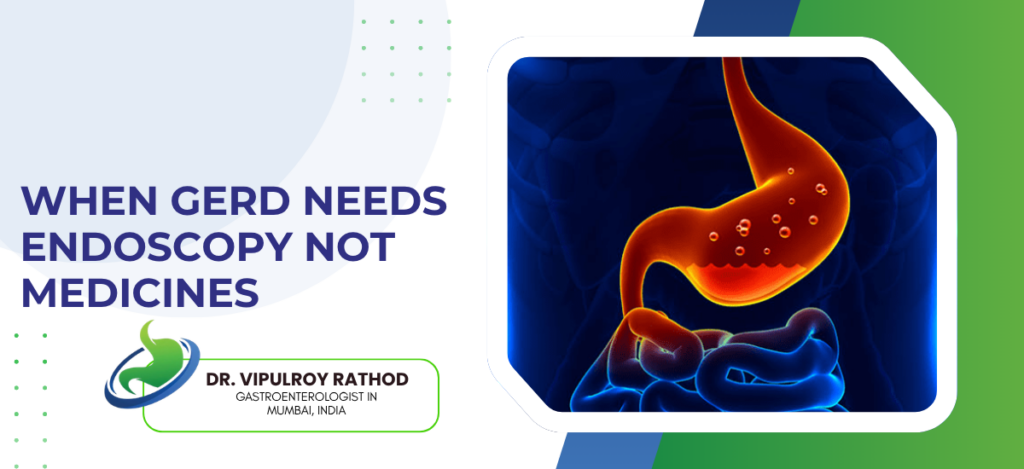
When GERD Needs Endoscopy Not Medicines

Most GERD patients manage fine on proton pump inhibitors and lifestyle changes. But there’s a point where pills stop being enough. When reflux symptoms persist despite proper medication, or when warning signs like difficulty swallowing, unexplained weight loss, or bleeding show up, an endoscopy becomes necessary to see what’s actually happening inside the oesophagus and rule out complications like strictures, Barrett’s, or early cancer. According to Dr. Vipulroy Rathod, an experienced Gastroenterologist in Mumbai, “Medicines control acid but they don’t fix the valve, and patients who’ve been on PPIs for years without real improvement need someone to actually look inside and figure out why the reflux isn’t responding the way it should.” What are the signs that GERD needs more than medication? PPIs do their job for a lot of people and nobody’s arguing that, but when they stop working or when symptoms start looking different from regular reflux the conversation changes completely. Symptoms despite medication: You’re on PPIs daily, following the diet, sleeping propped up, doing everything right, and the reflux still pushes through which is exactly where endoscopy steps in because something beyond acid is clearly driving it at that point. Difficulty swallowing: Food sticking on the way down isn’t normal reflux behaviour and could mean a stricture from years of acid damage or something else entirely, but nobody can tell without a scope going in to look which is why sitting on this symptom for months only delays finding out what’s behind it. Alarm symptoms: Weight dropping without trying, blood showing up in vomit or dark tarry stools, pain that feels different from the usual burn, any of these alongside GERD and the conversation shifts from “should we scope” to “when can we scope” because these genuinely don’t wait. GERD over 5 years: Reflux hanging around that long carries a small but real Barrett’s risk especially in men past 50 with longstanding heartburn, and at least one screening endoscopy to check the oesophageal lining makes sense even if symptoms feel manageable because the lining can be changing without you feeling any different at all. If reflux has reached the point where medicines aren’t cutting it, our endoscopic treatment for GERD page covers what minimally invasive options look like beyond just adjusting prescriptions. What can endoscopy do for GERD that medicines can’t? Medicines handle acid and that’s pretty much where their job description ends, but structural issues, tissue changes, and narrowing don’t respond to any pill which is exactly where endoscopy picks up what medication physically cannot address. Direct visualisation: Scope goes in and the doctor sees the oesophageal lining in real time with erosions, ulcers, narrowing, and Barrett’s changes all visible right there on the screen instead of being guessed at from symptoms or relying on scans that show walls but miss mucosal detail. Biopsy: Tissue samples come out during the same sitting for Barrett’s confirmation, eosinophilic oesophagitis detection, and dysplasia grading, and these diagnoses literally cannot be made without putting tissue under a microscope which means they can only come from a scope. Same-session treatment: Stricture found during the scope gets dilated right there, Barrett’s with dysplasia gets ablated in the same sitting, ARMA for a weak valve gets done through the scope, so diagnosis and treatment happen in one go instead of separate visits stretched out over weeks. Surveillance planning: Once the scope establishes what the baseline looks like inside, the gastroenterologist can set a proper monitoring schedule for how often to re-check, what to watch for, and when to act versus when to hold, because that plan simply can’t exist without someone having looked inside first. Picking the right diagnostic approach matters in GI care, and our bile leakage after gallbladder surgery blog covers another situation where endoscopic intervention plays a critical role in diagnosing and managing complications that medication alone can’t resolve. Why choose Dr. Vipulroy Rathod when GERD needs endoscopy? Dr. Vipulroy Rathod has been at advanced endoscopy for over 30 years with more than 80,000 procedures behind him, and a massive portion of that work has been upper GI endoscopy for reflux patients where the judgment call between “this just needs better medical management” and “this oesophagus needs a scope now” is something that sharpens over thousands of cases rather than something anyone picks up from a textbook alone. Nobody gets scoped here without a proper reason and nobody who actually needs scoping gets told to try another round of medicines first when the clinical picture says otherwise, because findings get explained clearly, the plan gets laid out in full, and the patient knows exactly where things stand before walking out the door. Book your consultation today with one of India’s most experienced specialists for GERD evaluation. Book Appointment Call now Frequently Asked Questions When should GERD patients get an endoscopy? When symptoms persist despite proper medication, alarm signs appear, or reflux has been present for over 5 years especially in patients over 50 with additional risk factors. Can endoscopy cure GERD? Endoscopy can treat GERD through procedures like ARMA or dilation of strictures, though the right approach depends on what the scope finds and not every patient needs intervention beyond diagnosis. Is endoscopy for GERD painful? The procedure is done under sedation so patients feel nothing during it, and most experience only mild throat discomfort afterwards that settles within a day. How often do GERD patients need repeat endoscopy? Frequency depends on findings from the first scope, with Barrett’s patients needing regular surveillance and patients with normal findings rarely needing another unless symptoms change. Reference links- GERD Management and Endoscopy Indications — American College of Gastroenterology Upper GI Endoscopy Guidelines — American Society for Gastrointestinal Endoscopy

When GERD Needs Endoscopy Not Medicines Read More »

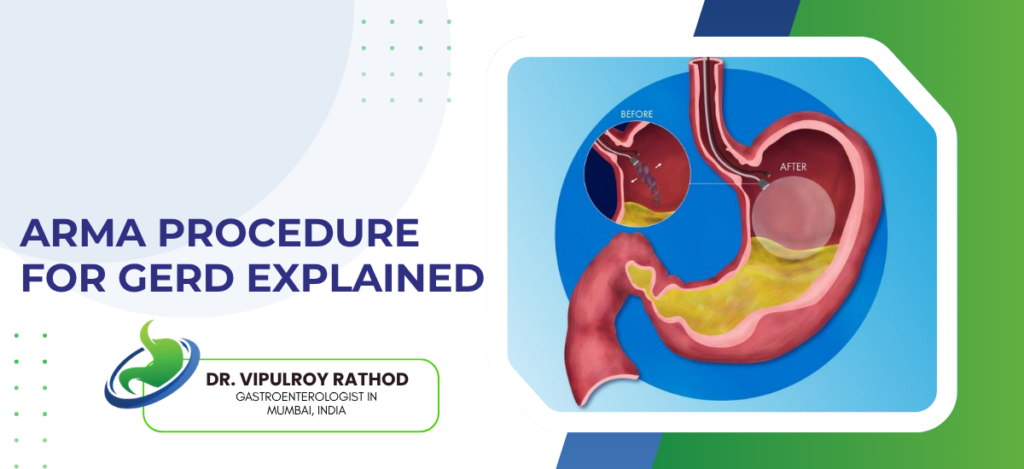
ARMA Procedure for GERD Explained

ARMA stands for Anti-Reflux Mucosal Ablation. It’s an endoscopic procedure for patients with gastroesophageal reflux disease who aren’t getting enough relief from medications or want an alternative to surgical fundoplication. The procedure works by ablating a crescent of tissue at the gastroesophageal junction, which tightens the valve mechanism as it heals and reduces acid reflux without any external incisions or permanent implants. According to Dr. Vipulroy Rathod, an experienced Gastroenterologist in Mumbai, “ARMA fills a real gap for GERD patients who are stuck between PPIs that aren’t working well enough and surgery that feels like too big a step, because it tightens the reflux barrier from the inside without cutting anything open.” How does the ARMA procedure actually work? Concept is simple even though the execution needs a trained hand, because you’re essentially creating controlled scarring at the valve between stomach and oesophagus so acid stops coming back up the way it has been. Endoscopic access: Whole thing goes through a standard endoscope via the mouth with no cuts anywhere on the body, patient is sedated, procedure runs about 30 to 45 minutes depending on how much tissue needs treating, and most patients head home the same day. Mucosal ablation: Using argon plasma coagulation or a similar tool the doctor burns a crescent-shaped strip of tissue right at the gastroesophageal junction which is the flap valve area, and the zone is very precisely chosen because this is controlled targeted work rather than anything random. Healing and scarring: Over the next few weeks the ablated area heals and scar tissue forms which physically tightens the junction so the valve that was letting acid through gets narrower, with most patients noticing reflux improvement somewhere around 4 to 8 weeks after the procedure. No implants: Big differentiator from other endoscopic reflux procedures because there are no magnets left inside, no beads, no stitches that could erode later, and the tightening comes purely from the body’s own scarring response which means nothing foreign stays behind. If you want the full rundown on how ARMA fits into the broader treatment picture, our ARMA procedure page covers candidacy, preparation, and what kind of outcomes patients are actually seeing. Who is a good candidate for ARMA? Not everyone with reflux qualifies for this and ARMA sits in a very specific niche between pills and surgery, where the patients who do well with it tend to share a pretty recognisable profile that any experienced gastroenterologist can spot during evaluation. PPI-dependent patients: Years on proton pump inhibitors where stopping means symptoms come roaring right back, and ARMA gives these patients a realistic shot at cutting down or dropping their medication entirely rather than staying on pills indefinitely. Incomplete PPI response: Some people take PPIs every single day and still deal with breakthrough reflux where food comes up and night symptoms wreck sleep, because PPIs reduce acid but they don’t fix the valve and ARMA goes after that mechanical problem directly. Avoiding surgery: Fundoplication works and nobody disputes that, but it’s general anaesthesia with abdominal incisions and weeks of dietary restrictions afterwards, so older patients or those with other health conditions often prefer something with a lighter footprint which is exactly the gap ARMA fills. Confirmed GERD on testing: This one’s non-negotiable because pH monitoring and endoscopy need to objectively confirm a mechanical valve problem exists before anyone ablates tissue, since symptoms alone aren’t enough to justify the procedure and proper testing always comes first. Endoscopic approaches keep reshaping how GI conditions get managed across the board, and our colon cancer screening in India blog covers another area where the right diagnostic approach at the right time can catch serious problems early before they progress into something far more complicated and expensive to treat. Why choose Dr. Vipulroy Rathod for the ARMA procedure? Dr. Vipulroy Rathod has been at advanced endoscopy for over 30 years with more than 80,000 procedures behind him, and ARMA specifically needs a level of comfort with ablation tools and GE junction anatomy that only builds through high-volume practice because getting the ablation zone exactly right is what separates patients who get solid reflux control from those who end up needing another go at it. What patients actually get here starts well before the procedure itself with proper pre-assessment confirming ARMA is genuinely the right fit, realistic expectations set upfront so nobody is caught off guard, and then proper follow-up tracking how the healing translates into symptom improvement over the weeks that follow rather than just doing the procedure and hoping for the best. Book your consultation today with one of India’s most experienced specialists for the ARMA procedure. Book Appointment Call now Frequently Asked Questions What is the ARMA procedure for GERD? ARMA is an endoscopic procedure that ablates tissue at the gastroesophageal junction to tighten the valve and reduce acid reflux without surgery or implants. How long does the ARMA procedure take? The procedure typically takes 30 to 45 minutes and most patients go home the same day since it’s done through the mouth under sedation without any surgical incisions. Is ARMA a permanent fix for GERD? Most patients see significant and lasting improvement in reflux symptoms, though some may still need a low dose of medication and long-term follow-up helps track results. Who should not get the ARMA procedure? Patients with large hiatal hernias, severe oesophagitis, or Barrett’s esophagus may not be ideal candidates and need evaluation for other treatment options instead. Reference links- Anti-Reflux Mucosal Ablation Clinical Evidence — National Library of Medicine GERD Management Guidelines — American College of Gastroenterology

ARMA Procedure for GERD Explained Read More »

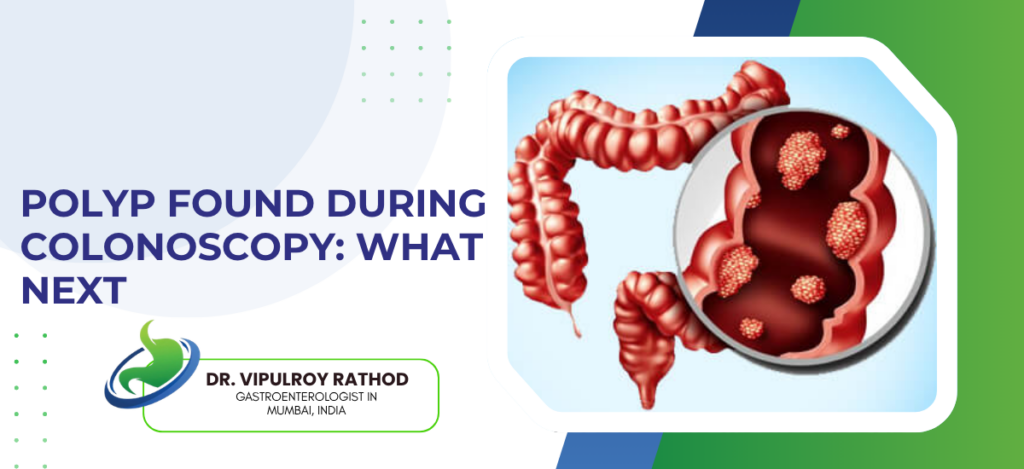
Polyp Found During Colonoscopy: What Next

Most polyps found during colonoscopy are removed right there during the same procedure. The doctor uses a wire loop or forceps through the scope to snip the polyp off the colon wall and sends it to a lab for biopsy. What the biopsy report says about that polyp, its type, size, and whether it shows any precancerous changes, is what decides everything that follows including how soon you need your next colonoscopy. According to Dr. Vipulroy Rathod, an experienced Gastroenterologist in Mumbai, “Finding a polyp during colonoscopy isn’t bad news by itself, it’s actually the system working exactly the way it should because catching polyps early and removing them on the spot is the whole reason screening exists in the first place.” What happens to the polyp after removal? The removal part is actually the easy bit. What matters more is what the lab says about that polyp once it’s been sliced, stained and put under a microscope, because that report is what decides everything going forward. Pathology report: Every polyp goes to a pathologist. They cut it open, look at cell patterns, check for dysplasia. The report takes about 5 to 7 working days to come back. Your gastroenterologist reads it before sitting down with you to discuss what it means. Nobody should be telling you next steps before that report is in hand. Polyp type: This is the part that actually determines risk. Adenomatous polyps are the ones that can eventually go cancerous if left alone long enough. Hyperplastic polyps are almost always harmless. Sessile serrated polyps are a bit of a grey area. The type written on that pathology report sets the tone for your entire follow-up plan. Size: A tiny 3 mm polyp and a 15 mm polyp live in completely different risk brackets. Bigger adenomas especially anything crossing 10 mm push you into a higher surveillance category. Margins: The pathologist also checks whether the whole polyp came out cleanly or whether abnormal tissue extends right to the cut edge. Clean margins mean complete removal. Tissue at the edges means the base might regrow. That single detail can move your next scope up by months. If you want more detail on the colonoscopy procedure itself, our colonoscopy page covers preparation, the scope process, and what recovery actually looks like day by day. When do you need your next colonoscopy after polyp removal? The answer is different for everyone because it’s driven entirely by what showed up on the biopsy, not by any fixed calendar rule that applies across the board. Low-risk adenomas: One or two small ones under 10 mm, low-grade dysplasia, nothing alarming on the report. Next scope in 5 to 7 years. Just routine. Check back in, make sure nothing new has popped up since then. High-risk adenomas: Three or more adenomas, anything 10 mm or bigger, villous features, high-grade dysplasia. Timeline drops to 3 years. Sometimes the gastroenterologist pulls it even shorter if the pathology looked particularly off. These patients get watched more closely from here on. Sessile serrated polyps: These follow their own track. Small ones without dysplasia get 5 years. Bigger ones or anything showing dysplastic changes moves to 3. They’re notoriously easy to miss during the scope itself because they lie flat against the wall, which is where having an experienced operator actually matters. Piecemeal removal: Large polyps that had to come out in fragments instead of one clean piece usually trigger a check-up scope at 6 months. Just to look at the removal site and make sure nothing is regrowing from whatever was left behind at the base. Standard practice. Not a sign that something went wrong. The endoscopic approach to managing findings like polyps applies across many GI conditions, and our chronic pancreatitis treatment without surgery blog covers how the same minimally invasive thinking shapes treatment for complex pancreatic conditions where avoiding open surgery makes a measurable difference. Why choose Dr. Vipulroy Rathod for polyp management? Dr. Vipulroy Rathod has over 30 years in advanced endoscopy. More than 80,000 procedures. Polypectomy is bread and butter work but technique makes a bigger difference than patients realise. Clean removal with clear margins means fewer repeat scopes down the line. Sloppy removal means coming back in 6 months instead of 5 years. That gap is what experience closes. Patients here don’t get a polyp snipped and a date stamped for the next visit. They get the biopsy broken down in plain language. What the polyp type means. What the size means. What the surveillance schedule looks like based on their specific findings. No guesswork walking out. Book your consultation today with one of India’s most experienced specialists for polyp evaluation and removal. Book Appointment Call now Frequently Asked Questions Are all polyps cancerous? No, most polyps are benign and only certain types like adenomatous polyps carry a meaningful risk of becoming cancerous over time if left in place. Is polyp removal during colonoscopy painful? You’re sedated during the procedure so there’s no pain during removal, and most patients don’t feel anything different afterwards beyond mild bloating that clears within a day. How soon do biopsy results come back after polyp removal? Pathology reports typically take 5 to 7 working days, after which your gastroenterologist reviews the findings and discusses the results and next steps with you. Can polyps grow back after removal? Polyps can recur in the same or different locations over time, which is exactly why follow-up colonoscopies at recommended intervals are necessary after any polyp removal. Reference links- Post-Polypectomy Surveillance Guidelines — American College of Gastroenterology Polyp Management and Follow-Up — American Society for Gastrointestinal Endoscopy

Polyp Found During Colonoscopy: What Next Read More »

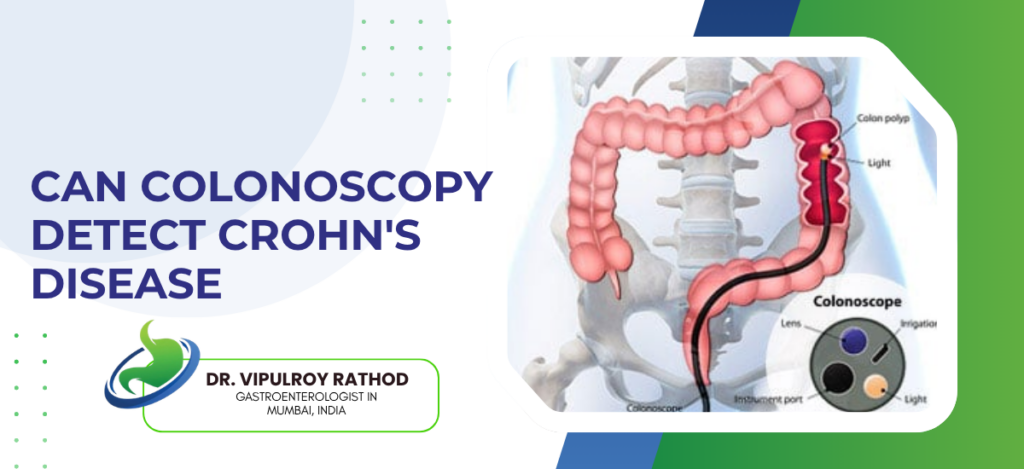
Can Colonoscopy Detect Crohn’s Disease

Yes, a colonoscopy is a primary and highly effective tool for detecting and diagnosing Crohn’s disease. It allows doctors to visualize the rectum, colon, and terminal ileum (end of the small intestine) to look for signs of inflammation, ulcers, and “cobblestoning” of the mucosa, while also taking tissue samples (biopsies) for analysis. According to Dr. Vipulroy Rathod, an experienced Gastroenterologist in Mumbai, “Colonoscopy doesn’t just confirm whether Crohn’s is there or not, it shows us exactly how much of the bowel is affected and how deep the inflammation goes, which is what drives every treatment decision that follows.” What does colonoscopy actually show in Crohn’s disease? Crohn’s looks different from other inflammatory conditions under the scope. An experienced endoscopist can usually tell within minutes whether the pattern fits, though biopsies still have to go out for confirmation. Skip lesions: Ulcerative colitis causes continuous inflammation that starts from the rectum and works its way up. Crohn’s doesn’t do that. It shows up in patches. Normal bowel sitting right next to inflamed bowel. That patchy pattern is one of the first things a gastroenterologist notices during the scope and it’s a strong early clue. Deep ulcers: The ulcers in Crohn’s cut deeper than what you see in most other gut conditions. They dig into the bowel wall and create a surface that looks rough, almost like cobblestone paving. Pretty distinctive once you’ve seen it enough times. Shallow erosions point toward other diagnoses. Terminal ileum: Crohn’s loves the terminal ileum. That’s the last stretch of small intestine right before the colon starts. A colonoscopy can reach that spot and check for inflammation, narrowing, or ulceration that CT or MRI might hint at but can’t show you directly the way a scope does. Biopsy: What the doctor sees through the scope is only half the picture. The biopsy samples go to a pathologist who checks for granulomas and other microscopic features that separate Crohn’s from infections, drug reactions, or other things that can look similar on the surface. If gut symptoms have been dragging on and you want to know what a colonoscopy actually involves before going in, our colonoscopy page covers the procedure end to end including preparation and recovery. When should you get a colonoscopy for suspected Crohn’s? Diarrhea and stomach pain are common. Most of the time they pass on their own. But certain patterns don’t pass, and those are the ones where sitting on it means losing months that could have gone toward getting a proper diagnosis. Diarrhea that won’t quit: Four to six weeks of diarrhea that doesn’t respond to the usual fixes is a red flag. At that point it stops being about what you ate last week and starts being about what’s actually happening inside the bowel wall. That’s when a scope becomes the logical next step. Cramping plus weight dropping: Pain that keeps showing up in the same spot, especially lower right, alongside weight loss you didn’t plan for. Gastroenterologists see this combination a lot in Crohn’s patients. Most will fast-track a colonoscopy once this pattern shows up. Blood or mucus showing up regularly: This one shouldn’t be watched from home for months. Younger patients especially tend to get moved up the diagnostic list quickly when blood or mucus pairs with other symptoms because the odds of something inflammatory being behind it go up considerably. IBD in the family: A parent or sibling with Crohn’s or UC doesn’t mean you’ll get it. But it does make doctors more willing to scope early rather than spend weeks trying medications that might just be delaying the actual diagnosis. Understanding how IBD gets managed after diagnosis matters just as much, and our digestive cancer treatment cost in Mumbai blog covers why catching conditions like Crohn’s early through colonoscopy can significantly reduce the long-term financial burden of treatment compared to dealing with complications at a later stage. Why choose Dr. Vipulroy Rathod for Crohn’s disease diagnosis? Dr. Vipulroy Rathod has spent over 30 years doing advanced endoscopy. More than 80,000 procedures. A big part of that has been IBD work where the difference between Crohn’s and something else comes down to visual details during the scope and how the biopsies get read. Less experienced centres miss that. It happens. What patients get here goes past the scope itself. Clear explanation of findings. What the biopsy means in practical terms. What the treatment options look like. And an actual plan rather than a vague suggestion to come back in three months. Book your consultation today with one of India’s most experienced specialists for Crohn’s disease evaluation. Book Appointment Call now Frequently Asked Questions Can colonoscopy confirm Crohn’s disease? Yes, colonoscopy with biopsies is one of the most reliable methods for confirming Crohn’s disease and distinguishing it from other inflammatory bowel conditions. Is colonoscopy painful for Crohn’s patients? The procedure is done under sedation so there’s no pain during it, though patients with active inflammation may experience mild discomfort afterwards that typically settles within a day. How often do Crohn’s patients need colonoscopy? Frequency depends on disease activity and duration, with most patients needing surveillance colonoscopies every 1 to 3 years after 8 years of disease to monitor for complications. Can Crohn’s be missed on colonoscopy? Crohn’s affecting only the small bowel beyond the reach of a standard colonoscope can be missed, which is why additional imaging or enteroscopy may be needed in some cases. Reference links- Crohn’s Disease Diagnosis Guidelines — American College of Gastroenterology Inflammatory Bowel Disease Endoscopic Assessment — American Society for Gastrointestinal Endoscopy

Can Colonoscopy Detect Crohn’s Disease Read More »

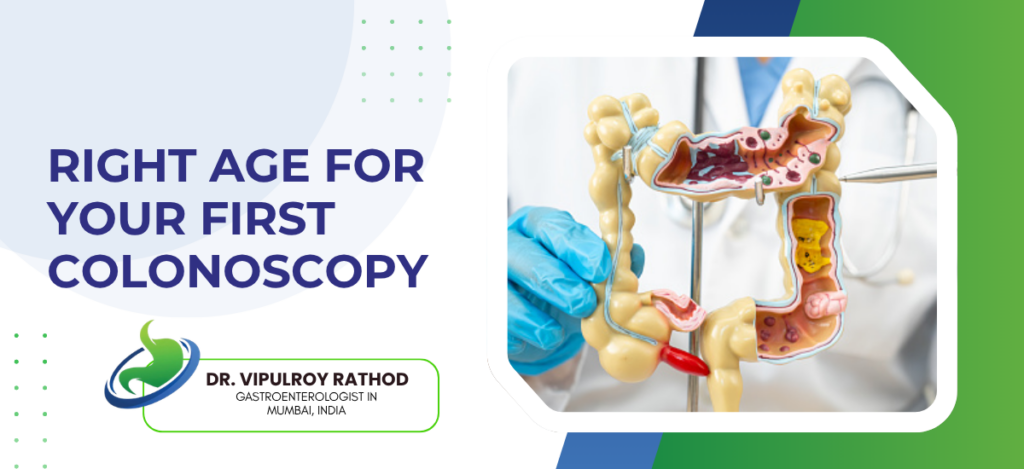
Right Age for Your First Colonoscopy

For individuals at average risk, the recommended age for the first screening colonoscopy is 45. Updated guidelines from major health organizations, including the American Cancer Society and US Preventive Services Task Force, lowered the age from 50 to 45 due to rising colorectal cancer rates in younger adults. According to Dr. Vipulroy Rathod, an experienced Gastroenterologist in Mumbai, “The age cutoff is just a starting point and not a finish line because plenty of patients in their 30s walk in with concerning findings that everyone assumed were nothing, which is why timing should always be guided by personal risk and not just a calendar.” What does the standard age recommendation actually mean? Patients ask this a lot actually, because hearing “start at 45” doesn’t tell you much about why that number got picked or what happens if your situation doesn’t fit neatly into the average-risk category. Why 45 now: Older guidelines said 50 for years. Nobody questioned it. Then the data started coming in showing colorectal cancer turning up in younger adults way more often than expected, and that’s what finally pushed the American Cancer Society and USPSTF to drop the age down, with most countries quietly following after. Average risk: This label gets thrown around a lot but what it actually means is no family history of colon cancer, no prior polyps, no IBD hanging around in the background, no genetic syndromes, no concerning symptoms, and if even one of those applies to you the standard 45 timeline usually shifts by a meaningful number of years. Earlier isn’t always smarter: Scoping every 30-year-old who walks through the door isn’t useful because the procedure itself does carry small risks, sedation has its own set of risks, and doing it without an actual indication just burns resources while putting people through something they didn’t really need. Later isn’t safer: Plenty of people pushed their first scope past 50 when guidelines used to allow that, and newer data showed that’s exactly the window where preventable cancers kept getting missed because the whole point of starting at 45 is catching polyps while they’re still polyps and not something worse. If you’re near that age and thinking about getting it done, our colonoscopy page walks through what the procedure actually looks like and how to go about scheduling one. Who needs to start colonoscopy screening earlier than 45? This part surprises a lot of patients because they assume 45 is the universal number when really a big portion of the people sitting in gastroenterology clinics don’t qualify for the standard timeline at all. Family history: A parent, sibling or child diagnosed with colorectal cancer rewrites your entire screening schedule because it then needs to start 10 years before whatever age they were diagnosed at or by 40 whichever lands first, and having two affected first-degree relatives shifts things forward even more. Prior polyps: Anyone who’s already had polyps taken out during a previous scope needs repeat colonoscopies at intervals set by what was found regardless of age, with that interval falling somewhere between 1 and 5 years based on polyp type, size and how many were removed. IBD for 8 plus years: Crohn’s or ulcerative colitis sitting in the colon that long pushes cancer risk up enough that surveillance colonoscopies stop being something you choose and become something your gastroenterologist schedules automatically, which is why some patients end up getting scoped regularly from their early 30s onward. Genetic syndromes: Lynch syndrome, FAP and the other hereditary conditions need colonoscopy starting in the teens or early twenties with much shorter gaps between scopes, and these patients get managed on a completely separate track from regular screening because the risk profile is just different from the ground up. For anyone thinking about the financial side of this as well, our digestive cancer treatment cost in Mumbai blog lays out what cancer care actually costs in real numbers and why catching things through early screening saves a huge amount compared to dealing with later-stage treatment. Why choose Dr. Vipulroy Rathod for your first colonoscopy? Dr. Vipulroy Rathod has been doing advanced endoscopy for over 30 years now, crossed 80,000 procedures, and a big share of those are colonoscopies done on first-timers and high-risk patients at some of Mumbai’s best-known hospitals. That matters for someone getting scoped for the first time because half the battle is nerves, and those tend to settle fast when the person explaining things to you has literally done this tens of thousands of times before. What patients bring up most afterwards isn’t the scope. It’s the conversation after. Whether their risk profile fits the standard timeline or needs earlier attention, what the findings actually mean, what happens next. All of it gets laid out clearly here rather than showing up as confusing jargon on a discharge sheet nobody reads properly. Book your first colonoscopy today with one of India’s most experienced specialists. Book Appointment Call now Frequently Asked Questions What is the right age for a first colonoscopy? For most adults at average risk the right age is 45, but family history or other risk factors may mean starting earlier than that. Why was the colonoscopy age changed from 50 to 45? Colorectal cancer rates started rising in younger adults so guidelines moved the screening age down to catch more cases earlier. Can someone in their 30s get a colonoscopy? Yes, especially if there’s family history, prior polyps, inflammatory bowel disease, or symptoms that need direct evaluation of the colon. How often should colonoscopy be repeated after the first one? If the first colonoscopy is normal it usually doesn’t need repeating for 10 years, though shorter intervals apply if polyps or other findings are present. Reference links- Colorectal Cancer Screening Recommendations — U.S. Preventive Services Task Force (USPSTF) ACG Clinical Guidelines: Colorectal Cancer Screening — American College of Gastroenterology

Right Age for Your First Colonoscopy Read More »

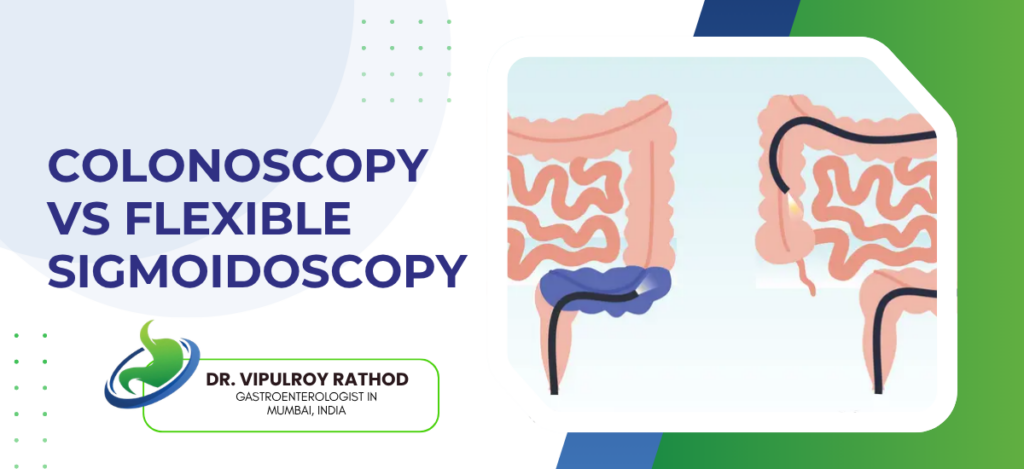
Colonoscopy vs Flexible Sigmoidoscopy

Colonoscopy provides a complete examination of the entire large intestine (colon and rectum), making it the gold standard for cancer screening. Flexible sigmoidoscopy examines only the lower third (sigmoid colon and rectum). Colonoscopy requires extensive prep and sedation, while sigmoidoscopy needs less prep and no sedation. According to Dr. Vipulroy Rathod, an experienced Gastroenterologist in Mumbai, “Both procedures have their place but they’re not interchangeable, and choosing the wrong one for the clinical question being asked is one of the more common reasons patients end up needing a second scope to get the right answer.” What is the difference between colonoscopy and flexible sigmoidoscopy? On paper they sound similar. Both use a thin scope with a camera at the tip. Both go in through the rectum. Where they actually part company is the reach inside the body, and that gap matters way more than most patients expect going in. Area examined: Colonoscopy goes the whole way through. Rectum, sigmoid, descending colon, transverse, ascending, right up to where the small bowel meets the large. Sigmoidoscopy stops around the 60 cm mark. The whole upper part of the colon stays out of view. Bowel preparation: Full colonoscopy prep is the part patients dread most, no question. Day-long liquid diet plus a strong laxative to clear everything out. Sigmoidoscopy is way lighter. Couple of enemas about an hour or two before. Easier on you yes. But the trade-off shows up in what the doctor can see. Sedation requirements: Colonoscopy is done under sedation as standard since the scope spends longer in there and reaches further. Sigmoidoscopy doesn’t normally need sedation. Shorter distance, shorter procedure, most patients tolerate it awake without much fuss. Time and recovery: Plan on 30 to 60 minutes for colonoscopy plus another hour or two for sedation to wear off afterwards. Sigmoidoscopy is in and out in under 20 minutes. No grogginess. Most patients just drive themselves home. If your doctor has suggested either of these, our colonoscopy page covers the full picture of what colonoscopy involves and why it stays the more thorough of the two. When should you choose colonoscopy over flexible sigmoidoscopy? This isn’t really a patient choice. The decision gets driven by what the doctor needs to see and rule out, and almost every situation points clearly to one or the other. Screening for colorectal cancer: Polyps and tumors don’t only grow in the lower colon. They turn up anywhere along the entire length. Sigmoidoscopy misses everything past 60 cm. Which is why no proper screening guideline anywhere recommends sigmoidoscopy alone for colorectal cancer screening in average-risk adults. Investigating unexplained symptoms: Bleeding from somewhere unknown. Anemia with no obvious cause. Bowel habits that have shifted and stayed shifted. All of these need the full colon examined. Sigmoidoscopy only helps if symptoms specifically point downstairs to the rectum or sigmoid. Family history of colon cancer: Anyone with a parent or sibling diagnosed with colorectal cancer needs colonoscopy. The genetic risk doesn’t sit politely in the lower colon. Sending these patients for sigmoidoscopy alone misses the whole point of why they need earlier screening in the first place. Removing polyps during the same procedure: Both scopes can biopsy. But pulling out larger or trickier polyps cleanly needs the working room and sedation that come with colonoscopy. Sigmoidoscopy is mostly for looking. Colonoscopy looks and treats in the same sitting. For anyone trying to understand why this kind of screening matters at certain ages, our guide on colon cancer screening eligibility in India explains the clinical reasoning and key risk factors. Why choose Dr. Vipulroy Rathod for colonoscopy or flexible sigmoidoscopy? Dr. Vipulroy Rathod brings over three decades of advanced endoscopy practice and more than 80,000 procedures done. Colonoscopies and sigmoidoscopies number in the thousands across that work. Depth like that makes a real difference when picking the right scope for the right patient and actually doing it well. Every consultation here ends with a clear answer on which procedure makes sense and why. No vague recommendations. No defaulting to the easier scope when the harder one is what’s actually needed. Once it’s done, findings get explained properly instead of buried in jargon on a discharge slip. Book your consultation today with one of India’s most experienced specialists for colonoscopy and sigmoidoscopy procedures. Book Appointment Call now Frequently Asked Questions Which is better, colonoscopy or flexible sigmoidoscopy? Colonoscopy is more comprehensive because it examines the entire colon, while flexible sigmoidoscopy only reaches the lower portion and is reserved for specific situations. Is flexible sigmoidoscopy painful? It’s usually well tolerated without sedation since the scope only reaches the lower colon, though some patients may feel mild cramping during the procedure. Can flexible sigmoidoscopy detect colon cancer? It can detect cancer only in the rectum and sigmoid colon, but cancer further up the colon would be missed without a full colonoscopy. Do I need bowel prep for flexible sigmoidoscopy? Yes, but the prep is much lighter than colonoscopy and usually involves one or two enemas a few hours before the procedure. Reference links- Colonoscopy and Sigmoidoscopy Guidelines — American College of Gastroenterology Colorectal Cancer Screening Procedures — American Society for Gastrointestinal Endoscopy

Colonoscopy vs Flexible Sigmoidoscopy Read More »

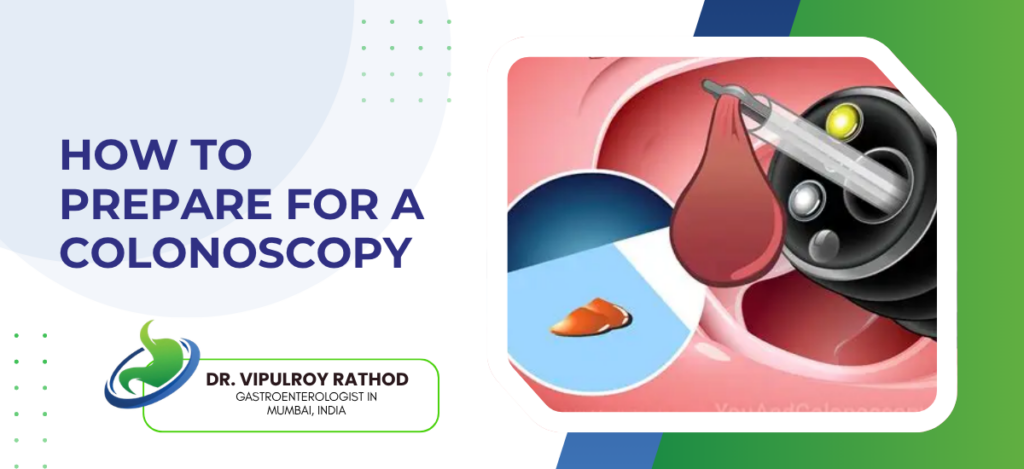
How to Prepare for a Colonoscopy

Colonoscopy prep involves a strict, low-fiber diet 2–3 days prior, followed by a full clear liquid diet and strong prescription laxatives the day before to empty the colon. Patients usually drink half the laxative solution the evening before and the second half 6–8 hours before the procedure, ensuring stool becomes clear. According to Dr. Vipulroy Rathod, an experienced Gastroenterologist in Mumbai, “A good colonoscopy depends almost entirely on how well the colon was cleaned beforehand, and incomplete preparation is the single biggest reason findings get missed or patients have to come back for a repeat procedure.” What are the diet and bowel prep steps? Preparation runs across about 3 days with the workload increasing as the procedure date approaches. Three days before: Cut out high-fibre foods. No nuts, no seeds, no raw vegetables or fruits with skins, no whole grains, no popcorn. These take longer to clear from the gut. What stays allowed is white rice, white bread, plain pasta, eggs, chicken, and fish without breading. Pretty much low-residue across the board. One day before: Switch entirely to clear liquids. Water, plain tea or coffee without milk, clear broth, apple or white grape juice without pulp, jelly without red colour. Nothing solid. Nothing red or purple because those can stain the colon lining and get mistaken for blood during the scope. Evening before or split-dose prep: The bowel-cleansing solution comes in here. Most doctors prescribe a split dose now, meaning half the evening before and the other half early on the day of the procedure. Split dosing actually cleans the colon better than drinking it all at once the night before. Day of the procedure: Stop drinking clear liquids at least 2 hours before the scheduled time. Nothing at all including water in that final window. Sedation requires an empty stomach to stay safe. If you’re preparing for a scope anywhere in the country, our colonoscopy page covers everything about the procedure itself and what to expect on arrival at the facility. What should you avoid and what helps the prep go smoothly? Certain things make prep harder than it needs to be, and knowing them in advance makes the whole process considerably easier to get through. Skip red or purple liquids: These dye the colon lining and interfere with the scope view. Nothing red, nothing purple, nothing with artificial colouring in those shades. Plain apple juice, white grape juice, clear broth, and water are your safe options. Avoid certain medications: Iron supplements need to be stopped 5 to 7 days before because they stain the colon dark. Blood thinners may need adjustment depending on your cardiologist’s advice. Diabetes medications often need dose changes given you’re not eating. Always confirm with your doctor. Stay close to a bathroom: The prep solution works fast. Once it kicks in you’ll need a bathroom within reach for several hours. Schedule prep day as a stay-at-home day and stock up on soft toilet paper and barrier cream beforehand. Makes things noticeably more comfortable. Drink it cold, use a straw: Prep solutions don’t taste pleasant. Keeping the liquid cold and drinking through a straw helps avoid gagging. Sipping slowly over 1 to 2 hours instead of gulping also keeps nausea down. Small tricks but they make a real difference. If you’re unsure whether this screening applies to you, check out our detailed guide on who should get colon cancer screening in India, where we break down the clinical reasons and high-risk groups. Why choose Dr. Vipulroy Rathod for colonoscopy? Dr. Vipulroy Rathod  has completed more than 80,000 endoscopic procedures across three decades. Thousands of those are colonoscopies done at Mumbai’s leading hospitals. That volume of experience matters because a lot of clinical skill in colonoscopy comes down to how thoroughly the scope is advanced, how carefully the lining is examined, and how quickly subtle polyps are identified and addressed. Patients here get proper preparation guidance beforehand. Clear instructions. Access to the clinical team for any questions during prep. And once the procedure is done, findings are explained in language everyone actually understands rather than medical jargon handed out on a discharge slip. Book your colonoscopy today with one of India’s most experienced specialists. Book Appointment Call now Frequently Asked Questions How long before a colonoscopy should I start preparing? Diet changes begin about 3 days before, with the clear liquid diet and bowel prep happening in the final 24 hours before the procedure. Can I drink water before a colonoscopy? Clear water is allowed up until about 2 hours before the procedure, after which nothing should be consumed to keep sedation safe. Is the bowel prep solution mandatory? Yes, no colonoscopy is reliable without proper bowel cleansing because retained stool blocks the view and causes missed findings or repeat procedures. What if I can’t finish the prep solution? Drink it slowly over 1 to 2 hours and inform your doctor if you genuinely can’t complete it, since incomplete prep may mean rescheduling the procedure. Reference links- Colonoscopy Preparation Guidelines — American College of Gastroenterology Bowel Preparation Best Practices — American Society for Gastrointestinal Endoscopy

How to Prepare for a Colonoscopy Read More »

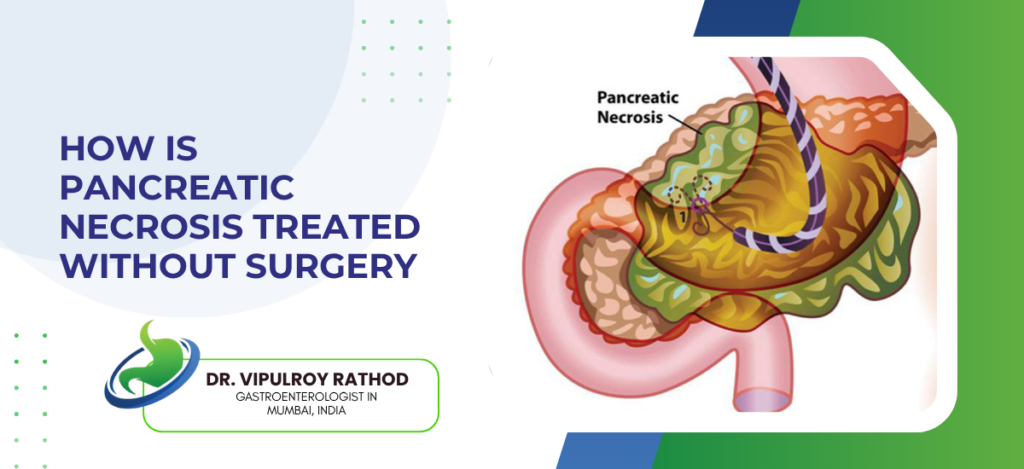
How Is Pancreatic Necrosis Treated Without Surgery

Pancreatic necrosis, or necrotizing pancreatitis, is increasingly treated without open surgery using a “step-up approach” involving minimally invasive techniques. Key non-surgical methods include endoscopic drainage (using an endoscope to drain fluid into the stomach), percutaneous catheter drainage (using imaging to place drains through the skin), antibiotics for infection, and intensive supportive care (fluid resuscitation and early enteral nutrition). According to Dr. Vipulroy Rathod, an experienced Gastroenterologist in Mumbai, “Open surgery for pancreatic necrosis used to be the only option and it carried serious risks, but with endoscopic necrosectomy we can now clear dead tissue through a scope with far better outcomes for the patient.” What endoscopic treatments are used for pancreatic necrosis? Picking the right technique comes down to where the collection sits, how old it is, and whether infection has set in. EUS-guided drainage: An endoscope fitted with ultrasound finds the collection from inside the stomach. A stent gets placed across the stomach wall into the pocket of necrotic fluid. Everything drains gradually over days. No skin incision, no operating theatre involved. Direct endoscopic necrosectomy: After the drainage stent is working, solid necrotic debris still has to come out. The scope goes right through the stent tract into the cavity and scoops out dead tissue. It rarely finishes in one session. Two, three, sometimes four sessions over weeks is normal. Lumen-apposing metal stents: These are a newer design made for exactly this job. The opening is wider than plastic stents so the scope can pass through easily. They hold the tract open long enough for multiple clean-out sessions without needing repeated stent changes. Percutaneous and endoscopic combined: Sometimes the collection stretches into spaces the scope physically cannot reach. In those situations a radiologist places a drain through the skin for the extra pockets while the endoscopist handles the rest. Both teams work together rather than choosing one over the other. Patients dealing with necrotising pancreatitis really do need specialist input, and the pancreatitis treatment page covers how conservative and endoscopic options are matched to each individual case. Why is non-surgical treatment preferred now? Open surgery for pancreatic necrosis carried very high mortality in older data. The endoscopic approach changed that and the numbers behind the shift are strong enough that most specialist centres now go non-surgical by default. Lower mortality: Multiple randomised trials now show endoscopic necrosectomy gives lower mortality than open surgical necrosectomy. That alone moved practice in most tertiary centres. More recent data has only reinforced the trend. Fewer complications afterwards: Less new-onset organ failure. Less bleeding in the post-op period. Fewer secondary infections. ICU stays end up noticeably shorter than what surgery needs for the same diagnosis. Quicker recovery, shorter hospital stay: No abdominal wound means patients are mobilising within days, not weeks. Discharge happens earlier. Functional recovery at 3 and 6 months reads better in follow-up data too. Healthy pancreas gets preserved: Open surgical necrosectomy often ends up damaging viable pancreas while removing the dead parts. Endoscopic tools touch only what’s dead. The difference matters because patients losing functional pancreas develop diabetes or malabsorption later. This move away from open surgery isn’t unique to the pancreas, and the achalasia and POEM blog goes into another condition where endoscopy replaced what used to be a major open operation. Why choose Dr. Vipulroy Rathod for pancreatic necrosis treatment? Dr. Vipulroy Rathod has over 20,000 EUS procedures behind him across 30 plus years of practice. Necrotising pancreatitis is exactly the category of case that benefits most from that depth, because the timing and sequencing of each intervention is what determines how well a patient ends up doing. The experience goes beyond the technical work. Families get the situation explained properly. Decisions are discussed before being made. What recovery actually looks like week by week is laid out honestly. Book your consultation today with one of India’s most experienced pancreatic endoscopy specialists. Book Appointment Call now Frequently Asked Questions Can pancreatic necrosis always be treated without surgery? Most cases can be managed endoscopically now, but complex situations with extensive necrosis may still require combined or surgical approaches depending on clinical factors. How long does endoscopic necrosectomy take to complete? Full treatment usually requires multiple sessions spread over several weeks, though many patients begin feeling significantly better after the first drainage procedure itself. Is endoscopic drainage painful? The procedure is performed under sedation so there’s no pain during it, and most patients experience only mild discomfort for a day or two afterwards. What is the success rate of endoscopic necrosectomy? Success rates in experienced centres consistently cross 80 to 90 percent depending on patient selection and how promptly the treatment is initiated. Reference links- Management of Acute Necrotizing Pancreatitis — American College of Gastroenterology Guidelines Endoscopic Necrosectomy Clinical Evidence — National Library of Medicine

How Is Pancreatic Necrosis Treated Without Surgery Read More »

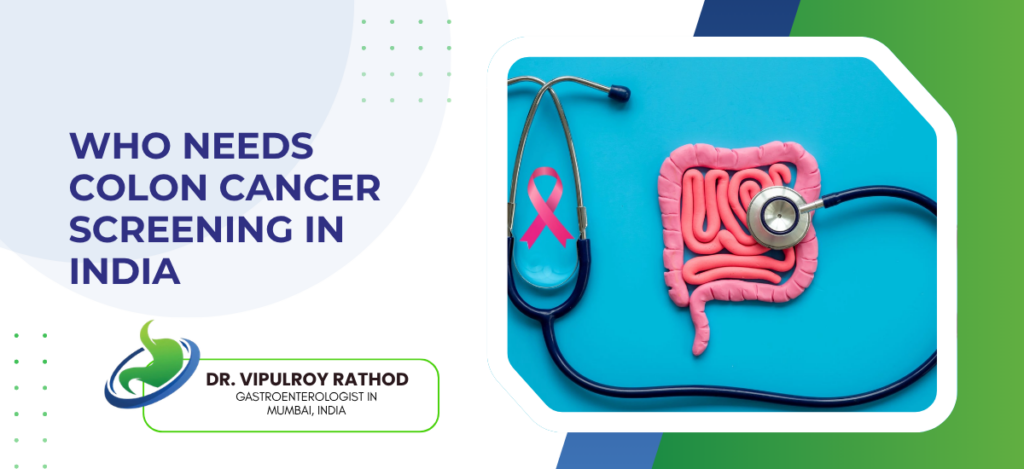
Who Needs Colon Cancer Screening in India

Colon cancer screening in India is recommended for all adults starting at age 45, even without symptoms. People with a family history of colon cancer, inflammatory bowel disease, or genetic syndromes should start earlier. Anyone with persistent changes in bowel habits, rectal bleeding, or unexplained weight loss should be evaluated regardless of age. According to Dr. Vipulroy Rathod, an experienced Gastroenterologist in Mumbai, “Colon cancer in India is being diagnosed at younger ages and at more advanced stages than it should be, which is why screening isn’t just a Western guideline to follow but a real need we see walking into our clinic every week.” https://www.youtube.com/shorts/0jImZw3wNIw Who should get screened at the standard age? The 45 cutoff applies to most Indian adults at average risk though plenty of people in this group still put off booking a screening even when they clearly fit the criteria. Average-risk adults over 45: If you’ve got no family history of colon cancer and no IBD and no prior polyps along with nothing off about your bowels, you still fall under standard screening once 45 arrives since polyps can sit quietly inside a perfectly healthy body without ever flagging themselves. Men and women equally: Screening applies to both sexes without much difference in India given that colon cancer figures don’t tilt heavily toward men the way some other cancers do, so any woman thinking she’s automatically lower-risk is working off a misconception rather than actual data. Urban and rural residents: Screening eligibility has spread beyond big-city populations over the last decade or so as food habits across tier-2 cities and smaller towns have shifted toward patterns that mirror urban risk factors, meaning people outside the metros can no longer assume they’re in the safer bucket. Adults with healthy lifestyles: A clean diet and regular workouts lower your statistical risk on paper but won’t take it down to zero, so even the most active person past 45 benefits from having that baseline scope done once just to confirm nothing unexpected is brewing. If you’re over 45 and haven’t scheduled one, a colonoscopy is the most direct way of finding out whether things inside match how healthy everything appears from the surface. Who needs earlier or more frequent screening? A sizeable chunk of the patients coming into gastroenterology clinics across India aren’t average-risk at all with their screening needing to begin much earlier than the standard 45 timeline. Family history of colon cancer: Screening starts 10 years before your parent or sibling’s diagnosis age or by 40 itself whichever comes first, and specialists consider this a firm clinical recommendation rather than something you’re supposed to debate since first-degree family history genuinely alters the risk profile in ways blood tests won’t catch. Inflammatory bowel disease patients: Once Crohn’s or ulcerative colitis has been active in the colon for 8 years or longer cancer risk climbs to a level where surveillance colonoscopies every 1 to 3 years get built into regular disease management rather than standing as a separate screening you schedule alongside everything else. Genetic syndromes like Lynch or FAP: Inherited conditions such as Lynch syndrome and familial adenomatous polyposis reset the screening age entirely with scopes often starting in the teens or early twenties at intervals much tighter than anything that applies to the average Indian adult. Metabolic risk factors: Obesity paired with type 2 diabetes and fatty liver disease keeps showing up in newer studies as connected to higher colon cancer risk which carries real weight for anyone already being treated for two or more of these conditions simultaneously. If you match any of these profiles don’t sit on the screening conversation, and our blog on fatty liver and diabetes is worth a read since it walks through how overlapping metabolic issues can quietly pile up into bigger long-term risks including various cancers. Why choose Dr. Vipulroy Rathod for colon cancer screening? Dr. Vipulroy Rathod has been in gastroenterology for over thirty years with more than 80,000 endoscopic procedures done and thousands of those being colonoscopies performed at Mumbai’s leading hospitals, which translates into the kind of reading of subtle findings that genuinely matters when a small polyp or unusual patch shows up during an otherwise routine screening scope. What patients mention most often isn’t really about the scope itself but about the after-part where results actually get explained properly, the follow-up plan is laid out without vague medical talk, and concerns get real answers rather than the rushed response most people are used to getting in a busy clinic. Book your colon cancer screening today with one of India’s most experienced gastroenterologists. Book Appointment Call now Frequently Asked Questions At what age should colon cancer screening start in India? Most adults should start at 45, but if you have family history or genetic risk factors your doctor may recommend starting earlier than that. Is colon cancer common in India? Colon cancer rates in India have been rising steadily over the past two decades, especially in urban populations with changing dietary and lifestyle patterns.   How often is screening needed? Normal colonoscopy results usually mean one screening every 10 years, but higher-risk patients might need rescreening every 1 to 5 years depending on findings. Is colon cancer screening covered by insurance in India? Most private health insurance policies cover colonoscopy when recommended by a doctor, though coverage varies and it’s worth confirming specifics with your insurer beforehand. Reference links- Colorectal Cancer Screening Recommendation — U.S. Preventive Services Task Force (USPSTF) Colorectal Cancer in India: Epidemiology and Screening — World Health Organization Global Cancer Observatory

Who Needs Colon Cancer Screening in India Read More »

Scroll to Top
Call Now Button