

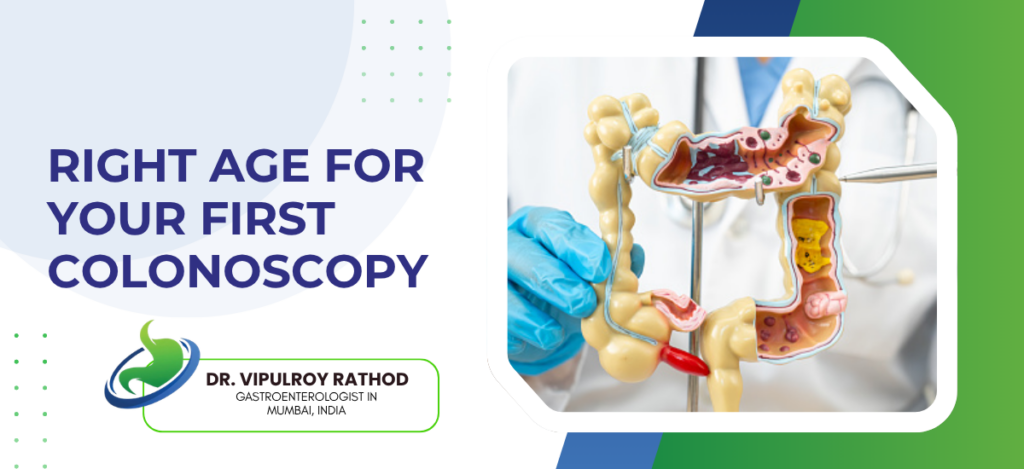
For individuals at average risk, the recommended age for the first screening colonoscopy is 45. Updated guidelines from major health organizations, including the American Cancer Society and US Preventive Services Task Force, lowered the age from 50 to 45 due to rising colorectal cancer rates in younger adults.
According to Dr. Vipulroy Rathod, an experienced Gastroenterologist in Mumbai, “The age cutoff is just a starting point and not a finish line because plenty of patients in their 30s walk in with concerning findings that everyone assumed were nothing, which is why timing should always be guided by personal risk and not just a calendar.”
What does the standard age recommendation actually mean?
Patients ask this a lot actually, because hearing “start at 45” doesn’t tell you much about why that number got picked or what happens if your situation doesn’t fit neatly into the average-risk category.
- Why 45 now: Older guidelines said 50 for years. Nobody questioned it. Then the data started coming in showing colorectal cancer turning up in younger adults way more often than expected, and that’s what finally pushed the American Cancer Society and USPSTF to drop the age down, with most countries quietly following after.
- Average risk: This label gets thrown around a lot but what it actually means is no family history of colon cancer, no prior polyps, no IBD hanging around in the background, no genetic syndromes, no concerning symptoms, and if even one of those applies to you the standard 45 timeline usually shifts by a meaningful number of years.
- Earlier isn’t always smarter: Scoping every 30-year-old who walks through the door isn’t useful because the procedure itself does carry small risks, sedation has its own set of risks, and doing it without an actual indication just burns resources while putting people through something they didn’t really need.
- Later isn’t safer: Plenty of people pushed their first scope past 50 when guidelines used to allow that, and newer data showed that’s exactly the window where preventable cancers kept getting missed because the whole point of starting at 45 is catching polyps while they’re still polyps and not something worse.
If you’re near that age and thinking about getting it done, our colonoscopy page walks through what the procedure actually looks like and how to go about scheduling one.
Who needs to start colonoscopy screening earlier than 45?
This part surprises a lot of patients because they assume 45 is the universal number when really a big portion of the people sitting in gastroenterology clinics don’t qualify for the standard timeline at all.
- Family history: A parent, sibling or child diagnosed with colorectal cancer rewrites your entire screening schedule because it then needs to start 10 years before whatever age they were diagnosed at or by 40 whichever lands first, and having two affected first-degree relatives shifts things forward even more.
- Prior polyps: Anyone who’s already had polyps taken out during a previous scope needs repeat colonoscopies at intervals set by what was found regardless of age, with that interval falling somewhere between 1 and 5 years based on polyp type, size and how many were removed.
- IBD for 8 plus years: Crohn’s or ulcerative colitis sitting in the colon that long pushes cancer risk up enough that surveillance colonoscopies stop being something you choose and become something your gastroenterologist schedules automatically, which is why some patients end up getting scoped regularly from their early 30s onward.
- Genetic syndromes: Lynch syndrome, FAP and the other hereditary conditions need colonoscopy starting in the teens or early twenties with much shorter gaps between scopes, and these patients get managed on a completely separate track from regular screening because the risk profile is just different from the ground up.
For anyone thinking about the financial side of this as well, our digestive cancer treatment cost in Mumbai blog lays out what cancer care actually costs in real numbers and why catching things through early screening saves a huge amount compared to dealing with later-stage treatment.
Why choose Dr. Vipulroy Rathod for your first colonoscopy?
Dr. Vipulroy Rathod has been doing advanced endoscopy for over 30 years now, crossed 80,000 procedures, and a big share of those are colonoscopies done on first-timers and high-risk patients at some of Mumbai’s best-known hospitals. That matters for someone getting scoped for the first time because half the battle is nerves, and those tend to settle fast when the person explaining things to you has literally done this tens of thousands of times before.
What patients bring up most afterwards isn’t the scope. It’s the conversation after. Whether their risk profile fits the standard timeline or needs earlier attention, what the findings actually mean, what happens next. All of it gets laid out clearly here rather than showing up as confusing jargon on a discharge sheet nobody reads properly.
Book your first colonoscopy today with one of India’s most experienced specialists.
Frequently Asked Questions
For most adults at average risk the right age is 45, but family history or other risk factors may mean starting earlier than that.
Colorectal cancer rates started rising in younger adults so guidelines moved the screening age down to catch more cases earlier.
Yes, especially if there’s family history, prior polyps, inflammatory bowel disease, or symptoms that need direct evaluation of the colon.
If the first colonoscopy is normal it usually doesn’t need repeating for 10 years, though shorter intervals apply if polyps or other findings are present.
Reference links-
- Colorectal Cancer Screening Recommendations — U.S. Preventive Services Task Force (USPSTF)
- ACG Clinical Guidelines: Colorectal Cancer Screening — American College of Gastroenterology
