Dr. Vipulroy Rathod

Contact Us

    Stomach Cancer Treatment in Mumbai, India

    Stomach cancer, also called gastric cancer, develops in the lining of the stomach. In India, it remains one of the more commonly diagnosed gastrointestinal cancers, with incidence rates higher than many other parts of the world. What makes it difficult to manage is the timeline. Early gastric cancer produces almost no distinct symptoms — a mild ache, some indigestion, a slight drop in appetite. Nothing that sends most people to a doctor.

    The stomach breaks down food and mixes it with digestive acid before passing it to the small intestine. When cancer grows in the stomach lining, that function is gradually compromised. Left untreated, the tumour penetrates the stomach wall, involves nearby lymph nodes, and in advanced cases reaches distant organs like the liver or lungs.

    Catching stomach cancer early is largely a matter of who gets scoped and when, says Dr. Vipulroy Rathod, a well-known gastroenterologist in Mumbai. In patients who come in with persistent upper GI complaints, endoscopy often finds what no symptom made obvious.

    First, let’s explore the different types and stages of  Stomach cancer to better understand this condition.

    Types of Stomach Cancer Managed by Dr. Vipulroy D. Rathod

    Dr. Vipulroy D. Rathod manages stomach cancer across its various forms, using upper GI endoscopy and surgical coordination tailored to each patient’s diagnosis and disease extent.

    Stomach cancer is not a single disease. It takes several forms depending on which cells the tumour arises from:

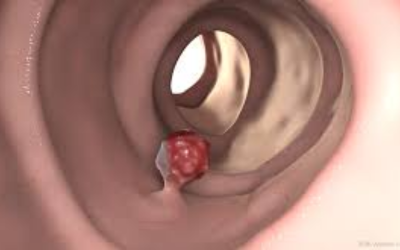
    Endoscopic view of a small red polyp-like mass attached to the inner wall of a tubular organ.

    Adenocarcinoma

    This is by far the most common type, accounting for the large majority of stomach cancer cases. It starts in the mucus-producing cells that line the stomach wall.
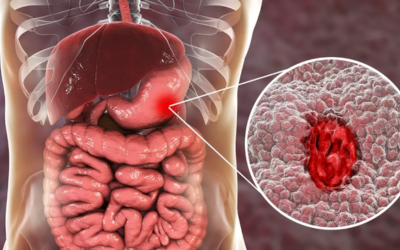
    Medical illustration of the digestive system with a magnified inset showing a narrowed artery with a red blood clot (atherosclerotic plaque).

    Gastrointestinal stromal tumours (GISTs)

    These arise from the connective tissue within the stomach wall rather than the lining itself. GISTs often behave differently from adenocarcinoma and may respond to targeted drug therapy.
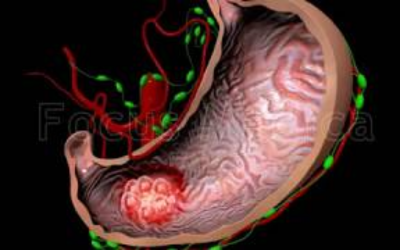
    Illustration of a human stomach cross-section showing a red, irregular tumor on the inner lining, indicating gastric cancer.

    Gastric lymphoma

    Less common. This originates in the lymphatic tissue of the stomach, and treatment often involves a combination of chemotherapy and radiation rather than surgery alone.
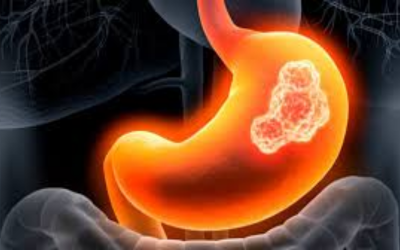
    Illustration of a human stomach with a highlighted tumor indicating stomach cancer.

    Carcinoid tumours

    These develop from the hormone-producing cells of the stomach. Many are slow-growing, but they still require monitoring and, in some cases, endoscopic or surgical removal.

    Staging determines what treatment is appropriate:

    Stage I

    The tumour is limited to the inner lining or muscle layer of the stomach and has not reached the lymph nodes.

    Stage II

    Cancer has grown deeper into the stomach wall or spread to a small number of nearby lymph nodes.

    Stage III

    More extensive lymph node involvement, or the tumour has grown into adjacent organs while staying in the region.

    Stage IV

    Advanced, widely spread throughout the liver and possibly to distant organs.

    The cancer has spread to distant organs such as the liver, lungs, or peritoneum. Treatment at this stage focuses on controlling progression and managing symptoms.

    The earlier stomach cancer is staged, the more surgical and endoscopic options are available.

    Comprehensive Care for Stomach Cancer by Dr. Vipulroy Rathod

    Dr. Rathod’s experience in upper GI endoscopy allows him to detect and manage stomach cancer through procedures that most gastroenterologists in Mumbai refer out:

    Icon of a magnifying glass inspecting a document, indicating search or review of a file or invoice

    Advanced diagnostics

    Upper GI endoscopy, Endoscopic Ultrasound (EUS), and CT imaging together give a clear picture of the tumour's size, depth, and spread. EUS is particularly useful for staging early gastric cancer before surgery is planned.

    Clipboard with a checklist and a blue medical cross icon, representing a health form or medical checklist

    Customised treatment plans

    No two gastric cancer cases follow the same path. Surgery may be the primary treatment for resectable tumours; chemotherapy or targeted therapy may come before or after surgery; radiation may be added for certain stages. The plan is built around the specific case, not a generic protocol.

    No syringes or needles allowed (crossed-out icon in a blue circle)

    Minimally invasive approaches

    Where the disease stage allows, Dr. Rathod uses endoscopic techniques to remove early-stage gastric tumours without open surgery. This keeps recovery short and avoids the complications that come with major abdominal operations.

    Icon of a user silhouette at center with four curved arrows circling around, indicating account synchronization or user management.

    Multidisciplinary approach

    Stomach cancer treatment typically involves gastroenterologists, surgical oncologists, medical oncologists, and radiologists. Dr. Rathod coordinates directly with those specialists so the patient gets a unified plan rather than disconnected opinions from separate clinics

    Desktop monitor with a circular clock showing 24, signaling 24/7 online support.

    Ongoing care and support

    Monitoring after treatment matters. Stomach cancer can recur, and catching a recurrence early gives patients better options. Dr. Rathod builds follow-up into the care plan from the beginning.
    Dr. Vipulroy Rathod's Advanced Treatment Approaches and Surgical Expertise

    How can comprehensive liver cancer care improve patient outcomes? Let’s look at Dr. Rathod’s holistic care approach.

    Dr. Rathod uses advanced medical technology and minimally invasive techniques to effectively treat liver cancer. Some of his cutting-edge techniques for treating cancer are:

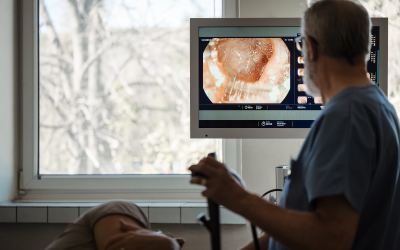
    Healthcare professional performing an endoscopic examination on a patient; monitor shows live internal tissue view.

    Upper GI endoscopy and biopsy

    The starting point for most gastric cancer diagnoses. Dr. Rathod performs upper GI endoscopy to directly visualise the stomach lining, identify suspicious lesions, and take biopsies for histological confirmation. Early detection at this stage changes what is possible.
    Syringe with a fine needle injecting into a hair follicle beneath the skin.

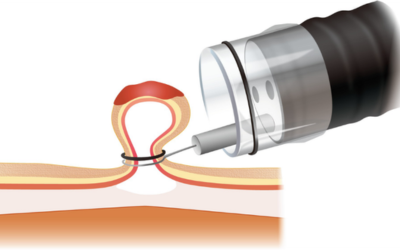
    Endoscopic Mucosal Resection (EMR) and ESD

    For early gastric cancers confined to the mucosal layer, Endoscopic Submucosal Dissection (ESD) and Endoscopic Mucosal Resection allow complete tumour removal through the scope. No abdominal incision, no general surgery recovery.
    Close-up medical illustration of a flexible catheter or probe inserted into pink tissue with a white-tipped end and a black, segmented body

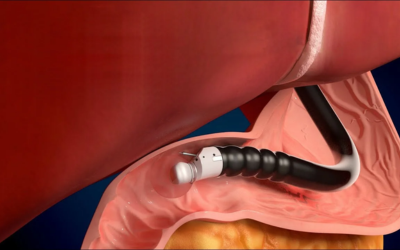
    Endoscopic Ultrasound (EUS)

    EUS provides high-resolution images of the stomach wall layers and surrounding lymph nodes, which CT scans alone cannot reliably show. It is the most accurate tool available for local staging before a surgical decision is made.
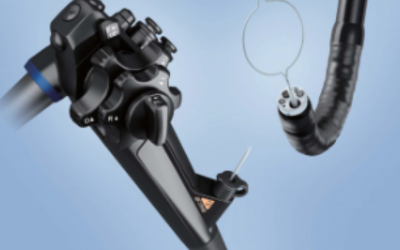
    Close-up of dental implant surgical drill and handpiece against a blue background in a dental setup.

    NBI endoscopy

    Narrow Band Imaging makes subtle mucosal changes visible that standard white-light endoscopy misses. It is particularly useful for identifying early gastric cancer and pre-cancerous conditions like intestinal metaplasia before they progress.
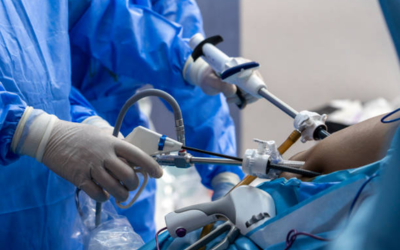
    Surgeons in blue sterile gowns perform laparoscopic surgery, guiding instruments through small ports on a patient’s abdomen.

    Laparoscopic and surgical resection

    When the tumour requires surgical removal, Dr. Rathod coordinates with surgical oncologists for laparoscopic or open gastrectomy depending on the extent of disease. Minimally invasive surgical approaches are used where the case allows.
    Why Choose Dr. Vipulroy Rathod for Stomach Cancer Treatment?

    Gastroenterologist with three decades of experience

    Dr. Vipulroy Rathod has over 30 years managing upper GI and gastric conditions. His experience covers the full range — from early gastric cancer caught on routine endoscopy to advanced cases needing complex multimodal treatment.

    Full-spectrum gastric cancer care

    Diagnosis, staging, endoscopic resection, surgical coordination, chemotherapy planning, and post-treatment follow-up all managed under one team. Patients are not passed between providers who do not talk to each other.

    High procedure volume

    Over 80,000 endoscopic procedures and 20,000 EUS interventions performed. In complex upper GI cancer cases, that experience directly affects the accuracy of staging and the precision of endoscopic resection.

    Patient-first consultations

    Dr. Rathod explains what the scope found, what the biopsy means, and what the options are before anything is scheduled. Patients leave informed, not overwhelmed.

    Middle-aged man with a gray beard seated at a wooden desk in an office, trophies on a shelf behind him.

    Recognised outcomes

    His results managing gastric and GI cancers through endoscopic and minimally invasive methods have earned him recognition at national and international levels.

    Faster recovery where possible

    Patients treated with ESD or EMR for early gastric cancer avoid major surgery entirely. Even those who require surgical resection benefit from laparoscopic approaches that cut recovery time compared to open operations.

    Frequently Asked Questions

    Faster recovery where possible

    Persistent indigestion, a feeling of fullness after small meals, mild nausea, unexplained weight loss, and blood in the stool or vomit are the signs most commonly reported. The problem is that these are also symptoms of far more common, benign conditions. Anyone with persistent upper GI symptoms should get an endoscopy rather than waiting it out.

    Who is at higher risk of developing stomach cancer?

    People over 50, those with a history of H. pylori infection, individuals with a family history of gastric cancer, smokers, and people with pre-cancerous stomach conditions like intestinal metaplasia or chronic atrophic gastritis all carry elevated risk. A history of stomach surgery also increases risk over time.

    Is H. pylori infection linked to stomach cancer?

    Yes. H. pylori is the single most well-established risk factor for gastric adenocarcinoma. It causes chronic inflammation of the stomach lining that, over years, can progress through a series of pre-cancerous changes before cancer develops. Treating H. pylori early significantly reduces that risk.

    Can stomach cancer be detected without symptoms?

    It can, through upper GI endoscopy. Many early-stage gastric cancers are found incidentally during endoscopy performed for reflux, ulcers, or persistent indigestion. In countries with routine gastric cancer screening, early detection rates are much higher. For high-risk patients, Dr. Rathod recommends proactive endoscopic screening.

    How long does recovery take after stomach cancer treatment?

    Endoscopic resection for early gastric cancer typically means one to two days in hospital and a return to normal eating within a week. Laparoscopic gastrectomy requires two to four weeks before most patients are back to daily activity. Open surgery takes longer. The type of procedure needed depends entirely on the stage of the cancer at diagnosis.

    Disclaimer: The content shared on this page is for informational purposes and not for promotional use.

    Scroll to Top
    Call Now Button