

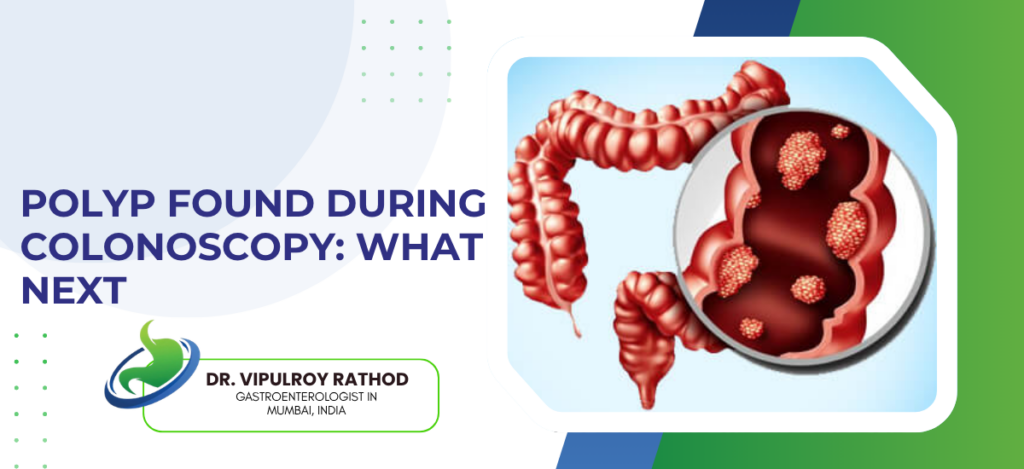
Most polyps found during colonoscopy are removed right there during the same procedure. The doctor uses a wire loop or forceps through the scope to snip the polyp off the colon wall and sends it to a lab for biopsy. What the biopsy report says about that polyp, its type, size, and whether it shows any precancerous changes, is what decides everything that follows including how soon you need your next colonoscopy.
According to Dr. Vipulroy Rathod, an experienced Gastroenterologist in Mumbai, “Finding a polyp during colonoscopy isn’t bad news by itself, it’s actually the system working exactly the way it should because catching polyps early and removing them on the spot is the whole reason screening exists in the first place.”
What happens to the polyp after removal?
The removal part is actually the easy bit. What matters more is what the lab says about that polyp once it’s been sliced, stained and put under a microscope, because that report is what decides everything going forward.
- Pathology report: Every polyp goes to a pathologist. They cut it open, look at cell patterns, check for dysplasia. The report takes about 5 to 7 working days to come back. Your gastroenterologist reads it before sitting down with you to discuss what it means. Nobody should be telling you next steps before that report is in hand.
- Polyp type: This is the part that actually determines risk. Adenomatous polyps are the ones that can eventually go cancerous if left alone long enough. Hyperplastic polyps are almost always harmless. Sessile serrated polyps are a bit of a grey area. The type written on that pathology report sets the tone for your entire follow-up plan.
- Size: A tiny 3 mm polyp and a 15 mm polyp live in completely different risk brackets. Bigger adenomas especially anything crossing 10 mm push you into a higher surveillance category.
- Margins: The pathologist also checks whether the whole polyp came out cleanly or whether abnormal tissue extends right to the cut edge. Clean margins mean complete removal. Tissue at the edges means the base might regrow. That single detail can move your next scope up by months.
If you want more detail on the colonoscopy procedure itself, our colonoscopy page covers preparation, the scope process, and what recovery actually looks like day by day.
When do you need your next colonoscopy after polyp removal?
The answer is different for everyone because it’s driven entirely by what showed up on the biopsy, not by any fixed calendar rule that applies across the board.
- Low-risk adenomas: One or two small ones under 10 mm, low-grade dysplasia, nothing alarming on the report. Next scope in 5 to 7 years. Just routine. Check back in, make sure nothing new has popped up since then.
- High-risk adenomas: Three or more adenomas, anything 10 mm or bigger, villous features, high-grade dysplasia. Timeline drops to 3 years. Sometimes the gastroenterologist pulls it even shorter if the pathology looked particularly off. These patients get watched more closely from here on.
- Sessile serrated polyps: These follow their own track. Small ones without dysplasia get 5 years. Bigger ones or anything showing dysplastic changes moves to 3. They’re notoriously easy to miss during the scope itself because they lie flat against the wall, which is where having an experienced operator actually matters.
- Piecemeal removal: Large polyps that had to come out in fragments instead of one clean piece usually trigger a check-up scope at 6 months. Just to look at the removal site and make sure nothing is regrowing from whatever was left behind at the base. Standard practice. Not a sign that something went wrong.
The endoscopic approach to managing findings like polyps applies across many GI conditions, and our chronic pancreatitis treatment without surgery blog covers how the same minimally invasive thinking shapes treatment for complex pancreatic conditions where avoiding open surgery makes a measurable difference.
Why choose Dr. Vipulroy Rathod for polyp management?
Dr. Vipulroy Rathod has over 30 years in advanced endoscopy. More than 80,000 procedures. Polypectomy is bread and butter work but technique makes a bigger difference than patients realise. Clean removal with clear margins means fewer repeat scopes down the line. Sloppy removal means coming back in 6 months instead of 5 years. That gap is what experience closes.
Patients here don’t get a polyp snipped and a date stamped for the next visit. They get the biopsy broken down in plain language. What the polyp type means. What the size means. What the surveillance schedule looks like based on their specific findings. No guesswork walking out.
Book your consultation today with one of India’s most experienced specialists for polyp evaluation and removal.
Frequently Asked Questions
No, most polyps are benign and only certain types like adenomatous polyps carry a meaningful risk of becoming cancerous over time if left in place.
You’re sedated during the procedure so there’s no pain during removal, and most patients don’t feel anything different afterwards beyond mild bloating that clears within a day.
Pathology reports typically take 5 to 7 working days, after which your gastroenterologist reviews the findings and discusses the results and next steps with you.
Polyps can recur in the same or different locations over time, which is exactly why follow-up colonoscopies at recommended intervals are necessary after any polyp removal.
Reference links-
- Post-Polypectomy Surveillance Guidelines — American College of Gastroenterology
- Polyp Management and Follow-Up — American Society for Gastrointestinal Endoscopy
