
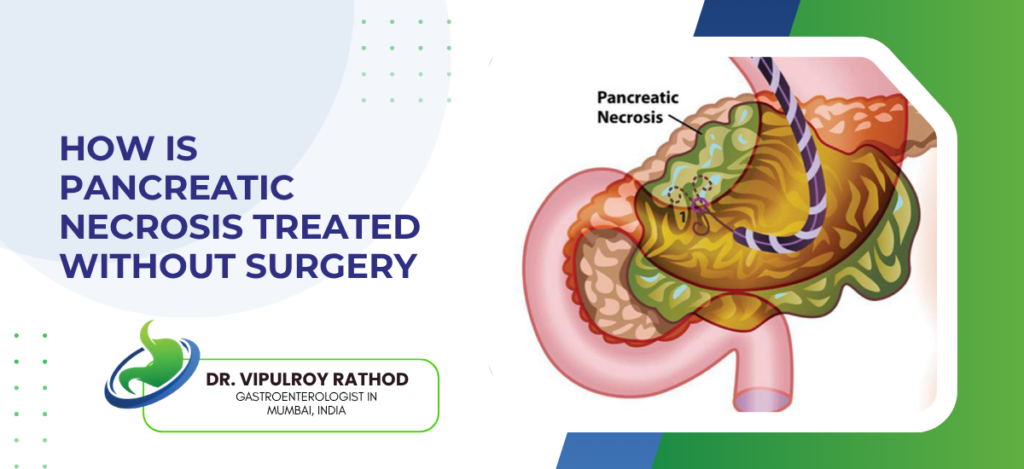
Pancreatic necrosis, or necrotizing pancreatitis, is increasingly treated without open surgery using a “step-up approach” involving minimally invasive techniques. Key non-surgical methods include endoscopic drainage (using an endoscope to drain fluid into the stomach), percutaneous catheter drainage (using imaging to place drains through the skin), antibiotics for infection, and intensive supportive care (fluid resuscitation and early enteral nutrition).
According to Dr. Vipulroy Rathod, an experienced Gastroenterologist in Mumbai, “Open surgery for pancreatic necrosis used to be the only option and it carried serious risks, but with endoscopic necrosectomy we can now clear dead tissue through a scope with far better outcomes for the patient.”
What endoscopic treatments are used for pancreatic necrosis?
Picking the right technique comes down to where the collection sits, how old it is, and whether infection has set in.
- EUS-guided drainage: An endoscope fitted with ultrasound finds the collection from inside the stomach. A stent gets placed across the stomach wall into the pocket of necrotic fluid. Everything drains gradually over days. No skin incision, no operating theatre involved.
- Direct endoscopic necrosectomy: After the drainage stent is working, solid necrotic debris still has to come out. The scope goes right through the stent tract into the cavity and scoops out dead tissue. It rarely finishes in one session. Two, three, sometimes four sessions over weeks is normal.
- Lumen-apposing metal stents: These are a newer design made for exactly this job. The opening is wider than plastic stents so the scope can pass through easily. They hold the tract open long enough for multiple clean-out sessions without needing repeated stent changes.
- Percutaneous and endoscopic combined: Sometimes the collection stretches into spaces the scope physically cannot reach. In those situations a radiologist places a drain through the skin for the extra pockets while the endoscopist handles the rest. Both teams work together rather than choosing one over the other.
Patients dealing with necrotising pancreatitis really do need specialist input, and the pancreatitis treatment page covers how conservative and endoscopic options are matched to each individual case.
Why is non-surgical treatment preferred now?
Open surgery for pancreatic necrosis carried very high mortality in older data. The endoscopic approach changed that and the numbers behind the shift are strong enough that most specialist centres now go non-surgical by default.
- Lower mortality: Multiple randomised trials now show endoscopic necrosectomy gives lower mortality than open surgical necrosectomy. That alone moved practice in most tertiary centres. More recent data has only reinforced the trend.
- Fewer complications afterwards: Less new-onset organ failure. Less bleeding in the post-op period. Fewer secondary infections. ICU stays end up noticeably shorter than what surgery needs for the same diagnosis.
- Quicker recovery, shorter hospital stay: No abdominal wound means patients are mobilising within days, not weeks. Discharge happens earlier. Functional recovery at 3 and 6 months reads better in follow-up data too.
- Healthy pancreas gets preserved: Open surgical necrosectomy often ends up damaging viable pancreas while removing the dead parts. Endoscopic tools touch only what’s dead. The difference matters because patients losing functional pancreas develop diabetes or malabsorption later.
This move away from open surgery isn’t unique to the pancreas, and the achalasia and POEM blog goes into another condition where endoscopy replaced what used to be a major open operation.
Why choose Dr. Vipulroy Rathod for pancreatic necrosis treatment?
Dr. Vipulroy Rathod has over 20,000 EUS procedures behind him across 30 plus years of practice. Necrotising pancreatitis is exactly the category of case that benefits most from that depth, because the timing and sequencing of each intervention is what determines how well a patient ends up doing. The experience goes beyond the technical work. Families get the situation explained properly. Decisions are discussed before being made. What recovery actually looks like week by week is laid out honestly.
Book your consultation today with one of India’s most experienced pancreatic endoscopy specialists.
Frequently Asked Questions
Most cases can be managed endoscopically now, but complex situations with extensive necrosis may still require combined or surgical approaches depending on clinical factors.
Full treatment usually requires multiple sessions spread over several weeks, though many patients begin feeling significantly better after the first drainage procedure itself.
The procedure is performed under sedation so there’s no pain during it, and most patients experience only mild discomfort for a day or two afterwards.
Success rates in experienced centres consistently cross 80 to 90 percent depending on patient selection and how promptly the treatment is initiated.
Reference links-
- Management of Acute Necrotizing Pancreatitis — American College of Gastroenterology Guidelines
- Endoscopic Necrosectomy Clinical Evidence — National Library of Medicine
