

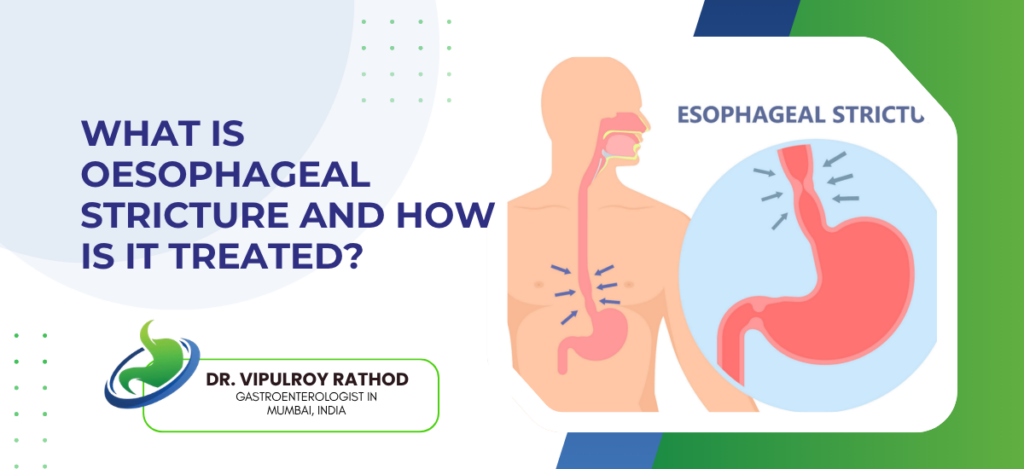
Oesophageal stricture is narrowing of the oesophagus that obstructs the passage of food, caused most commonly by chronic acid reflux but also by caustic injury, radiation, eosinophilic oesophagitis, post-surgical scarring, or malignancy. The classic symptom is dysphagia, food sticking in the chest, usually solids before liquids, often progressive over months. Treatment is endoscopic in the majority of cases, with balloon dilatation or bougie dilatation reopening the narrowed segment. Underlying cause needs treatment alongside, because dilatation alone without addressing reflux or inflammation rarely produces lasting relief.
According to Dr. Vipulroy Rathod, Gastroenterologist in Mumbai, “Strictures get treated successfully in most patients with endoscopic dilatation. The challenge isn’t the procedure. It’s stopping the stricture from coming back. PPIs for reflux strictures. Steroid injections for refractory cases. Treatment of underlying eosinophilic oesophagitis when that’s the cause. The dilatation opens the lumen. The maintenance keeps it open.”
What causes oesophageal stricture?
The causes fall into a few clear categories, and identifying the cause matters because it changes the treatment approach.
- Peptic stricture from chronic reflux. The commonest cause. Long-standing acid exposure damages the lower oesophagus, scarring develops, and the lumen narrows progressively over years. Usually occurs in patients with longstanding untreated or undertreated reflux.
- Eosinophilic oesophagitis produces strictures from chronic allergic inflammation. Typically affects younger patients and presents with food impaction or dysphagia. The strictures are often multiple and located higher in the oesophagus than peptic strictures.
- Caustic and radiation injury. Accidental or intentional ingestion of acid or alkali burns the oesophagus, with scarring developing weeks later. Radiation strictures occur after treatment for head, neck, or thoracic cancers and tend to be tight, long-segment, and harder to dilate.
- Malignant strictures from oesophageal or gastric cancer. These need biopsy before any dilatation. The treatment pathway shifts to oncology rather than continued endoscopic dilatation, with stenting as a palliative option in unresectable disease.
The cause changes everything about management. Endoscopy in Mumbai services with biopsy capability during the same dilatation session avoid the need for repeat procedures and ensure cancer is ruled out at the earliest opportunity, particularly in older patients or those with weight loss alongside the dysphagia.
How oesophageal stricture is treated?
Treatment is mostly endoscopic. Surgery is reserved for the small number of cases where dilatation has failed repeatedly or the underlying cause is malignant and resectable.
- Balloon dilatation. A balloon catheter is passed through the scope to the stricture and inflated to a controlled diameter. Quick, well-tolerated, performed under sedation. Often the first-line endoscopic treatment for most peptic and inflammatory strictures.
- Bougie dilatation uses graduated dilators passed sequentially over a guidewire. Useful for longer strictures or those that don’t fully respond to balloon dilatation. Either technique works in expert hands.
- Steroid injection. Triamcinolone injected into the stricture site reduces scarring and prolongs the interval before re-stricture in refractory cases. Used selectively rather than universally, mostly in patients needing repeat dilatations within short intervals.
- Stenting for malignant or refractory benign strictures. Self-expanding metal stents reopen the lumen and stay in place for weeks to months, used mostly in palliative oncology cases or in benign strictures that have failed multiple dilatations.
Treating the cause is what prevents recurrence. Read more on eosinophilic oesophagitis for one of the increasingly recognised causes of oesophageal stricture, particularly in younger patients who don’t fit the classical reflux pattern.
Why choose Dr. Vipulroy Rathod for oesophageal stricture treatment?
Dr. Vipulroy Rathod has been performing endoscopic dilatation and stricture management at Fortis Hospital Mulund for over three decades, with the technical experience across balloon and bougie techniques that complex strictures often require. Many patients arrive after multiple dilatations elsewhere that didn’t address the underlying cause, with the stricture returning every few months and the same dilatation being repeated as a recurrent procedure rather than a step in a coherent plan.
The bigger picture in stricture management is whether the underlying disease is being treated alongside the mechanical narrowing. PPIs at proper doses for reflux strictures. Topical steroids for eosinophilic oesophagitis. Surveillance and biopsy in older patients to exclude malignancy. Dilatation alone, without that broader workup, is what produces patients who come back every three months for years.
Book your consultation today with one of India’s most experienced specialists for oesophageal stricture assessment and endoscopic treatment.
Frequently Asked Questions
No, the procedure is done under sedation. Mild throat discomfort for a day afterwards is normal.
Months to years, depending on the cause and whether the underlying disease is being treated alongside.
Yes, particularly if the underlying cause isn’t controlled. Refractory strictures sometimes need repeated dilatations or steroid injections.
Rarely. Mostly when dilatation has failed multiple times, when stricture is associated with resectable malignancy, or with complications like perforation.
Reference links-
- Esophageal Dilation Guidelines, American Society for Gastrointestinal Endoscopy — https://www.asge.org/home/practice-support/guidelines
- Management of Esophageal Strictures, World Gastroenterology Organisation — https://www.worldgastroenterology.org/guidelines
