 Skip to content
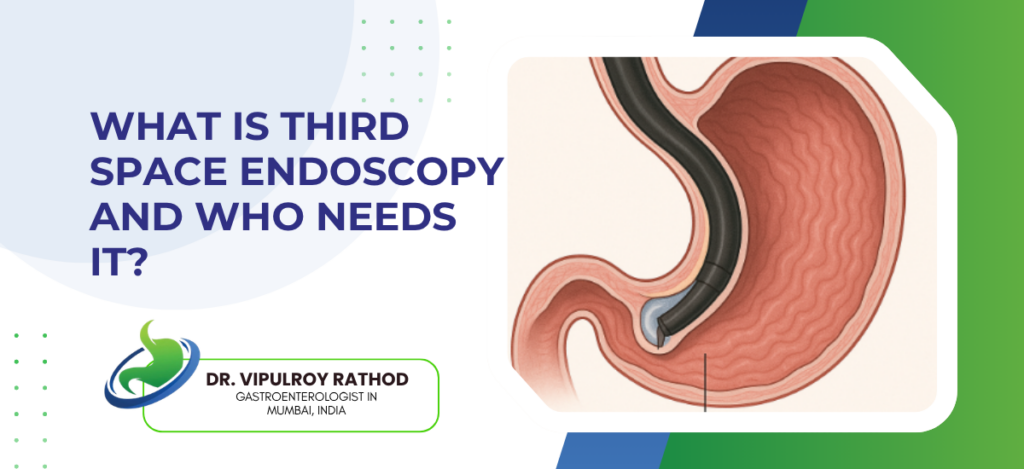
Third space endoscopy is a category of advanced endoscopic procedures that work in the submucosal layer of the GI tract, between the mucosa and the muscle wall, to treat conditions previously requiring surgery. It includes peroral endoscopic myotomy (POEM) for achalasia, submucosal tumour resection, and Zenker’s diverticulum repair. The approach uses the same scope used for routine endoscopy with specialised tools.
According to Dr. Vipulroy Rathod, Gastroenterologist in Mumbai, “Third space endoscopy is one of the bigger shifts in GI procedural medicine over the last fifteen years. Conditions that needed open chest surgery or laparoscopy can now be treated through the scope alone. Achalasia. Submucosal tumours. Zenker’s diverticulum. Patients walk in the morning and walk out the same day. The recovery is dramatically shorter, the cosmetic result is invisible, and the outcomes match surgery in most published series.”
What conditions are treated with third space endoscopy?
The technique applies to a defined set of conditions where surgical access to the muscle layer is needed but the mucosa above can be preserved.
- Achalasia. Peroral endoscopic myotomy (POEM) cuts the lower oesophageal sphincter muscle through a submucosal tunnel. Replaces Heller myotomy in most appropriate cases, with similar long-term outcomes and faster recovery.
- Submucosal tumours like gastrointestinal stromal tumours (GISTs) and leiomyomas in the oesophagus, stomach, or duodenum. These can be respected through endoscopic submucosal dissection or tunnelling techniques without open surgery.
- Zenker’s diverticulum. A pharyngeal pouch causing dysphagia and regurgitation can be treated with Z-POEM, cutting the cricopharyngeal muscle endoscopically and avoiding open neck surgery.
- Gastroparesis with refractory symptoms. G-POEM (pyloromyotomy) cuts the pylorus muscle endoscopically, improving gastric emptying in patients who haven’t responded to medical management.
The technique has expanded rapidly across centres in the last decade. Advanced endoscopy services with the equipment and training to perform third space procedures are still limited in India, which means access depends heavily on which centre a patient is referred to.
How is third space endoscopy performed?
The procedure uses a working channel and specialised electrosurgical knives passed through a standard endoscope. The anatomy of the submucosal space is what makes the technique possible.
- Submucosal injection. A solution is injected under the mucosa to create a working space between the mucosa and the muscle layer underneath. This separates the layers and reduces injury risk during cutting.
- A small mucosal incision is made several centimetres proximal to the target area, then a tunnel is dissected underneath through the submucosal space until the area of interest is reached.
- Targeted treatment. Depending on indication, the muscle layer is cut for myotomy, the tumour is dissected free, or the diverticular septum is divided. The treatment is precise and limited to the target structure.
- Mucosal closure at the entry point with endoscopic clips. This seals the submucosal tunnel from the lumen and allows healing without leak in the vast majority of cases.
Recovery is short and the cosmetic result is invisible because there’s no incision through the skin. Read more on advanced GI procedures for related advanced endoscopic techniques used in complex GI conditions.
Why choose Dr. Vipulroy Rathod for third space endoscopy?
Dr. Vipulroy Rathod has been performing advanced endoscopic procedures at Fortis Hospital Mulund for over three decades, with experience in submucosal techniques, POEM, and the broader range of third space endoscopy procedures that few Indian centres can offer at volume. The training and equipment requirements are significant, which is part of why access to these procedures remains limited despite their proven benefits in the patient groups who need them.
The decision to undergo a third space procedure isn’t only about which condition the patient has. It’s about whether the centre doing the procedure has the volume, the equipment, and the experience to handle the case safely and to manage complications if they arise. Patients should ask about case numbers before agreeing to any third space procedure.
Book your consultation today with one of India’s most experienced specialists for advanced endoscopic procedure assessment and treatment.
Frequently Asked Questions
The procedure itself is done under general anaesthesia or deep sedation and patients don’t feel it. Some chest or abdominal discomfort for a day or two afterwards is normal and settles on its own.
Most patients go home within twenty-four to forty-eight hours after the procedure, with normal activity resumed within a week. The recovery is significantly shorter than surgical alternatives for the same conditions.
Outcomes are similar in published series and meta-analyses, with comparable long-term symptom relief and slightly different side-effect profiles, particularly regarding post-procedure reflux which is more common after POEM.
Limited. Only a small number of centres offer third space endoscopy with the volume and equipment needed to do it safely. Most patients are referred to high-volume centres for these specific procedures.
Disclaimer:
This blog is intended for informational and educational purposes only and should not be considered medical advice.
Please consult a qualified gastroenterologist or healthcare professional for personalized diagnosis and treatment.
