

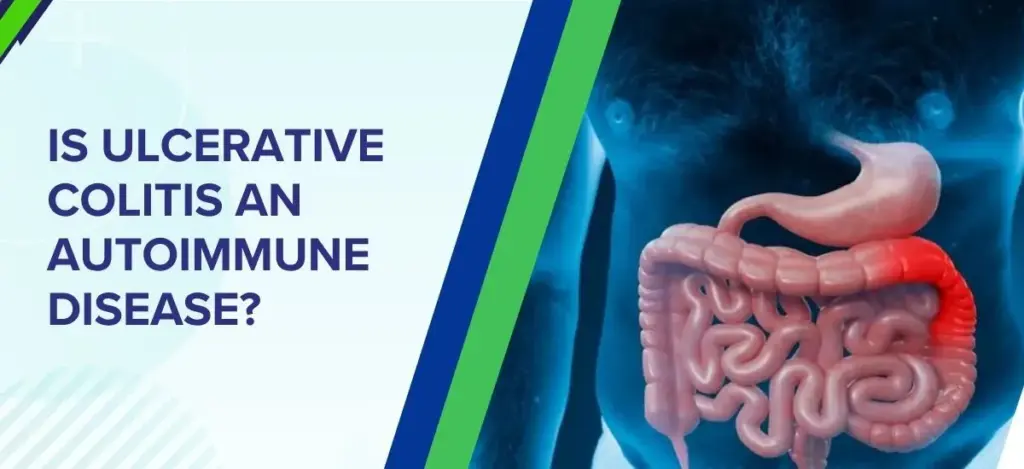
Ulcerative colitis is a chronic inflammatory bowel disease (IBD) that develops in the colon and rectal lining. Many patients ask, “Is ulcerative colitis an autoimmune disease?” While not classified as a traditional autoimmune disease, it is an immune mediated condition in which overactivity of the immune system causes inflammation in the digestive tract.

How does ulcerative colitis impact digestion? Let’s explore its effects on the colon.
What Is Ulcerative Colitis and How Does It Affect the Body?

Is Ulcerative Colitis an Autoimmune Disease or an Immune-Mediated Condition?
The question “is ulcerative colitis an autoimmune disease” does not have a simple yes or no answer.
Most gastroenterologists will tell you it’s immune-mediated, not autoimmune in the strict sense. The difference is subtle but real — classic autoimmune diseases directly attack specific healthy cells or tissues. Ulcerative colitis is messier than that. The immune response overreacts and causes excessive inflammation in the colon.
Researchers believe that ulcerative colitis develops due to a combination of:
Immune system imbalance
Environmental triggers
Genetic factors
Changes in gut bacteria
This abnormal immune response causes the body to maintain inflammation even when there is no actual infection or threat.
Why does inflammation occur in ulcerative colitis? Let’s explore the immune response behind it.
How Does the Immune System Cause Inflammation in Ulcerative Colitis?
The immune system normally protects the body from harmful bacteria and infections. In ulcerative colitis, it may react excessively to normal substances in the digestive tract.
This can lead to:
Release of inflammatory chemicals
Formation of ulcers
Damage to the intestinal lining
Repeated cycles of inflammation and healing
This ongoing inflammation is responsible for many symptoms experienced by patients.
Which symptoms should not be ignored? Let’s look at common signs of ulcerative colitis.
Top Symptoms That May Indicate Ulcerative Colitis
Common symptoms of ulcerative colitis include:

Symptoms may vary depending on the severity and extent of inflammation in the colon.
What Causes Ulcerative Colitis and Who Is at Higher Risk?
Still no single confirmed cause — despite decades of research. But research suggests that multiple factors contribute to its development.
Risk factors include:

IBD diagnoses have increased globally, India included, with studies reporting a rising number of cases in developing countries specifically.
How Is Ulcerative Colitis Diagnosed?
Usually, it’s a combination — medical history, physical exam, then advanced tests to confirm diagnosis.
Typical steps:

A gastroenterologist for ulcerative colitis helps determine severity of the disease and creates a suitable management plan.
Can ulcerative colitis be controlled? Let’s explore the available treatment options.
Treatment Options for Ulcerative Colitis and Immune System Management
The goal isn’t a cure. It’s damage control, essentially — bring inflammation down, ease symptoms, stretch out remission as long as possible.
Options include:

Modern ulcerative colitis treatment can be different for every patient — it depends on symptoms, disease severity and patient needs.
Can Ulcerative Colitis Be Cured?
No, not currently. There’s no permanent cure for ulcerative colitis. However, many patients can achieve long periods of remission with appropriate treatment and regular checkups.
The focus of care is to:
Control inflammation
Reduce flare-ups
Prevent complications
Maintain a better quality of life
With advances in treatment, many patients live pretty normal lives managing ulcerative colitis over the long term.
Why Understanding the Autoimmune Link in Ulcerative Colitis Matters
Once you understand ulcerative colitis involves immune system dysfunction rather than a straightforward infection, treatment starts making a lot more sense — doctors can select therapies that target inflammation at its source instead of just managing symptoms.
Early diagnosis and consistent follow-up with an experienced specialist can help patients manage symptoms for long term.
Conclusion
Ulcerative colitis is not one of the classical autoimmune diseases, but rather a type of immune disorder in which an abnormal immune response causes inflammation in colon. Understanding the connection between the immune system and digestive health plays a significant role in deciding the course of action.
Patients seeking treatment for ulcerative colitis and other GI disorders can benefit from expert evaluation and management through the expertise of Dr. Vipulroy Rathod.
Managing ulcerative colitis starts with the right information and support. Connect with a specialist for guidance tailored to your needs.
Frequently Asked Questions
Ulcerative colitis is generally considered an immune-mediated inflammatory condition rather than a classic autoimmune disease.
The causes are unknown, although there could be genetic and environmental factors.
Yes, ulcerative colitis is a chronic condition that requires ongoing management.
One needs to consult a gastroenterologist in case of persistent diarrhoea, bleeding, stomach pains or unexplained weight loss.
The symptoms include diarrhoea, abdominal cramps, urgency and bleeding.
References:
- Crohn’s & Colitis Foundation
https://www.crohnscolitisfoundation.org/ - National Institute of Diabetes and Digestive and Kidney Diseases (NIDDK)
https://www.niddk.nih.gov/
Disclaimer: The information shared in this content is for educational purposes and not for promotional use.
