

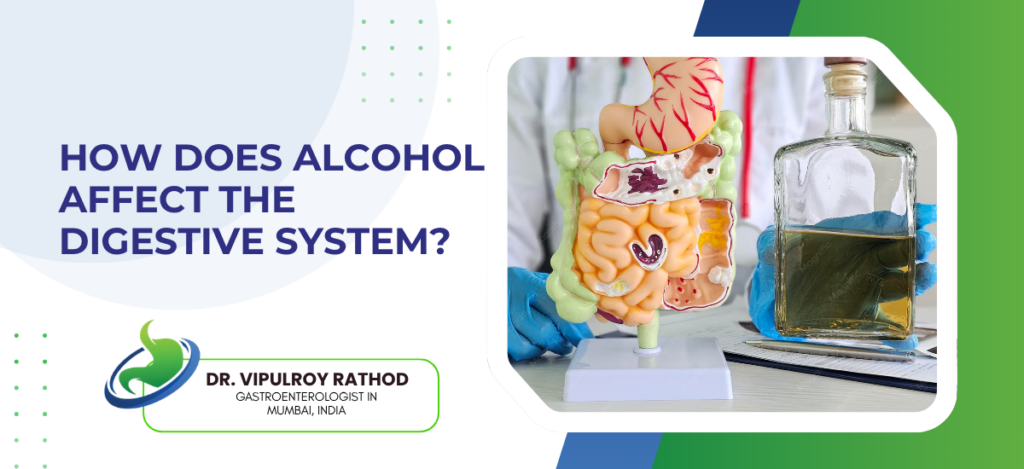
Alcohol affects every part of the digestive system, from the oesophagus to the colon, with the liver and pancreas taking the most significant damage at higher intakes. It irritates the mucosal lining, alters gut motility, disrupts the microbiome, and at higher doses causes structural injury including fatty liver, alcoholic hepatitis, chronic pancreatitis, and gastrointestinal cancers. The damage is dose-related and partly genetic, with some patients showing significant disease at intakes others tolerate without obvious problems.
According to Dr. Vipulroy Rathod, Gastroenterologist in Mumbai, “Patients often think alcohol only affects the liver. The truth is wider than that. The oesophagus, the stomach, the pancreas, the gut microbiome, all of them take damage. The liver gets attention because it’s the organ that fails most visibly. Many of the symptoms patients come in with, reflux that won’t settle, gastritis, recurrent diarrhoea, episodes of pancreatitis, trace back to the same drinking pattern that the patient hasn’t yet been asked about.”
Where alcohol damages the digestive system?
The injury patterns differ by organ. Some are direct mucosal effects, others come from systemic metabolic consequences.
- Oesophagus. Alcohol relaxes the lower oesophageal sphincter, worsening reflux. Long-term drinking raises the risk of Barrett’s oesophagus and squamous cell cancer, particularly in heavy drinkers who smoke.
- The stomach takes direct mucosal damage. Acute gastritis with heavy drinking, chronic gastritis with regular use, and a raised risk of peptic ulcer disease especially with NSAIDs.
- Pancreas. Alcohol is the commonest cause of chronic pancreatitis worldwide. The damage accumulates with each acute episode, leaving scar tissue that produces diabetes and enzyme insufficiency over years.
- Liver injury runs from fatty liver to alcoholic hepatitis to cirrhosis. The progression depends on dose, duration, and genetics. Fatty liver reverses with abstinence. Cirrhosis does not.
The damage doesn’t always announce itself early. Endoscopy in Mumbai services with upper and lower GI assessment alongside liver elastography in the same workup help patients with significant alcohol use, because the asymptomatic phase of most alcohol-related disease lasts years.
What changes when alcohol intake stops?
The digestive system has substantial capacity for recovery if exposure stops early enough. The rate of reversal depends on which organ and how much damage has already accumulated.
- Stomach and oesophagus recover quickly. Reflux improves within weeks. Gastritis resolves over a similar period. Mucosal healing is usually complete within months.
- The pancreas is harder. Acute pancreatitis recovers over weeks, but the structural damage from chronic alcohol-related pancreatitis is permanent. Stopping prevents further injury and reduces flare frequency.
- Liver recovery depends on stage. Fatty liver reverses fully within three to six months. Alcoholic hepatitis can resolve but may leave fibrosis. Cirrhosis doesn’t reverse, though stopping extends survival meaningfully.
- The gut microbiome shifts back over months. Inflammation markers come down. Mood and metabolic parameters improve. The pattern of recovery here is consistent across recent research.
Recovery isn’t uniform, and the staging dictates what’s realistic. Read more on fatty liver and metabolic health for how alcohol-related liver injury fits into the broader category of metabolic and toxic liver disease.
Why choose Dr. Vipulroy Rathod for alcohol-related digestive disease?
Dr. Vipulroy Rathod has been managing alcohol-related digestive disease at Fortis Hospital Mulund for over three decades, with experience across the spectrum from early reflux and gastritis to established chronic pancreatitis and decompensated liver disease. Many patients arrive after years of being treated symptomatically for one part of the picture, without anyone having asked about alcohol intake systematically or staged the overall damage properly.
The conversation about alcohol intake is one most clinicians skip because it’s uncomfortable. The result is patients who have multiple organs being damaged by the same exposure, getting partial treatment for each symptom, without anyone connecting the dots. Asking properly and assessing each organ honestly is what makes effective treatment possible.
Book your consultation today with one of India’s most experienced specialists for alcohol-related digestive disease and integrated GI assessment.
Frequently Asked Questions
There is no completely safe threshold. Recent evidence shows even moderate drinking raises the risk of GI cancers and worsens metabolic liver disease.
Some of it. Fatty liver reverses fully with abstinence, gastritis and reflux resolve quickly, but chronic pancreatitis and cirrhosis don’t fully reverse.
Not really. Binge episodes are particularly damaging to the pancreas and can trigger acute pancreatitis on their own.
Yes. Liver function tests, FibroScan, faecal elastase, and endoscopy can identify problems years before clinical disease develops.
Reference links-
- Alcohol-Related Liver Disease Guidelines, American Association for the Study of Liver Diseases — https://www.aasld.org/sites/default/files/2022-04/AASLD%20ALD%20Guidance%202019%20Update.pdf
- Alcohol and Gastrointestinal Health, World Gastroenterology Organisation — https://www.worldgastroenterology.org/guidelines
