

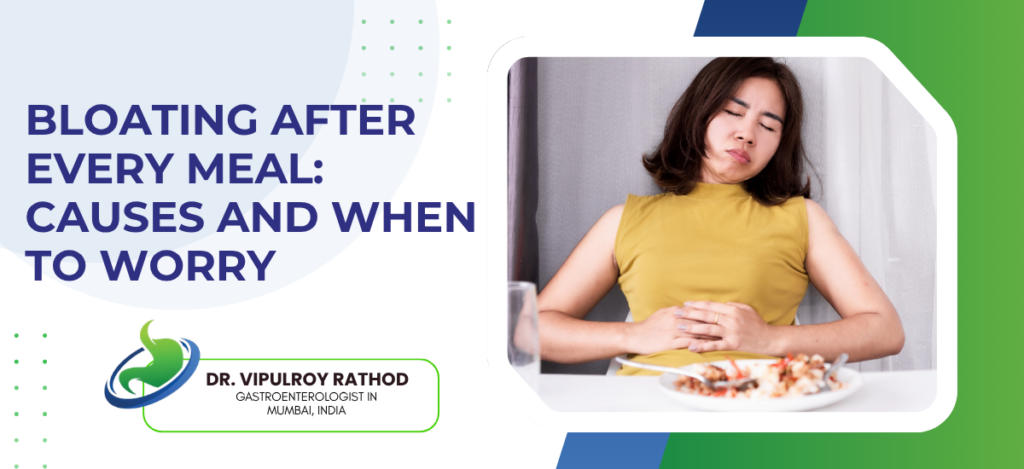
Feeling bloated occasionally after a heavy meal is completely normal, but bloating after every single meal is not, and it’s worth taking seriously. The causes range from harmless habits like eating too fast to genuine conditions such as functional dyspepsia, food intolerances, SIBO, and pancreatic enzyme problems. Most cases are benign, though a small number carry warning signs that mean the bloating needs proper investigation rather than another over-the-counter remedy.
According to Dr. Vipulroy Rathod, Gastroenterologist in Mumbai, “Bloating is one of those symptoms people put up with for years before mentioning it, usually because it feels too minor to bring up. Most of the time it’s something manageable like functional dyspepsia or a food intolerance. But when bloating comes with weight loss or a change in bowel habits, that’s when it stops being a nuisance and starts needing a proper look.”
What Causes Bloating After Every Meal?
Persistent post-meal bloating usually traces back to one of a handful of common causes.
Eating too fast is the most overlooked culprit of all. Rushing a meal means swallowing air and giving the stomach less time to register fullness, and slowing down at the table alone resolves a surprising number of cases without any other intervention.
Functional dyspepsia is the diagnosis behind many stubborn cases. The digestive system underperforms with nothing structurally wrong, often through the gut-brain link, with bloating as one of its hallmark features.
Certain foods build the problem up meal after meal. Lactose and the fermentable carbohydrates the gut struggles to absorb generate gas and distension, and pinning down the trigger food usually brings clear relief.
SIBO and enzyme shortfalls belong on the list too. Bacterial overgrowth ferments food in the wrong part of the gut while low pancreatic enzyme output leaves meals poorly digested, both surfacing as bloating with other digestive symptoms.
When bloating comes with poor digestion and greasy stools, the pancreas is worth examining, which is where a specialist in endoscopy treatment directs the right tests to find the cause.
When Should You Worry About Bloating?
Most bloating is benign, but certain accompanying features change the picture entirely.
Unintended weight loss is the clearest warning of all. Losing weight without trying while feeling persistently bloated is never something to manage at home, and it warrants prompt assessment.
A lasting change in bowel habits matters. New constipation, diarrhoea, or an altered stool pattern that arrives with the bloating and sticks around deserves investigation rather than dietary tweaks.
Pain, vomiting, or blood are outright red flags. Any of these appearing with bloating moves it firmly into the category that needs a scope rather than reassurance.
New, progressive bloating in an older adult carries far more weight than the same complaint in a young person and should be checked rather than written off as ordinary indigestion.
Understanding how the pancreas contributes to digestion helps explain why enzyme problems cause bloating and malabsorption. Read more on role of the pancreas to understand how digestive enzymes affect how well food is broken down.
Why Choose Dr. Vipulroy Rathod for Digestive Symptoms?
Dr. Vipulroy Rathod has been diagnosing the causes of chronic bloating and digestive discomfort at Fortis Hospital Mulund for over 30 years, distinguishing benign functional causes from the few that need endoscopic investigation. Patients who’ve lived with daily bloating for years often finally get a clear cause and an effective plan rather than being told it’s just stress. Physicians from 35 countries have trained under his approach at Fortis.
Book your consultation today with one of India’s most experienced specialists for bloating and digestive symptom evaluation.
Frequently Asked Questions
Frequent bloating is often caused by functional dyspepsia, acid reflux, food intolerances, eating too fast, or conditions like SIBO, gastroparesis, and pancreatic enzyme insufficiency.
It needs attention when it comes with weight loss, persistent pain, vomiting, blood in the stool, or a change in bowel habits, as these can point to a serious cause.
Occasional bloating after a large or rich meal is normal, but bloating after every meal is not and should be assessed by a gastroenterologist.
Diagnosis may involve endoscopy, breath tests for SIBO or intolerances, blood tests, and assessment of diet and eating habits to find the underlying cause.
Reference
- Chronic Bloating and Abdominal Distension: Mechanisms and Management — NCBI/PMC, https://www.ncbi.nlm.nih.gov/pmc/articles/PMC7548944/
- Functional Dyspepsia: Pathophysiology and Management — NCBI/PMC, https://www.ncbi.nlm.nih.gov/pmc/articles/PMC5859129/
