

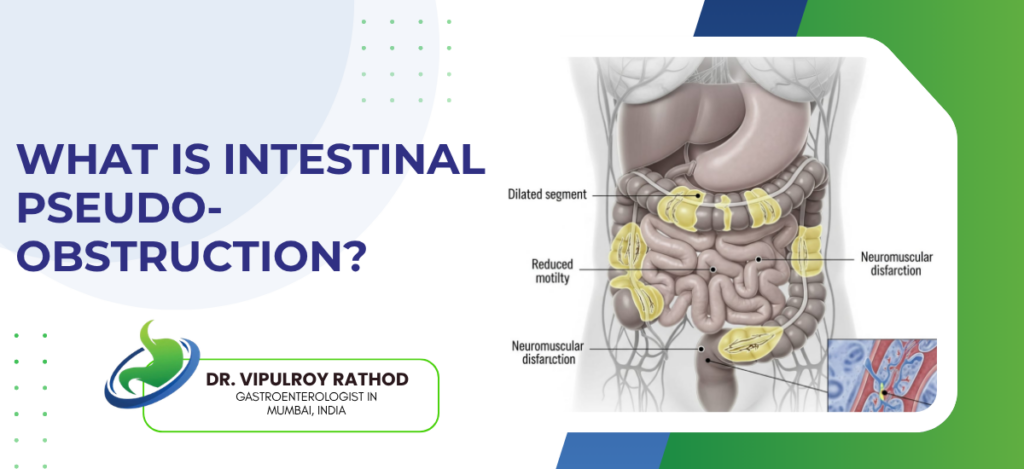
Intestinal pseudo-obstruction is a condition where the intestines fail to move food, fluid, and gas properly, mimicking a physical blockage. It produces all the signs of a blocked bowel, distension, cramping, vomiting, and constipation, yet no physical blockage exists. The problem lies in the nerves or muscles that drive bowel movement rather than in any mechanical obstruction. Because it looks so convincingly like a true blockage, the first and most important step is imaging to confirm there’s nothing actually obstructing the gut.
According to Dr. Vipulroy Rathod, Gastroenterologist in Mumbai, “Pseudo-obstruction is one of the trickier diagnoses because the patient looks exactly like someone with a mechanical blockage, and the instinct is to operate. The key is proving there’s no physical obstruction first, because taking a patient like this to surgery unnecessarily can make things worse. Once we know the bowel is open, the management is completely different.”
What Causes It and What Are the Symptoms?
Pseudo-obstruction can be acute or chronic, and the causes sit in the nerves and muscles that coordinate bowel movement.
The symptoms mimic a true blockage closely. Abdominal distension, cramping pain, nausea, vomiting, and constipation all appear, which is precisely why the condition is so easily mistaken for mechanical obstruction on first presentation.
Underlying causes are wide-ranging. Diabetes, Parkinson’s disease, previous surgery, certain medications, and connective tissue diseases like scleroderma can all disrupt the enteric nervous system or bowel muscle that normally keeps things moving.
The acute form often follows illness or surgery. Known as Ogilvie syndrome when it affects the colon, it can develop in seriously ill or post-operative patients and needs prompt attention to avoid the bowel over-distending.
The chronic form comes and goes over years. Some patients live with recurring episodes driven by a longstanding motility disorder, which affects nutrition and quality of life and needs ongoing specialist management.
Excluding a genuine blockage and assessing the small bowel is where a specialist in endoscopy treatment directs the right investigations before deciding on management.
How Is It Diagnosed and Treated?
Diagnosis is as much about ruling out mechanical obstruction as it is about confirming the motility problem.
Imaging comes first to exclude a physical blockage. A CT scan shows dilated bowel without any obstructing point, and this distinction is the single most important step, because the whole treatment approach depends on it.
Motility and specialist tests follow. Once obstruction is excluded, tests of how the bowel moves, alongside blood work to look for underlying causes like diabetes or thyroid disease, build the fuller picture.
Treatment starts conservatively. Resting the bowel, correcting fluids and electrolytes, providing nutritional support, and stopping any medications that slow the gut resolve many acute episodes without anything more invasive.
Decompression or surgery is reserved for severe cases. Endoscopic decompression can relieve a dangerously distended colon in acute pseudo-obstruction, and surgery is a last resort for the small group who don’t respond to other measures.
Assessing the small bowel in these patients sometimes calls for reaching further than a standard scope allows. Read more on enteroscopy to understand how the deeper small intestine is examined when standard endoscopy cannot reach it.
Why Choose Dr. Vipulroy Rathod for Bowel Motility Disorders?
Dr. Vipulroy Rathod has been diagnosing and managing complex bowel motility disorders including pseudo-obstruction at Fortis Hospital Mulund for over 30 years, with the experience to distinguish a true mechanical blockage from a functional one before anyone reaches for surgery. That judgment, backed by endoscopic decompression capability when it’s needed, is exactly what these patients require. Physicians from 35 countries have trained under his approach at Fortis.
Book your consultation today with one of India’s most experienced specialists for bowel motility and pseudo-obstruction management.
Frequently Asked Questions
It is a condition where the bowel behaves as if blocked, with the symptoms of obstruction, but no physical blockage is present. The problem lies in the nerves or muscles controlling bowel movement.
Symptoms include abdominal distension, cramping pain, nausea, vomiting, constipation, and a swollen belly, closely mimicking a true mechanical bowel obstruction.
Diagnosis involves imaging like CT to exclude a mechanical blockage, followed by tests of bowel motility, since the key step is confirming there is no physical obstruction.
Treatment includes bowel rest, nutritional support, medications to stimulate motility, treating any underlying cause, and endoscopic decompression or surgery in severe cases.
Reference
- Chronic Intestinal Pseudo-Obstruction: Diagnosis and Management — NCBI/PMC, https://www.ncbi.nlm.nih.gov/pmc/articles/PMC5437500/
- Acute Colonic Pseudo-Obstruction (Ogilvie Syndrome) — NCBI/PMC, https://www.ncbi.nlm.nih.gov/pmc/articles/PMC5847279/
