

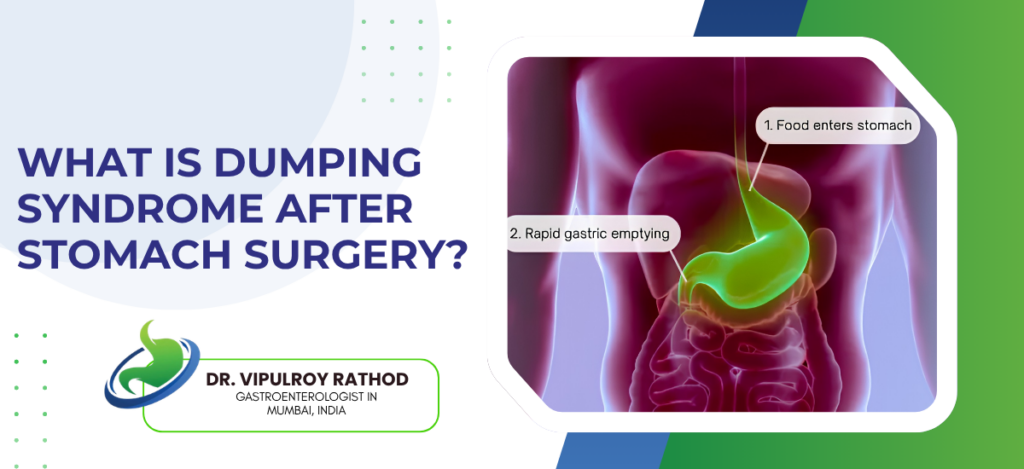
Dumping syndrome happens when food, sugar especially, empties too quickly from the stomach into the small intestine, and it’s a common consequence of stomach or bariatric surgery. The symptoms fall into two patterns depending on timing, one striking within half an hour of eating and the other one to three hours later. For most patients it’s manageable with dietary changes, and it often eases over time as the gut adapts.
According to Dr. Vipulroy Rathod, Gastroenterologist in Mumbai, “Dumping syndrome frightens patients more than it needs to because the symptoms come on fast and feel dramatic. What most people don’t realise is how much control they have over it through simple changes to how and what they eat. The majority never need anything beyond dietary adjustment, and the gut usually adapts over the following months.”
What Are the Symptoms of Dumping Syndrome?
The symptoms split into two distinct types based on when they appear after a meal.
Early dumping strikes within about thirty minutes of eating, bringing bloating, cramping, nausea, and diarrhoea as the rapid rush of food into the small bowel pulls fluid in with it and stretches the intestine.
Late dumping arrives one to three hours after the meal. Here the trigger is a blood-sugar crash, as the quick absorption of sugar spikes insulin and then leaves the patient sweating, shaky, weak, and lightheaded once the glucose drops.
Sugary foods and drinks are the biggest culprits, and patients quickly learn that a sweet dessert or a fizzy drink brings on symptoms far more reliably than a protein-based meal does.
Symptoms tend to ease with time. Many patients find that what felt overwhelming in the first weeks after surgery settles considerably over the following months as the digestive system adjusts to its new anatomy.
Symptoms that overlap with ordinary post-meal discomfort can be hard to place, and a specialist in stomach cancer surgery follow-up can distinguish dumping from other post-surgical or unrelated GI causes.
How Is Dumping Syndrome Managed?
Treatment starts with the plate and only rarely goes beyond it.
Smaller, more frequent meals reduce the volume hitting the small intestine at once, and shifting from three large meals to five or six small ones is often the single most effective change a patient can make.
Cutting back on sugar and refined carbohydrates removes the main trigger for both early and late dumping, since these are the foods that empty fastest and drive the blood-sugar swings behind late symptoms.
Separating fluids from solids helps too, so drinking between meals rather than with them slows how quickly the stomach empties and eases the rush into the bowel.
Medication or surgery is reserved for the few whose symptoms don’t settle with diet, where drugs that slow gastric emptying or, very rarely, corrective surgery become options after dietary measures have been given a proper trial.
Distinguishing dumping syndrome from other causes of post-meal distress matters for getting the management right. Read more on indigestion after meals to understand the range of conditions that produce symptoms after eating and how they’re told apart.
Why Choose Dr. Vipulroy Rathod for Post-Surgical GI Care?
Dr. Vipulroy Rathod has been managing post-surgical gastrointestinal problems including dumping syndrome at Fortis Hospital Mulund for over 30 years, across patients recovering from gastric cancer surgery, bariatric procedures, and other upper GI operations. That experience means dumping is recognised quickly, distinguished from other post-surgical complications, and managed with the dietary and medical steps that actually work. Physicians from 35 countries have trained under his approach at Fortis.
Book your consultation today with one of India’s most experienced specialists for post-surgical GI care and dumping syndrome management.
Frequently Asked Questions
It is a group of symptoms that occur when food, especially sugar, moves too quickly from the stomach into the small intestine, usually after stomach or bariatric surgery.
Early dumping causes bloating, cramping, and diarrhoea within 30 minutes of eating, while late dumping causes sweating, weakness, and dizziness one to three hours after a meal.
Most cases improve with smaller frequent meals, limiting sugar, and separating fluids from solids. Medication or, rarely, surgery is used for severe cases.
In many patients it improves over weeks to months as the gut adapts after surgery, particularly with dietary management, though some need longer-term treatment.
Reference
- Dumping Syndrome: Pathophysiology, Diagnosis and Management — NCBI/PMC, https://www.ncbi.nlm.nih.gov/pmc/articles/PMC5477788/
- Diagnosis and Management of Postoperative Dumping Syndrome — NCBI/PMC, https://www.ncbi.nlm.nih.gov/pmc/articles/PMC6284370/
