

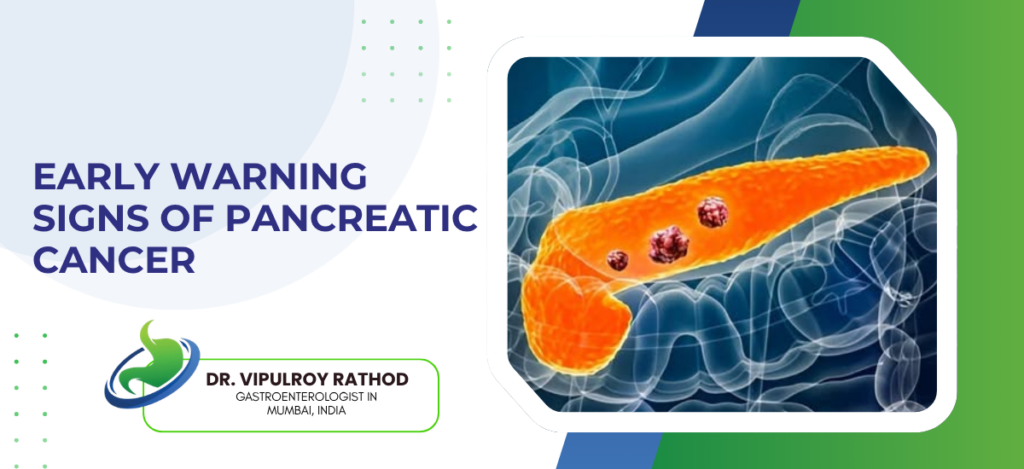
Pancreatic cancer rarely announces itself early because the pancreas sits buried deep behind the stomach and produces almost nothing in the way of obvious symptoms until the disease has already moved past easy treatment, but there are signals worth taking seriously, and they tend to show up as unexplained weight loss, persistent upper abdominal or back pain, new diabetes after 50 with no real reason, painless jaundice, oily stools, and a slow loss of appetite that doesn’t sort itself out. Most patients land at advanced stage simply because nobody connected those signals back to the pancreas in time to do anything useful about them.
According to Dr. Vipulroy Rathod, Gastroenterologist in Mumbai, “Pancreatic cancer is one of those conditions where the difference between early and late diagnosis is often the difference between treatable disease and palliative care, and most patients arrive late because the early signs are exactly the kind that get attributed to acidity, stress, or age before anyone thinks to investigate properly.”
What Are the Early Warning Signs of Pancreatic Cancer?
Individually each of these can mean nothing, but when two or three cluster together or run on for weeks without explanation, they start telling a different story.
- Weight: Losing 4 to 5 kg without changing anything about your eating or activity is one of the most consistent early signals because pancreatic enzyme production gets disrupted long before any other symptom appears, so the body slowly stops absorbing nutrients properly while the patient and their doctor assume it’s just stress or work catching up.
- Pain: That dull ache in the upper abdomen radiating through to the back, worse after meals or at night, is a classic pancreatic pattern, and patients often spend months getting treated for gastritis or muscle strain before someone finally connects the pain to the actual organ producing it behind the stomach.
- Diabetes: New diabetes in a non-obese patient over 50 with no metabolic explanation is a recognised early signal because the tumour disrupts insulin-producing tissue, yet most of these cases get filed straight under endocrine disease and the pancreas itself never gets imaged properly.
- Jaundice: Yellowing of skin and eyes without any cramping pain shows up when a tumour in the head of the pancreas blocks the bile duct, and unlike gallstone jaundice it tends to arrive quietly without the dramatic abdominal pain, which is exactly why patients delay coming in until family members notice the colour change at home.
These signals get more serious when two or more cluster together in the same patient over a short window, and a pancreatic cancer treatment specialist investigates that combination properly rather than treating each symptom as a standalone problem.
When Should These Signs Trigger Proper Investigation?
Not every symptom on this list means cancer, but specific patient profiles need a much lower threshold for investigation than the general population.
- Family: Patients with a first-degree relative diagnosed with pancreatic cancer carry significantly elevated lifetime risk and should already be on EUS surveillance regardless of symptoms, because finding a small lesion before any signal develops is the entire point of surveillance and waiting for warning signs in this group means waiting too long.
- BRCA2: Confirmed BRCA2, BRCA1, or PALB2 carriers face meaningfully higher pancreatic cancer risk and benefit from annual EUS surveillance from age 50, and any of the warning signs in this group should trigger imaging within days rather than the wait-and-see approach used for the same symptoms in average-risk patients.
- Pancreatitis: Patients living with chronic pancreatitis carry elevated background cancer risk and warning signs can easily get attributed to the pancreatitis itself, so any change in pain pattern, new weight loss, or onset of diabetes in this group needs proper EUS investigation rather than dismissal as the underlying disease acting up.
- Smokers: Long-term smokers carry roughly double the pancreatic cancer risk of non-smokers and warning signs are statistically more likely to actually mean something here, which is why a smoker over 50 with persistent upper abdominal symptoms genuinely deserves proper investigation rather than the standard reassurance most of them get sent home with.
A small lesion found early can be treated, while the same disease six months later usually cannot, and that gap is exactly what surveillance and proper investigation are designed to close. Read more on EUS detection to see which symptoms map to which findings on EUS and why the timing of investigation makes such a real difference.
Why choose Dr. Vipulroy Rathod for screening early warning signs of pancreatic cancer ?
Dr. Vipulroy Rathod has spent over 30 years investigating pancreatic disease through EUS, fine needle aspiration biopsy, and metabolic workup at Fortis Hospital Mulund, finding small pancreatic lesions in patients whose CT scans were called normal and whose symptoms were being managed as something else entirely, and has trained physicians from 35 countries in this exact diagnostic pathway.
Most patients arrive having been reassured for months that nothing serious was happening, and many leave with a real diagnosis caught early enough to actually do something about it, which is the entire reason proper investigation matters at this point in the disease course.
Book your consultation today with one of India’s most experienced specialists for hepatitis and liver cancer evaluation.
Frequently Asked Questions
Unexplained weight loss combined with vague upper abdominal discomfort is the most common early presentation of pancreatic cancer.
Yes, EUS surveillance can find small pancreatic lesions in high-risk patients before any symptoms develop.
New diabetes in a non-obese patient over 50 with no metabolic risk factors is a recognised early signal that warrants pancreatic imaging.
EUS combined with fine needle aspiration biopsy is the most accurate method for early pancreatic cancer detection in symptomatic and high-risk patients.
Reference links-
- Pancreatic Cancer Early Detection Guidelines — American Society for Gastrointestinal Endoscopy
- Pancreatic Cancer Risk and Surveillance — World Gastroenterology Organisation
