

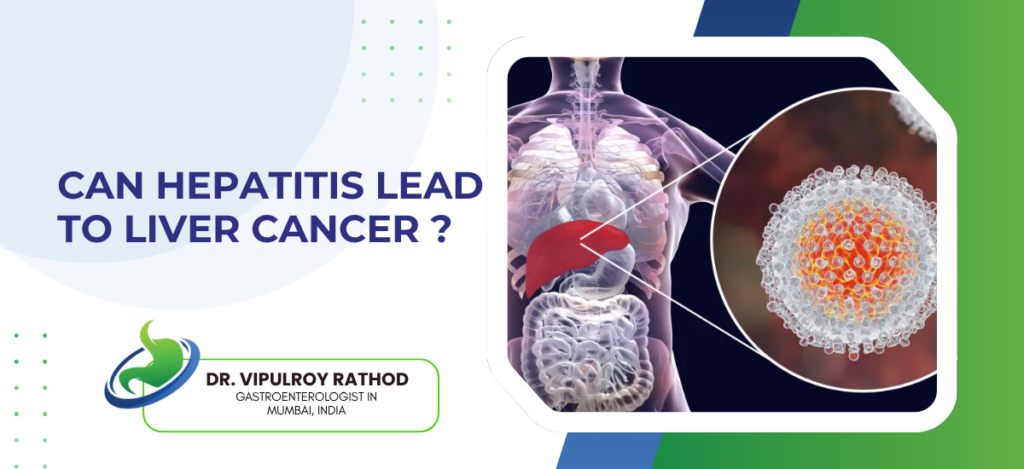
Chronic hepatitis B and hepatitis C are the two biggest infectious causes of liver cancer worldwide, with each virus driving cancer risk through a different mechanism. Hepatitis B can trigger cancer directly by embedding into liver cell DNA even without cirrhosis, while hepatitis C typically raises risk through the cirrhosis pathway where years of inflammation build scarring that eventually sets the stage for malignancy.
According to Dr. Vipulroy Rathod, an experienced Gastroenterologist in Mumbai, “The connection between hepatitis and liver cancer is one of the most well-established links in all of medicine, and yet patients with chronic hepatitis still slip through without being told they need regular screening until a tumour shows up and suddenly the conversation shifts from prevention to damage control.”
How does hepatitis actually cause liver cancer?
Both viruses jack up cancer risk but they get there through completely different back roads which is why you can’t just run the same surveillance playbook for both, and understanding which mechanism is chewing through a particular patient’s liver changes how hard they need watching and what specifically the screening is looking for.
- Hep B — direct sabotage: This virus doesn’t bother waiting for cirrhosis to roll in before it starts causing problems because it buries itself directly into the DNA of liver cells and can flip the switches that turn a normal cell cancerous from the inside out, which is why hep B patients can grow hepatocellular carcinoma in a liver that looks perfectly clean on every other test and has zero scarring anywhere.
- Hep C — the long grind: Hep C takes the scenic route to cancer by keeping the liver in a state of constant low-grade warfare where inflammation slowly stacks fibrosis on top of fibrosis over decades until cirrhosis sets in and that wrecked cirrhotic environment is what eventually rolls out the red carpet for cancer to take root.
- Cell turnover gone wrong: Both viruses force liver cells to die and regenerate faster than they normally would, and that sped-up turnover is basically a lottery where every cell division carries a small chance of a genetic screw-up and the more tickets you buy over decades of chronic infection the higher the odds that one of those screw-ups eventually becomes a cancer.
- Stacking damage: Patients carrying both viruses at once or either virus paired with years of heavy booze face cancer risk that doesn’t just climb it rockets, because each factor dumps its own damage on top of what the other’s already done and the liver is copping hits from multiple directions with no breathing room to recover between rounds.
If chronic hepatitis has already been diagnosed and you want the full picture of what screening and treatment look like, our liver cancer treatment page covers everything from surveillance schedules through intervention options depending on what shows up.
Can treating the virus actually bring the cancer risk down?
Treating hepatitis absolutely bends the curve but how much risk drops depends heavily on when treatment happens relative to how much damage the liver has already copped, which is why getting treated at the fibrosis stage versus the cirrhosis stage can mean the difference between a patient who mostly dodges cancer risk and one who carries it around for the rest of their life.
- Hep B antivirals: Squashing the virus with long-term antivirals drops cancer risk dramatically but doesn’t wipe it out completely because the viral DNA that’s already welded itself into liver cell chromosomes stays parked there even when blood tests show the virus as undetectable, meaning hep B patients on treatment still need six-monthly screening because that embedded DNA can still cause havoc years after the virus itself went quiet.
- Hep C cure: Direct-acting antivirals now knock out hep C in over 95 percent of patients and clearing the virus chops the cancer risk significantly, but patients who already had cirrhosis before getting cured still sit on elevated risk for years afterward because the scarred-up liver environment that cancer loves doesn’t just pack up and leave the moment the virus gets evicted.
- Earlier is always better: A patient who gets treated before fibrosis digs in has a wildly better long-term outlook than one who gets treated after cirrhosis has already cemented itself, which is the single strongest argument for catching hepatitis early and treating immediately rather than the outdated approach of sitting on your hands and waiting for the liver to start visibly struggling before doing anything.
- Screening never fully stops: Even patients with undetectable viral loads and successful treatment still need continued surveillance if they had significant fibrosis or cirrhosis when they started therapy, because cancer risk takes years to properly come down and yanking screening away too early is exactly how tumours get missed in people who assumed the worst was behind them.
Knowing how the two hepatitis types differ at a fundamental level helps guide which screening approach fits, and our hepatitis B vs hepatitis C blog breaks down the key differences between the two viruses and why the surveillance game plan can’t just be photocopied from one to the other.
Why choose Dr. Vipulroy Rathod for hepatitis and liver cancer screening?
Dr. Vipulroy Rathod has over 30 years in gastroenterology and hepatology with more than 80,000 endoscopic procedures behind him, and hepatitis-related cancer risk is one of those areas where knowing whether the patient needs watching because of viral DNA buried inside liver cells or because of a cirrhotic landscape that cancer thrives in changes the entire surveillance setup, and a gastroenterologist who treats both situations as identical is missing a distinction that directly affects how often imaging happens and what it’s actually hunting for.
What patients get here is hepatitis management that doesn’t just treat the virus and dust its hands off but keeps the cancer surveillance running for as long as the risk stays elevated, because clearing the bug or beating it down with antivirals is only half the job and the other half is making sure the liver doesn’t quietly sprout a tumour in the years afterward while everyone’s patting themselves on the back thinking the battle’s already won.
Book your consultation today with one of India’s most experienced specialists for hepatitis and liver cancer evaluation.
Frequently Asked Questions
Chronic hep B and C are the leading infectious causes of liver cancer worldwide, with hep B sabotaging liver cell DNA directly and hep C grinding toward cancer through decades of inflammation that builds cirrhosis underneath.
Curing it slashes the risk massively but doesn’t zero it out in patients who already had cirrhosis before treatment, which is why surveillance needs to keep running for years even after the virus has been completely booted out.
Most don’t, but every chronic hep B carrier sits at elevated risk compared to the general population which is why six-monthly ultrasound and AFP screening is recommended across the board regardless of how healthy the liver looks or how fine the patient feels.
Every six months with ultrasound and AFP for all chronic hep B carriers and all hep C patients with significant fibrosis or cirrhosis, and that schedule keeps running even after successful treatment if liver damage was already baked in at the time therapy started.
Reference links-
- Hepatitis and Hepatocellular Carcinoma Guidelines — American Association for the Study of Liver Diseases
- Viral Hepatitis and Liver Cancer Evidence — National Library of Medicine
