

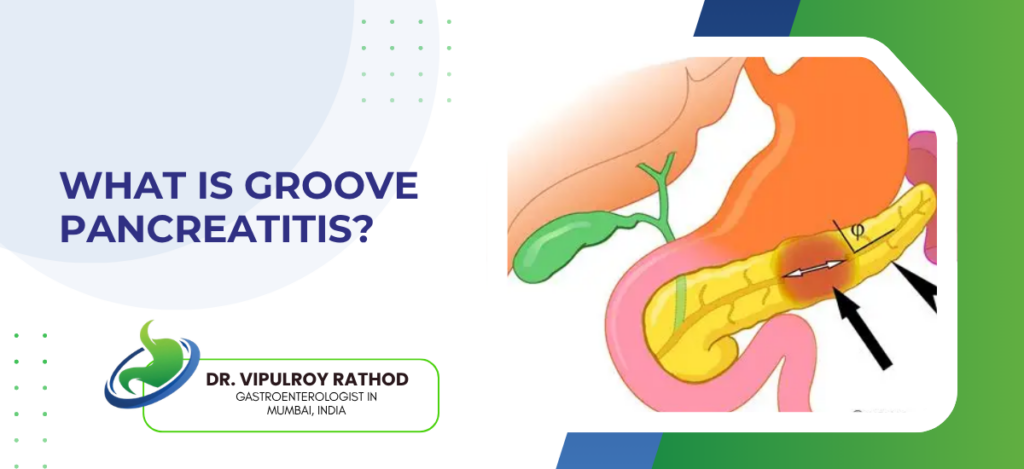
Groove pancreatitis is a rare form of chronic pancreatitis that affects the groove between the head of the pancreas, the duodenum, and the common bile duct. It produces a mass-like thickening in that specific area that looks alarmingly like pancreatic head cancer on CT and MRI. Most patients we see with this condition spent weeks or months being worked up for suspected malignancy before someone considered groove pancreatitis as the actual diagnosis. Almost always linked to heavy alcohol use and usually presents with upper abdominal pain, nausea, vomiting, and weight loss that makes the cancer suspicion feel even more convincing.
According to Dr. Vipulroy Rathod, Gastroenterologist in Mumbai, “Groove pancreatitis is one of the most commonly misdiagnosed pancreatic conditions because it sits in exactly the location where pancreatic cancer appears and produces imaging findings that even experienced radiologists struggle to distinguish from malignancy without proper EUS evaluation.”
What Causes Groove Pancreatitis and How Is It Diagnosed?
Alcohol is behind most cases. But the diagnosis is tricky because everything about it looks like cancer until you prove otherwise.
- Alcohol: Chronic heavy drinking is the primary driver in most cases we diagnose. The inflammation concentrates specifically in the groove between the pancreatic head and the duodenum rather than affecting the whole organ, and that focal pattern is exactly what makes it look like a mass on imaging rather than diffuse pancreatitis that’s easier to recognise.
- Mechanism: Repeated alcohol-induced inflammation damages the minor papilla area, causes protein plugs and cystic changes in the duodenal wall, fibrosis develops in the groove, and over time the whole area thickens into what looks like a solid mass on CT. The duodenal wall itself gets involved. That’s unusual for standard pancreatitis and it’s one of the features that distinguishes groove pancreatitis from other forms.
- Mimics Cancer: CT and MRI show a mass in the pancreatic head region with duodenal wall thickening, bile duct narrowing, and sometimes cystic changes. Looks like cancer. Radiologist reports it as suspicious. Surgeon gets consulted. Patient is terrified. And in a proportion of cases, the whole thing turns out to be inflammatory. The problem is that nobody can be 100% certain without tissue, and that’s where EUS comes in.
- Diagnosis: EUS gets close enough to see the groove in detail that external imaging can’t match, characterises the tissue pattern, identifies the cystic changes within the duodenal wall that are more typical of groove pancreatitis than cancer, and provides FNA biopsy of the thickened area. Biopsy showing fibrosis and inflammation without malignant cells is what finally settles the question for most patients.
Getting this diagnosis right avoids unnecessary surgery. Specialist in endoscopic ultrasound differentiates groove pancreatitis from pancreatic cancer using tissue-level detail that CT and MRI can suggest but never confirm.
How Is Groove Pancreatitis Treated?
Treatment depends on how severe the symptoms are and whether complications like duodenal obstruction or bile duct compression have developed.
- Conservative: Alcohol cessation is the foundation. Pain management. Nutritional support. In mild to moderate cases the inflammatory process stabilises and sometimes partially regresses once alcohol is removed from the picture. Patients who stop drinking early enough often avoid any procedural intervention entirely, and that’s a genuinely different outcome from what they were expecting when they walked in thinking they had cancer.
- Endoscopic: Bile duct compression from groove inflammation managed with ERCP stenting. Duodenal stenosis dilated endoscopically when obstruction develops. Pain from ductal involvement addressed through stenting or celiac plexus block. These interventions manage complications without surgery and buy time for conservative treatment to work in patients who’ve committed to alcohol cessation.
- Surgery: Reserved for patients with refractory pain despite conservative and endoscopic management, or when malignancy genuinely cannot be excluded even after EUS and biopsy. Pancreaticoduodenectomy is the standard surgical approach but it’s a major operation for a benign condition, and the decision to operate should only happen after every reasonable attempt to confirm the diagnosis non-surgically has been exhausted.
- Monitoring: Even after diagnosis, these patients need follow-up imaging to ensure the inflammation is regressing with conservative treatment and not progressing. And honestly, because groove pancreatitis and pancreatic cancer can look identical even on EUS in some cases, ongoing surveillance gives the clinical team and the patient a safety net that a single investigation never provides.
Groove pancreatitis is treatable and usually benign. The challenge is getting the diagnosis right before surgery happens. Read more on duct strictures to understand how duct-level changes in chronic pancreatitis overlap with findings in groove pancreatitis and why characterisation matters.
Why Choose Dr. Vipulroy Rathod for Groove Pancreatitis Diagnosis?
Dr. Vipulroy Rathod has spent over 30 years differentiating unusual pancreatic conditions from malignancy at Fortis Hospital Mulund. Groove pancreatitis diagnosed through EUS in patients referred for Whipple surgery they didn’t need. Malignancy confirmed in cases that looked inflammatory but weren’t. EUS since 1998. 35 countries worth of physicians trained in exactly this kind of diagnostic distinction.
Patients arrive having been told they likely have pancreatic cancer based on a CT report. Some of them leave with a groove pancreatitis diagnosis, a conservative management plan, and their pancreas still intact. That’s a different life from the one they were preparing for.
Book your consultation today with one of India’s most experienced specialists for groove pancreatitis diagnosis and management.
Frequently Asked Questions
Groove pancreatitis is a benign inflammatory condition affecting the groove near the pancreatic head while pancreatic cancer is malignant, but both produce similar mass-like findings on imaging.
Yes, most cases respond to alcohol cessation, pain management, and endoscopic intervention for complications without requiring surgical resection.
EUS with fine needle aspiration biopsy provides the most accurate differentiation from pancreatic cancer by showing inflammatory tissue patterns and excluding malignant cells.
Chronic heavy alcohol use is the primary risk factor for groove pancreatitis in most diagnosed cases.
Reference links-
- Groove Pancreatitis Diagnosis and Management — American College of Gastroenterology
- Paraduodenal Pancreatitis Guidelines — World Gastroenterology Organisation
