

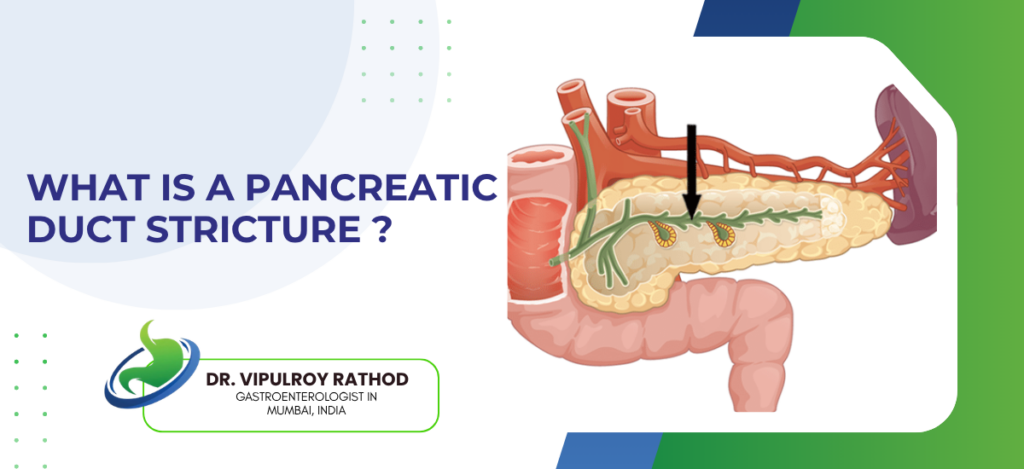
A pancreatic duct stricture is a narrowing inside the main pancreatic duct that blocks digestive enzymes from reaching the small intestine. Chronic pancreatitis causes most of them, scar tissue builds up inside the duct wall over years of inflammation, the opening shrinks, enzymes back up, pressure builds, and the patient gets pain that no amount of medication touches because the problem is a physical blockage not inflammation anymore. Some strictures are benign scarring. Some are a tumour pressing on the duct from outside. Telling those apart is the single most important step before anything else happens.
According to Dr. Vipulroy Rathod, Gastroenterologist in Mumbai, “A pancreatic duct stricture is not a diagnosis by itself, it’s a finding that needs characterising because the difference between a benign inflammatory stricture and a malignant one changes everything about what happens next for the patient.”
What Causes Pancreatic Duct Strictures?
Several things narrow the duct. Some destroy from inside. Some compress from outside. Doesn’t matter how, the gut can’t work without enzyme flow.
- Pancreatitis: Most common cause we see in practice. Years of inflammation replacing functional tissue with scar. Duct narrows progressively. Pain comes and goes at first, then becomes constant. Here’s what catches people off guard though, by the time symptoms are obvious enough to investigate, the stricture has usually been building for years because the pancreas masked early damage with its functional reserve.
- Cancer: Tumour pressing on the duct from outside or growing into the wall produces a stricture that sometimes looks similar to scarring on CT. Sometimes. Not always. And that “sometimes” is exactly where patients end up on the wrong treatment path because CT couldn’t tell the difference and nobody ordered EUS with biopsy to settle the question properly.
- Autoimmune: IgG4-related autoimmune pancreatitis. Duct narrowing that looks like cancer on imaging. Responds dramatically to steroids. Misdiagnose this as malignancy and the patient gets a Whipple they never needed. Miss it completely and the stricture progresses while nobody treats what’s actually driving it. Both outcomes are bad.
- Diagnosis: MRCP maps duct anatomy non-invasively. EUS gets close enough to see wall detail and biopsy suspicious areas in the same session. ERCP can diagnose and treat simultaneously by stenting across the stricture while collecting brushings. The investigation that gets ordered first often determines whether the patient gets the right answer quickly or spends months in diagnostic limbo.
Getting the cause right before treatment starts is the whole game. Specialist in endoscopic ultrasound characterises the stricture properly before anything else moves forward.
How Are Pancreatic Duct Strictures Treated?
Depends entirely on benign versus malignant. Get that distinction wrong and everything that follows goes in the wrong direction.
- Stenting: For benign strictures from chronic pancreatitis, ERCP places a stent across the narrowing to restore enzyme drainage. Most patients notice pain dropping within days. Not gradually over weeks. Days. Because the mechanical problem causing the pain has been physically opened and the pressure that was building behind the stricture releases immediately.
- Multiple Stents: One stent doesn’t always resolve a fibrotic stricture permanently. Current approach is placing multiple plastic stents simultaneously, exchanging them every 3 to 6 months for 12 to 18 months, gradually remodelling the duct. Works in a meaningful proportion of patients. Avoids surgery. Takes patience and follow-through from both the doctor and the patient.
- Surgery: Endoscopic stenting fails or stricture keeps coming back despite proper therapy. That’s when surgical drainage through a Puestow or Frey procedure becomes the right call. But only after genuine endoscopic failure. Not after one stent that nobody followed up. Not after three months of waiting without a plan. After a real structured endoscopic attempt that was given a proper chance to work.
- Malignant: Stent placed for palliation to restore enzyme and bile flow. Primary treatment is oncological. Chemo, radiation, or surgery depending on staging. The stent buys time and quality of life while systemic treatment runs. It doesn’t treat the cancer. It keeps the patient functional while the cancer gets treated.
Stricture treatment works when the cause is identified first. Read more on pancreatitis without surgery to understand how duct stricture management fits into the broader non-surgical pancreatitis treatment picture.
Why Choose Dr. Vipulroy Rathod for Pancreatic Duct Stricture Management?
Dr. Vipulroy Rathod has spent over 30 years managing pancreatic duct strictures at Fortis Hospital Mulund. Benign strictures treated endoscopically that other centres sent straight to surgery. Malignant strictures identified through EUS biopsy when CT left the question open. Autoimmune strictures caught before unnecessary operations happened. 35 countries worth of physicians trained in this specific endoscopic approach.
Patients arrive with persistent pancreatic pain that medication hasn’t touched for months. Most leave with a duct that’s been opened, a cause that’s been identified, and symptoms resolving in ways they’d stopped expecting.
Book your consultation today with one of India’s most experienced specialists for pancreatic duct stricture diagnosis and endoscopic treatment.
Frequently Asked Questions
Chronic pancreatitis is the most common cause, with scar tissue narrowing the duct over years of repeated inflammation.
Yes, most benign strictures are treated through ERCP with stent placement that restores enzyme drainage without surgical intervention.
EUS with fine needle aspiration biopsy of the stricture area provides tissue diagnosis that distinguishes benign from malignant strictures.
Multiple stent exchanges over 12 to 18 months are typically needed to achieve long-term resolution of benign pancreatic duct strictures.
Reference links-
- Pancreatic Duct Stricture Management — American Society for Gastrointestinal Endoscopy
- Chronic Pancreatitis Duct Stricture Guidelines — World Gastroenterology Organisation
