

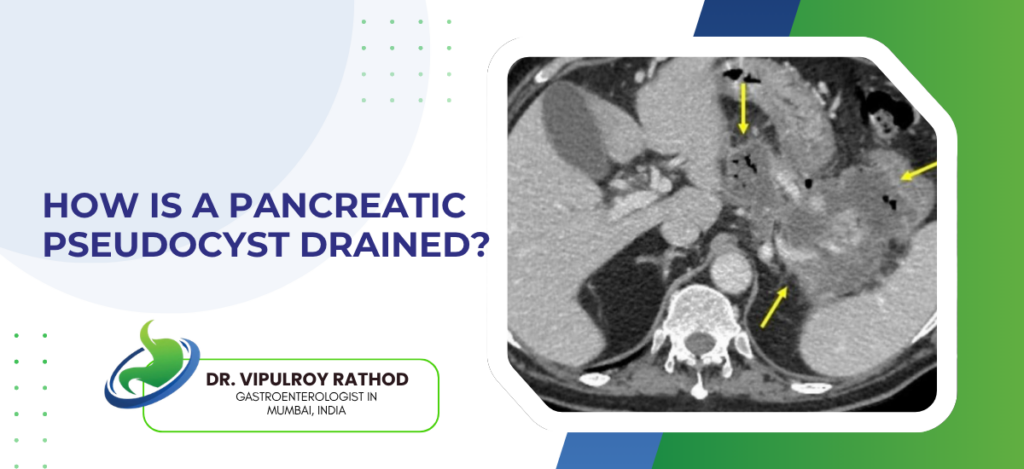
Most pancreatic pseudocysts that need draining are now handled endoscopically through EUS-guided procedures rather than open surgery, which means the gastroenterologist goes in through the mouth with a scope, creates a direct connection between the pseudocyst and the gut, and lets the fluid drain internally without a single cut on the body.
According to Dr. Vipulroy Rathod, an experienced Gastroenterologist in Mumbai, “The shift from surgical drainage to endoscopic drainage for pseudocysts has been one of the biggest changes in pancreatic disease management over the last decade, and patients who would’ve been looking at weeks of surgical recovery are now going home within a day or two with the collection already draining on its own.”
How does the drainage actually happen through a scope?
Patient goes under, scope goes in through the mouth, and by the time they come round the pseudocyst has a drain running into the stomach or duodenum and the fluid is already making its own way out, which honestly is why most patients look at you like you’re making it up when you tell them the whole thing took under an hour.
- EUS-guided access: Endoscopist uses a scope with an ultrasound tip to spot the pseudocyst through the stomach or duodenal wall, finds the safest entry point well away from any blood vessels, and punches through into the collection under live ultrasound rather than guessing from the outside and hoping for the best.
- Stent placement: Once the hole is made between gut and pseudocyst, metal or plastic stents get dropped through to keep it propped open, and fluid starts draining internally into the digestive tract straight away which is the body’s natural drainage route anyway so it gets processed and absorbed like everything else.
- LAMS stents: Newer dumbbell-shaped metal stents have been a proper game changer because they lock themselves in on both sides creating a wide stable channel that lets thick gunk and necrotic debris drain out, and the endoscopist can even pass the scope through the stent directly into the collection and physically clean it out if the situation calls for it.
- Nasocystic drain: In some cases a thin tube goes through the nose into the pseudocyst for continuous external drainage running alongside the internal stents, usually pulled out when dealing with infected collections where getting fluid out faster matters and relying on internal drainage alone to do the job isn’t cutting it.
If you want the full picture of how endoscopic procedures handle pancreatic and biliary conditions, our pancreatitis treatment page covers the complete range of options depending on what’s going on with the pancreas.
When is scoping the right call versus other approaches?
Not every pseudocyst gets scoped and honestly knowing which ones to go after versus which ones to leave alone is where the real clinical chops live, because “collection exists therefore drain it” is not how this works no matter how tempting it is to just go in and sort it.
- Endoscopic wins most of the time: When the pseudocyst is mature with a decent wall and sitting close enough to the stomach or duodenal wall for safe access the scope is almost always the way to go, which covers the majority of cases and is basically why endoscopic drainage has taken over as the default first move for most gastroenterologists handling these now.
- Percutaneous when the scope can’t get there: Collection tucked away somewhere the endoscope can’t reach or patient too crook for sedation means a radiologist puts an external drain through the skin under CT guidance, though this route comes with a higher fistula risk and generally takes longer to fully wrap up compared to going in through the gut wall.
- Surgery for the gnarly ones: Pseudocysts with disconnected duct syndrome where a chunk of the pancreas has been cut off from the main duct, collections with active arterial bleeding inside them, or cases that have struck out on both endoscopic and percutaneous attempts sometimes need a surgeon to go in and deal with the structural mess directly.
- Timing trumps method: Going after a pseudocyst before it’s mature enough is asking for trouble because an immature wall can fall apart mid-procedure, so most gastroenterologists sit on their hands for at least 4 to 6 weeks after the acute episode to make sure the collection has walled off solidly enough to actually hold a stent without the whole thing leaking everywhere.
Understanding how pseudocysts fit alongside other pancreatic findings matters because the management couldn’t be more different for each, and our pancreatitis vs pancreatic cancer blog covers how different pancreatic problems get evaluated and why nailing that initial distinction early shapes every decision that comes after.
Why choose Dr. Vipulroy Rathod for pseudocyst drainage?
Dr. Vipulroy Rathod has over 30 years in advanced gastroenterology with more than 80,000 endoscopic procedures behind him, and EUS-guided pseudocyst drainage is one of those procedures where operator volume shows up directly in results because threading a stent into a fluid pocket sitting millimetres from splenic and portal vessels under live ultrasound isn’t something that goes well when the person doing it is still working out their technique.
What patients get here is someone who’s done enough of these to know not just how to drain a pseudocyst but when to drain it and more importantly when to back off and leave it alone, because the itch to go after every collection that pops up on a scan is strong but a fat chunk of them sort themselves out without anyone touching them and the real skill is reading which ones won’t and acting on those specifically.
Book your consultation today with one of India’s most experienced specialists for pancreatic pseudocyst drainage.
Frequently Asked Questions
Most get drained endoscopically now using EUS guidance to punch a hole between the pseudocyst and the stomach or duodenum, with stents dropped through to let fluid drain internally which means no cuts on the body and most patients heading home within a day or two.
You’re sedated the whole time so you feel absolutely nothing while it’s happening, and afterwards it’s usually just mild belly discomfort that settles within a day as the collection starts emptying out on its own.
Bulk of the fluid usually shifts within the first few days after stents go in, though full resolution can take several weeks depending on how big the collection was and whether any thick debris inside needs additional clearing out.
Absolutely can especially if whatever caused it like chronic pancreatitis or a wrecked pancreatic duct hasn’t been properly dealt with, which is why going after the root problem at the same time as draining the collection is what actually stops the whole thing from cycling back around.
Reference links-
- EUS-Guided Pseudocyst Drainage Guidelines — American Society for Gastrointestinal Endoscopy
- Pancreatic Fluid Collection Management — National Library of Medicine
