

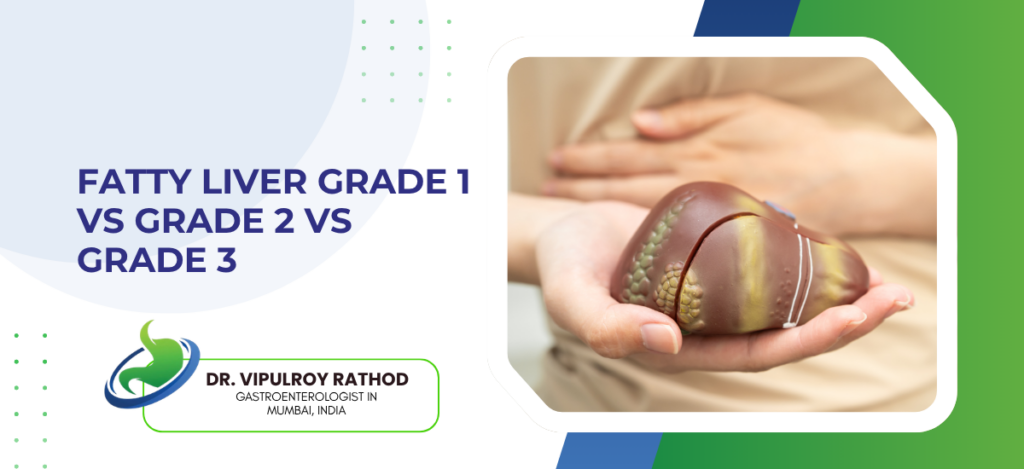
Fatty liver gets graded based on how much fat has accumulated inside the liver on ultrasound, with grade 1 being mild, grade 2 moderate, and grade 3 severe. The grade alone doesn’t tell the full story because what actually matters is whether that fat is causing inflammation and fibrosis underneath, but knowing your grade gives both you and your gastroenterologist a starting point for deciding how aggressively things need to be monitored and managed.
According to Dr. Vipulroy Rathod, an experienced Gastroenterologist in Mumbai, “Patients fixate on the grade number they see on their ultrasound report but the grade itself doesn’t tell you whether the liver is in trouble or just carrying extra fat quietly, which is why the workup can’t stop at an ultrasound and needs to include fibrosis assessment before anyone can say what that grade actually means for the patient sitting in front of them.”
What do the three grades actually mean?
Ultrasound grades fatty liver by comparing how bright the liver looks next to the kidney, and the brighter it glows the more fat is stuffed inside, but here’s what most patients don’t realise, two radiologists staring at the exact same scan can sometimes argue over whether it’s a 1 or a 2 because this grading system is genuinely rough around the edges.
- Grade 1 — Mild: Bit of extra fat making the liver slightly brighter than the kidney, usually zero symptoms, blood tests often look perfectly normal, and the honest truth is that most patients at this level will never have a single liver problem from it as long as the metabolic stuff underneath doesn’t keep sliding in the wrong direction.
- Grade 2 — Moderate: Noticeably more fat with the liver glowing brighter and deeper structures starting to look fuzzy on the scan, enzymes may or may not be acting up, and this is typically the grade where a good gastroenterologist starts leaning in harder because the hop from grade 2 into NASH and early fibrosis territory is where things can go from boring to clinically worrying.
- Grade 3 — Severe: Liver is so loaded with fat it lights up like a torch and the blood vessels and diaphragm behind it basically vanish on ultrasound, often paired with elevated enzymes and complaints like dragging fatigue and upper belly heaviness, and patients here need fibroscan or equivalent because the odds of NASH and scarring already being underway are high enough that just assuming it’s fine would be reckless.
- Grade ≠ damage: A grade 1 patient with active NASH quietly eating away at the liver is in worse shape than a grade 3 patient whose liver is packed with fat but completely unbothered by inflammation, which is exactly why the number on the ultrasound report can’t be the end of the conversation and fibrosis testing needs to fill in what the grade leaves out.
If ultrasound has flagged fatty liver at any grade, our fatty liver treatment page covers what management looks like from lifestyle overhaul through proper monitoring depending on what the full picture actually shows once you look past just the grade.
Does the grade decide how serious things are?
Not really and this is where most patients and honestly a fair chunk of doctors get it backwards, because the grade tells you how much fat is parked in the liver but says absolutely zero about whether that fat has started wrecking the place or is just sitting there minding its own business.
- Fibrosis trumps grade: Fibroscan or a FIB-4 blood score paints a far more honest picture of liver health than the ultrasound grade ever could, because fibrosis is what actually marches toward cirrhosis and failure while fat on its own mostly just hangs around looking bad on a scan without necessarily breaking anything.
- NASH is the actual problem: Whether NASH is present or absent is what sorts fatty liver patients into the “relax and keep an eye on it” bucket versus the “get on top of this now before it gets away from you” bucket, and NASH can show up at any grade which is why a grade 1 patient with inflammation is a bigger concern than a grade 3 patient whose liver is fatty but perfectly chill.
- Lifestyle works at every level: Dropping 7 to 10 percent of body weight pulls fat out of the liver whether you started at grade 1 or grade 3, and patients who genuinely commit to sustained eating changes and regular movement often watch their grade fall on the next ultrasound within 6 to 12 months which is one of the few spots in medicine where effort shows up directly on a scan.
- When to actually worry: Grade 3 paired with enzymes climbing, fibroscan scores creeping up, or symptoms like bone-deep tiredness and belly discomfort that won’t shift needs proper aggressive follow-up because the chances of NASH and fibrosis already being baked in at that point are too high to just shrug off and wait for next year’s annual scan.
Seeing where fatty liver can end up if it goes unchecked puts the grading in perspective, and our can fatty liver cause liver failure blog covers the full progression from harmless fat through NASH to cirrhosis and spells out exactly where things cross from manageable into genuinely dangerous territory.
Why choose Dr. Vipulroy Rathod for fatty liver grading and evaluation?
Dr. Vipulroy Rathod has over 30 years in gastroenterology and hepatology with more than 80,000 procedures behind him, and fatty liver evaluation goes way beyond just reading a grade off an ultrasound because the real work is correlating that number with fibroscan results, blood markers, metabolic risk factors, and clinical history to build a picture that actually tells you whether this liver needs someone paying close attention or whether it’s genuinely fine to leave it alone for now.
What patients notice here is that nobody walks out clutching just a grade number and a generic “clean up your diet” pamphlet, because the evaluation digs deep enough to answer whether the fat is harmless baggage or whether NASH and fibrosis are already quietly setting up shop underneath, and that one distinction is what decides whether someone needs hands-on management starting today or can safely take the slow lifestyle route and check back in down the track.
Book your consultation today with one of India’s most experienced specialists for fatty liver evaluation.
Frequently Asked Questions
Mild fat in the liver that shows up as slight brightness on ultrasound, usually causes no symptoms or blood test changes, and in most cases never becomes a problem as long as the metabolic risk factors behind it don’t keep drifting in the wrong direction.
Grade 3 just means lots of fat but the actual danger depends on whether NASH and fibrosis are happening alongside it, which is why grade 3 patients need fibroscan and fibrosis blood markers rather than assuming the high grade alone makes it serious.
Absolutely, sustained weight loss of 7 to 10 percent with proper diet and regular exercise visibly reduces liver fat on follow-up ultrasound within months, and plenty of patients drop a full grade or even two with consistent effort that doesn’t fizzle out after the first few weeks.
Grade doesn’t predict cirrhosis because it only measures fat not inflammation or scarring, and a grade 1 patient with active NASH can race toward cirrhosis faster than a grade 3 patient with zero inflammation which is why fibrosis assessment matters infinitely more than the number on the ultrasound report.
Reference links-
- NAFLD Grading and Assessment — American Association for the Study of Liver Diseases
- Fatty Liver Ultrasound Classification — National Library of Medicine
