
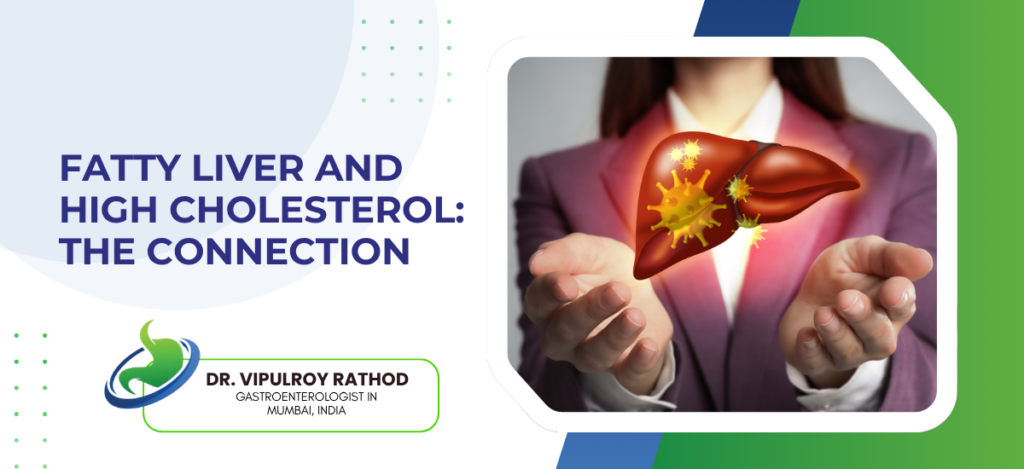
Fatty liver and high cholesterol are tightly linked because both stem from the same metabolic dysfunction where the body mishandles fats. High cholesterol, especially elevated triglycerides and low HDL, both feeds fat into the liver and gets worse when the liver is already fatty, creating a loop where each condition keeps making the other harder to control.
According to Dr. Vipulroy Rathod, an experienced Gastroenterologist in Mumbai, “Patients often get told their cholesterol is high and their liver is fatty as if those are two separate problems being managed by two different doctors, but they’re really two faces of the same metabolic mess and treating one without addressing the other is why so many patients stay stuck despite being on medication for years.”
How do fatty liver and high cholesterol feed into each other?
They don’t just coexist by coincidence, they actively make each other worse through a metabolic loop that keeps spinning until someone addresses the root cause driving both of them at the same time rather than chasing each one separately.
- Liver makes cholesterol: The liver is where most of the body’s cholesterol gets manufactured and when the organ is packed with fat that production goes into overdrive, pumping out more VLDL particles loaded with triglycerides which is why fatty liver patients often have lipid panels that look terrible even when their diet isn’t particularly bad.
- High triglycerides dump fat into the liver: Elevated triglycerides in the blood mean more fat circulating that the liver has to process and store, and when the incoming load exceeds what the organ can export or burn off the excess just keeps piling up inside the liver cells making the fatty liver progressively worse over time.
- Insulin resistance ties them together: The metabolic thread connecting both conditions is usually insulin resistance where cells stop responding to insulin properly, the liver ramps up both fat storage and cholesterol production simultaneously, and the patient ends up with a fatty liver and a bad lipid profile that are really just two symptoms of the same underlying problem.
- Inflammation multiplies the damage: Once fatty liver tips into NASH the chronic inflammation doesn’t stay confined to the liver because it spills inflammatory markers into the bloodstream that accelerate atherosclerosis in the arteries, which means a patient with NASH and high cholesterol is carrying cardiovascular risk that’s significantly higher than either condition would pose on its own.
If your liver has been flagged as fatty alongside abnormal cholesterol levels, our fatty liver treatment page covers how the metabolic drivers behind both conditions get addressed through a management approach that tackles the liver and the lipids together rather than treating them as separate problems.
What should patients with both conditions know about treatment?
Managing one while ignoring the other is how patients end up on statins for years with a liver that keeps getting fattier in the background, which is why the treatment approach needs to hit the shared root cause rather than putting band-aids on each symptom individually.
- Weight loss fixes both: Losing 7 to 10 percent of body weight reduces liver fat and improves cholesterol numbers simultaneously because it addresses the insulin resistance and metabolic dysfunction sitting underneath both conditions, and this is one of the rare situations in medicine where a single intervention genuinely tackles two problems at once.
- Statins are safe with fatty liver: A lot of patients and some doctors worry about using statins when the liver is fatty because of the liver enzyme association, but the evidence is clear that statins are not only safe in NAFLD but actually beneficial because they reduce cardiovascular risk which is the leading cause of death in fatty liver patients, not the liver disease itself.
- Diet quality over calorie counting: Swapping processed carbs and sugary foods for whole grains, vegetables, lean protein, and healthy fats like olive oil and nuts improves both the liver and the lipid panel because it changes the metabolic inputs the body is working with rather than just restricting how much goes in.
- Exercise independently helps both: Regular physical activity reduces liver fat and improves cholesterol even without weight loss on the scale, because exercise changes how the body processes lipids and responds to insulin at a cellular level which is why a patient who starts moving regularly often sees their numbers improve before the scale budges even a kilo.
Understanding how fatty liver connects to other metabolic conditions puts the cholesterol link in broader perspective, and our fatty liver and diabetes blog covers another major metabolic overlap where the same insulin resistance driving fatty liver and bad cholesterol also pushes blood sugar in the wrong direction.
Why choose Dr. Vipulroy Rathod for fatty liver and metabolic evaluation?
Dr. Vipulroy Rathod has over 30 years in gastroenterology and hepatology with more than 80,000 procedures behind him, and metabolic liver disease is a core part of how this clinic operates because fatty liver patients almost always walk in carrying cholesterol problems, blood sugar issues, or both, and managing the liver without addressing the full metabolic picture is exactly how patients end up being treated by three different specialists who aren’t talking to each other.
What patients notice here is that the liver, the lipids, and the metabolic risk factors all get evaluated as one connected problem rather than being split into separate departments with separate plans, because the gastroenterologist who understands how fatty liver drives cholesterol and how cholesterol drives liver damage is the one best positioned to build a plan that actually moves all the numbers in the right direction at the same time.
Book your consultation today with one of India’s most experienced specialists for fatty liver and metabolic liver evaluation.
Frequently Asked Questions
Fatty liver ramps up cholesterol production in the liver itself which worsens lipid levels, while high cholesterol simultaneously dumps more fat into the liver making the fatty liver worse, so they feed each other in a loop.
Yes, statins are both safe and recommended for fatty liver patients with high cholesterol because cardiovascular disease is actually the leading cause of death in NAFLD, not the liver disease itself.
Sustained weight loss of 7 to 10 percent addresses the insulin resistance underneath both conditions simultaneously, reducing liver fat and improving lipid numbers through the same metabolic correction.
Both ideally, but a gastroenterologist with hepatology expertise can assess the liver damage, identify whether NASH is present, and coordinate the metabolic management that addresses the shared root cause driving both the liver and cholesterol problems.
Reference links-
- NAFLD and Cardiovascular Risk — American Association for the Study of Liver Diseases
- Dyslipidemia in Non-Alcoholic Fatty Liver Disease — National Library of Medicine
