 Skip to content
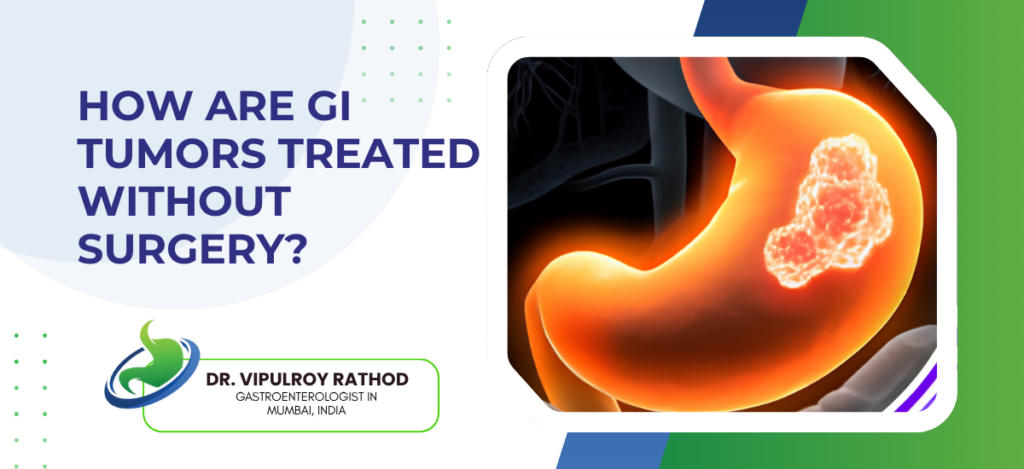
GI tumours can be treated without surgery in selected cases using endoscopic resection, ablation, stenting, and targeted systemic therapy. The approach depends on tumour location, depth of invasion, histology, and whether the intent is curative or palliative. Early-stage cancers and many benign tumours are now managed entirely through the scope, with surgery reserved for cases where endoscopic options aren’t suitable.
According to Dr. Vipulroy Rathod, Gastroenterologist in Mumbai, “Surgery used to be the answer for most GI tumours. Now it’s the answer for some. The shift came from accurate staging with EUS, advanced endoscopic resection techniques like ESD, and the ability to ablate or stent lesions through the scope. Patients who would have had gastrectomy or oesophagectomy a decade ago now go home the next day after endoscopic treatment. The trick is choosing the right patient for the right approach.”
What endoscopic options exist for GI tumours?
The toolkit has expanded considerably. Different techniques serve different tumour types and locations.
- Endoscopic mucosal resection: Removes small superficial polyps and early cancers by injecting under the lesion and snaring it. Standard for small colorectal polyps and selected early gastric lesions.
- Submucosal dissection takes larger lesions out in one intact piece using an electrosurgical knife. Used for early gastric cancer, Barrett’s neoplasia, and large colorectal lesions where en bloc removal is essential.
- Radiofrequency ablation: Burns away dysplastic mucosa in Barrett’s oesophagus and similar conditions. Preserves the underlying organ while eliminating the abnormal tissue layer.
- Stenting handles malignant obstruction. Self-expanding metal stents reopen blocked oesophagus, stomach outlet, bile duct, or colon in advanced cancer, allowing symptom relief and continued chemotherapy.
The choice depends on staging accuracy. Advanced endoscopy services that combine EUS, NBI, and the full range of resection techniques in one centre avoid the gap where patients are sent to surgery because the original assessment didn’t identify them as candidates for endoscopic treatment.
When is endoscopic treatment definitive and when is it palliative?
The distinction between curative and palliative intent shapes the entire treatment plan.
- Curative endoscopic resection: Early-stage cancers confined to the mucosa or superficial submucosa, without lymph node involvement, can be cured by complete removal alone. Long-term outcomes match surgery in selected cases.
- Ablation works for dysplastic lesions in Barrett’s oesophagus and other premalignant conditions. RFA and cryotherapy eliminate abnormal tissue and prevent progression to invasive cancer.
- Palliative stenting and debulking: Advanced cancers blocking the GI lumen are relieved by stent placement, allowing the patient to eat, swallow, or pass stool while systemic treatment continues.
- Bridging treatment in patients waiting for surgery or chemotherapy. Endoscopic stenting or biliary drainage stabilises the patient until definitive treatment can be delivered, particularly useful in obstructive jaundice from pancreatic head cancer.
Patient selection separates good outcomes from poor ones. Read more on cancer staging for one of the central techniques in modern endoscopic cancer management.
Why choose Dr. Vipulroy Rathod for endoscopic tumour treatment?
Dr. Vipulroy Rathod has been performing advanced endoscopic resection and ablation at Fortis Hospital Mulund since the late 1990s. EMR. ESD. RFA. Stenting. EUS-guided procedures. Volumes that few centres in India can match under one roof, alongside multidisciplinary input from surgery and oncology that complex cases require.
The judgment in tumour management isn’t always about the procedure. It’s about staging accurately, choosing the right approach, and recognising the cases where surgery genuinely is the better option rather than pushing endoscopic treatment that won’t deliver cure. Getting that call right depends on volume, experience, and honest assessment.
Book your consultation today with one of India’s most experienced specialists for endoscopic tumor assessment and treatment.
Frequently Asked Questions
No, only early-stage cancers confined to the mucosa or superficial submucosa, without lymph node involvement, are candidates for curative endoscopic resection. Advanced cancers need surgery or systemic treatment.
EUS for depth assessment, CT or MRI for distant spread, biopsy for histology, and sometimes PET scan in selected cases. The staging determines whether endoscopic treatment is appropriate.
Most patients go home within twenty-four to forty-eight hours and return to normal activity within a week.
Yes, surveillance endoscopy at three to six months initially, then yearly, is standard after endoscopic resection of cancer to detect any recurrence or new lesions at the earliest stage.
Disclaimer:
This blog is intended for informational and educational purposes only and should not be considered medical advice.
Please consult a qualified gastroenterologist or healthcare professional for personalized diagnosis and treatment.
