 Skip to content
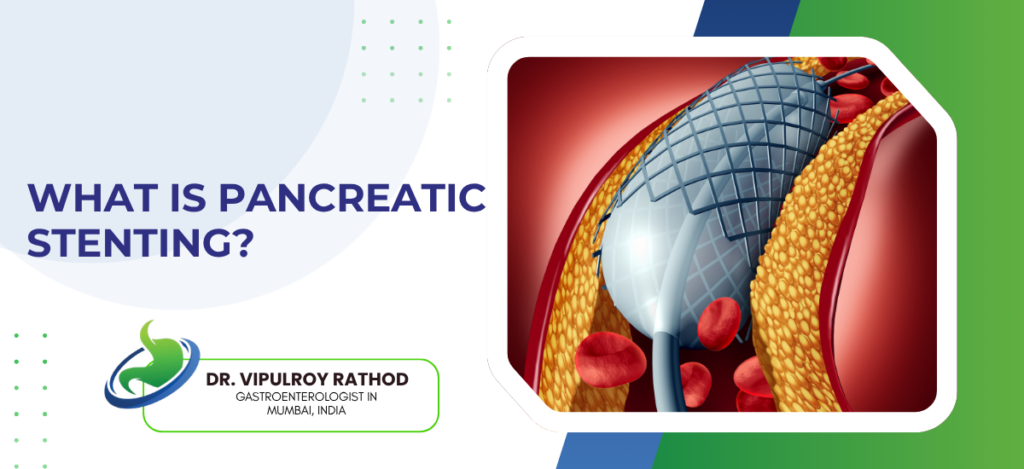
Pancreatic stenting is an endoscopic procedure used to keep the pancreatic duct open when something is blocking or narrowing it. A thin tube, usually plastic, sometimes metal, is placed inside the duct through ERCP. It restores drainage, brings down the pressure that builds up behind the obstruction, and usually relieves the pain that comes with it. Patients with chronic pancreatitis, duct stones, and certain pseudocysts are the typical candidates. So is a smaller group of pancreatic cancer patients whose duct gets compressed by the tumour.
According to Dr. Vipulroy Rathod, Gastroenterologist in Mumbai, “A stent isn’t a cure. It opens a blocked duct so the pancreas can drain. Whatever’s causing the blockage, a stone, a stricture, a tumour, still needs its own treatment. The stent buys time. It also buys relief from pain, which for these patients is often the biggest thing.”
When pancreatic stenting is used?
The decision to stent depends on what’s blocking the duct and how much trouble that blockage is causing. Pain, recurrent pancreatitis, jaundice from the same lesion, all of these factor in.
- Chronic pancreatitis with ductal strictures. Scar tissue inside the duct narrows it down, juices back up behind the narrowing, pressure rises, and pain follows. A stent across the stricture opens the channel again, and pain often eases significantly within days of placement.
- Pancreatic duct stones cause similar problems and stenting usually pairs with stone extraction. Stones come out first, sometimes with mechanical lithotripsy or extracorporeal shockwave lithotripsy assisting, then a stent holds the cleared duct open while inflammation settles.
- Pseudocyst drainage when communication exists. Some pseudocysts connect directly to the pancreatic duct, and a transpapillary stent lets the cyst drain naturally through the duodenum instead of needing percutaneous tubes hanging out of the abdomen.
- Prevention of post-ERCP pancreatitis. Brief.
- High-risk ERCP cases get a temporary 5 French stent placed at the end of the procedure. It drops the risk of post-procedure pancreatitis substantially in patients with normal anatomy undergoing therapeutic work, and the stent usually migrates out on its own within two to three weeks.
A stent rarely solves the underlying problem on its own. Pancreatic stone extraction often happens during the same session, with stenting and stone removal addressing different ends of the same obstruction, the stone is the cause and the stent is what keeps things moving while everything heals.
How the procedure works and what to expect?
Pancreatic stenting is done under sedation through ERCP, similar setup to a routine bile duct procedure but technically harder. The pancreatic duct is smaller, narrower, less forgiving of guidewire manipulation.
The scope used is a side-viewing duodenoscope, passed through the mouth into the second part of the duodenum. The opening of the pancreatic duct, the major papilla, is found and cannulated with a guidewire under fluoroscopy. If the stricture is tight, it gets dilated with a balloon. Then the stent slides over the wire into position. Total time, usually thirty to sixty minutes.
If you’re the patient, here’s what that translates to. You’ll be asleep for the procedure. You’ll wake up sore in the throat. The next forty-eight hours can include mild abdominal pain, which is normal, but severe pain or fever is not and means going back to hospital.
- Most stents stay in for three to six months before exchange. Plastic stents are standard. Metal ones are used cautiously in pancreatic disease because they cause more long-term problems than they solve.
- Complications. Post-ERCP pancreatitis in about three to five percent. Stent migration, blockage, occasional duct injury. None of these are common, but they happen, and the people doing this work a lot see fewer of them than people doing it occasionally.
- Missed exchanges cause the worst problems. A stent left in too long blocks, blocked stents drive infection and pancreatitis, and a patient who was doing well for months can end up back in hospital because of a stent that should have been replaced.
So the schedule matters as much as the placement itself. Read more on pancreatic stones and treatment for how stenting sits alongside stone extraction and shockwave lithotripsy in chronic pancreatitis management.
Why choose Dr. Vipulroy Rathod for pancreatic stenting?
Dr. Vipulroy Rathod has been performing pancreatic ERCP and stenting at Fortis Hospital Mulund for over three decades. Chronic pancreatitis strictures, duct stones, pseudocysts, the technically difficult cases where standard ERCP has failed and EUS-guided rendezvous becomes the way in. Pancreatic ERCP is harder than biliary, and the complication rate in inexperienced hands reflects that.
A surprising number of patients arrive with stents placed years ago and then forgotten. The duct around them is now inflamed, the stent itself blocked, the patient has been having pain nobody connected back to the original procedure. A pancreatic stent works only if the person who placed it tracks it and removes it on time.
Book your consultation today with one of India’s most experienced specialists for pancreatic stenting and chronic pancreatitis management.
Frequently Asked Questions
Usually three to six months before exchange.
The procedure itself isn’t, because it’s done under sedation. After. That’s where some patients have mild abdominal discomfort for a day or two, which is normal. What isn’t normal is severe pain or fever, those mean a complication and need urgent assessment. Most patients describe the actual recovery as easier than they expected, mostly throat soreness and a bit of tiredness, gone within twenty-four to forty-eight hours.
Yes, some are designed to. Short-duration prevention stents are made specifically to migrate out within two to three weeks without needing endoscopic removal. Other stents stay where placed until removed deliberately.
A blocked stent causes the same problem the stent was placed to solve, plus infection on top. Pain returns, sometimes worse than before. Fever can develop. Pancreatitis episodes start happening. Urgent repeat ERCP to exchange the stent fixes it.
Reference links-
- ERCP and Pancreatic Stenting Guidelines, American Society for Gastrointestinal Endoscopy — https://www.asge.org/home/practice-support/guidelines
- Chronic Pancreatitis Management Standards, World Gastroenterology Organisation — https://www.worldgastroenterology.org/guidelines
