 Skip to content
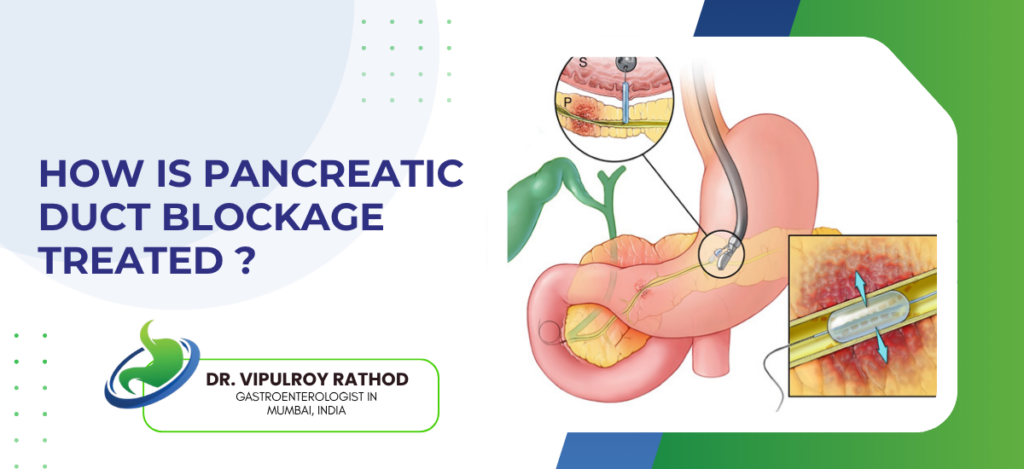
Pancreatic duct blockage is treated endoscopically in most cases through ERCP, where stones are removed, strictures are stented, and enzyme drainage gets restored without any surgical incision. The duct gets blocked by stones from chronic pancreatitis, by scar tissue narrowing the lumen over years, by tumours compressing from outside, or by mucus plugs in certain cystic conditions. What caused the blockage determines how it gets treated, and getting that wrong means the patient either gets too much intervention or not enough.
According to Dr. Vipulroy Rathod, Gastroenterologist in Mumbai, “Pancreatic duct blockage is treatable endoscopically in most patients we see, but the key is knowing what’s causing the obstruction before choosing the intervention, because a stone needs extraction, a stricture needs stenting, and a tumour needs tissue diagnosis before anyone does anything else.”
What Causes Pancreatic Duct Blockage?
Four main causes. Each one needs a different approach. Treating them all the same way is where things go wrong.
- Stones: Chronic pancreatitis produces calcifications inside the pancreatic duct over time. Small ones pass on their own sometimes. Larger ones lodge in the duct, block enzyme flow completely, build up ductal pressure, and the patient gets pain that worsens after meals because the enzymes have nowhere to go. We see this pattern constantly in patients with a long drinking history who’ve had multiple pancreatitis episodes nobody connected together.
- Strictures: Scar tissue from repeated inflammation narrows the duct progressively until flow drops below what the gut needs for digestion. Different from stones because the narrowing is in the wall itself not sitting inside the lumen, and stenting works differently here than stone extraction does, different tool, different technique, different follow-up plan.
- Tumours: Pancreatic head mass or ampullary tumour compressing the duct from outside. Duct blockage is sometimes the first presentation of pancreatic cancer, patient comes in with pain and enzyme deficiency and imaging finds a mass nobody was looking for. This is why every duct blockage needs proper characterisation before treatment starts, not after.
- Mucus: Intraductal papillary mucinous neoplasms produce thick mucus that blocks the duct intermittently. Symptoms come and go. Imaging shows duct dilation with mucus filling. IPMN itself carries malignant potential, so the blockage is actually the less dangerous problem compared to what the IPMN might become if nobody monitors it.
Multiple causes can coexist in the same patient. Specialists in pancreatitis treatment identify what’s driving the obstruction before deciding on the intervention approach.
How Is Pancreatic Duct Blockage Treated Without Surgery?
Endoscopic treatment handles most cases. Surgery is backup, not first line, and patients who end up in surgery often got there because endoscopic options weren’t tried properly first.
- ERCP Stone Extraction: Scope passes through the mouth into the duodenum, accesses the pancreatic duct, stones pulled out with baskets or balloons, larger stones broken up with lithotripsy first then extracted. Patient goes home next day in most cases. Pain relief is often immediate because the pressure that was building behind the stone releases the moment the stone comes out.
- Stenting: Plastic or metal stent placed across a stricture to hold the duct open and restore flow. Single stent for short strictures. Multiple simultaneous stents exchanged every few months for 12 to 18 months for longer fibrotic strictures. Takes time and follow-up but avoids surgery in a meaningful proportion of patients who would otherwise have been referred for a Puestow or Frey.
- Lithotripsy: Stones too large for direct ERCP extraction broken up with extracorporeal shock wave lithotripsy first, fragments then removed endoscopically. Not every centre has this. Patients get referred to surgery for large stones that could have been fragmented and extracted endoscopically if the right equipment and expertise were available.
- EUS-Guided Drainage: When the duct is completely obstructed and ERCP access isn’t possible, EUS-guided rendezvous or direct transmural drainage creates a new pathway for enzyme flow. Advanced technique. Not widely available. But for patients who’ve failed ERCP and are facing surgery as the only option, this is sometimes the intervention that keeps them out of the operating theatre.
Most duct blockages are manageable endoscopically when the right expertise and equipment exist in the same room. Read more on duct strictures to understand how stricture-specific treatment differs from stone extraction and why the distinction matters for outcomes.
Why Choose Dr. Vipulroy Rathod for Pancreatic Duct Blockage Treatment?
Dr. Vipulroy Rathod has spent over 30 years treating pancreatic duct blockages through ERCP, lithotripsy, stenting, and EUS-guided drainage at Fortis Hospital Mulund. Stones extracted that other centres referred to surgery. Strictures stented and resolved over months of structured follow-up. Tumour-related blockages diagnosed through EUS biopsy before treatment went in the wrong direction. 35 countries worth of physicians trained in this endoscopic approach.
Patients arrive with pancreatic pain that hasn’t responded to anything because nobody addressed the mechanical obstruction causing it. Most leave with the duct reopened and the cause identified in the same workup.
Book your consultation today with one of India’s most experienced specialists for pancreatic duct blockage diagnosis and endoscopic treatment.
Frequently Asked Questions
Pancreatic duct stones from chronic pancreatitis are the most common cause of duct blockage in adults.
Yes, ERCP with stone extraction or stent placement treats most pancreatic duct blockages endoscopically without surgical intervention.
Pain relief is often immediate after stone extraction and within days after stent placement as ductal pressure normalises.
Untreated blockage leads to chronic pain, pancreatic enzyme deficiency, malnutrition, and increased risk of pancreatic damage and complications.
Reference links-
- Pancreatic Duct Obstruction Management — American Society for Gastrointestinal Endoscopy
- ERCP in Pancreatic Disease — World Gastroenterology Organisation
