 Skip to content
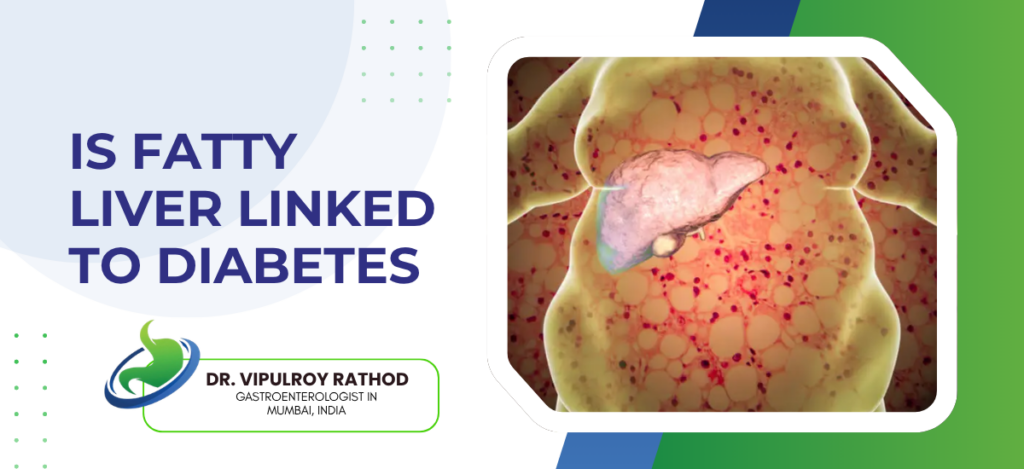
Yes, fatty liver and diabetes are directly linked through insulin resistance, the same metabolic dysfunction that drives fat accumulation in the liver also impairs glucose regulation, both conditions develop together and each makes the other worse, Type 2 diabetics have significantly higher rates of MASLD than the general population and people with fatty liver carry elevated diabetes risk even when their blood sugar currently looks fine on a report.
According to Dr. Vipulroy Rathod, Gastroenterologist in Mumbai, “Fatty liver and diabetes are two expressions of the same underlying metabolic problem and treating one without addressing the other is why so many patients cycle through management plans that control numbers on paper without actually changing what’s happening in the liver.”
How Are Fatty Liver and Diabetes Connected?
Same root cause, two organs expressing it differently, and most patients don’t find out the connection exists until both have been managed separately for years without either improving properly.
- Resistance: Liver cells stop responding to insulin, accumulate fat, the pancreas compensates by producing more which drives further fat storage, and that loop runs quietly until blood sugar can no longer be maintained regardless of how much insulin gets produced.
- Bidirectional: Fatty liver drives insulin resistance which drives diabetes, but existing diabetes accelerates liver fat accumulation and fibrosis progression simultaneously, so both get worse together unless both get properly managed together and most treatment plans don’t do that.
- MASH: Type 2 diabetics with fatty liver are far more likely to progress to metabolic steatohepatitis than fatty liver patients without diabetes, and most of them have no idea their diabetes is actively changing their liver disease trajectory while they’re managing blood sugar as a standalone problem.
- Fat: Central obesity deposits fat around internal organs including the liver, drives the inflammatory signals that damage liver tissue and impair beta cell function at the same time, and dietary advice given without structured metabolic intervention rarely reverses this in practice regardless of how motivated the patient is at the start.
Managing fatty liver without looking at the metabolic picture underneath is treating a symptom not a disease. Specialist in fatty liver assesses the full metabolic context rather than just noting what the scan shows and stopping there.
How Should Both Conditions Be Managed Together?
Treating this as one metabolic problem rather than two separate referrals is what changes what management actually achieves for these patients.
- Weight: 5 to 10% body weight reduction improves liver fat, reduces fibrosis risk, and improves insulin sensitivity at the same time, and this is why structured weight loss works where generic lifestyle advice given at the end of a consultation consistently doesn’t.
- Medication: GLP-1 receptor agonists improve blood sugar, drive meaningful weight loss, and reduce liver fat through one mechanism rather than requiring separate drug regimens for two conditions that most patients can’t realistically maintain long term anyway.
- Monitoring: Both conditions together means fibrosis staging through fibroscan or FIB-4 blood markers, not just a liver ultrasound that tells the patient fat is present without telling them where on the fibrosis spectrum they actually sit or how urgently that matters.
- Alcohol: Even moderate drinking in a patient with both fatty liver and diabetes accelerates liver damage significantly beyond what either condition does alone, and most patients underestimate this because nobody tells them directly that their threshold is much lower than someone without their metabolic profile.
Both conditions share the same root and addressing that root changes the trajectory of both. Read more on MASLD to understand the full picture of metabolic fatty liver disease and what proper management actually looks like.
Why Choose Dr. Vipulroy Rathod
Dr. Vipulroy Rathod has been managing fatty liver and its metabolic connections including diabetes and insulin resistance for over 30 years at Fortis Hospital Mulund, staging liver disease through fibroscan and blood markers rather than stopping at the ultrasound, building management plans that address the metabolic drivers rather than monitoring the liver while the underlying problem continues, trained physicians from 35 countries in this. Patients arrive having been told separately that they have fatty liver and that they have diabetes and most leave understanding for the first time that these are two expressions of one problem with one plan that actually addresses both.
Start Your Treatment Journey Today
Frequently Asked Questions
Yes, insulin resistance in Type 2 diabetes drives fat accumulation in the liver and significantly increases MASLD risk and progression rate.
Yes, reducing liver fat through weight loss and medication improves insulin sensitivity and often leads to better blood sugar control in Type 2 diabetics.
Around 50 to 75% of Type 2 diabetic patients have some degree of fatty liver making it one of the most common complications of diabetes.
Yes, diabetic patients with fatty liver should have fibrosis staging through fibroscan or FIB-4 blood markers not just ultrasound given their higher progression risk.
Reference links-
- Fatty Liver and Diabetes Connection — American Association for the Study of Liver Diseases
- MASLD and Metabolic Disease Guidelines — European Association for the Study of the Liver
