

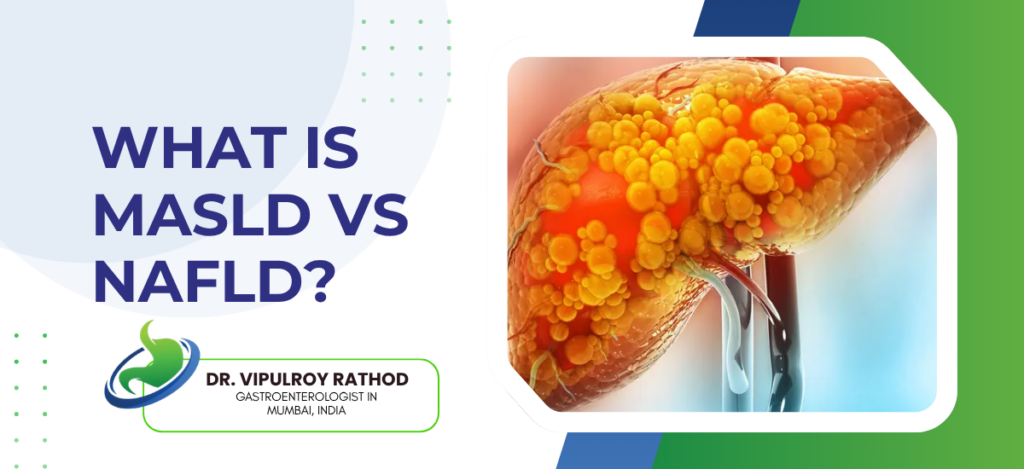
MASLD (Metabolic Dysfunction-Associated Steatotic Liver Disease) is the new term replacing NAFLD (Nonalcoholic Fatty Liver Disease), shifting focus from “not alcohol” to identifying the actual metabolic causes driving the disease. Both refer to fatty liver but MASLD requires at least one of five cardiometabolic risk factors including diabetes, high blood pressure, obesity, raised triglycerides, or low HDL, making diagnosis more precise and less stigmatising for patients.
According to Dr. Vipulroy Rathod, an experienced, Gastroenterologist in Mumbai, “The name change from NAFLD to MASLD matters clinically because it shifts focus to the actual metabolic causes driving liver fat accumulation rather than just excluding alcohol, and that changes how patients understand and engage with their own risk.”
What Is the Difference Between MASLD and NAFLD?
Same liver condition, different name, and the reason behind the change matters more than most patients realise when they see both terms on different reports.
- Name: NAFLD defined the condition by absence of alcohol while MASLD defines it by presence of metabolic dysfunction, shifting clinical focus toward obesity, diabetes, and insulin resistance as primary targets rather than just watching the liver without addressing what’s actually driving the fat.
- Criteria: MASLD requires at least one cardiometabolic risk factor alongside liver steatosis while NAFLD simply required no significant alcohol without specifying what was actually causing the problem, which meant patients got a label without a proper metabolic workup attached to it.
- Spectrum: Both terms cover the same disease range from simple steatosis through steatohepatitis to fibrosis, cirrhosis, and liver cancer, and a scan showing fat is not the end of the investigation because where on that spectrum the patient sits determines everything that happens next.
- Adoption: MASLD is accepted terminology across major liver societies including EASL and AASLD from 2023, so patients seeing NAFLD on older reports and MASLD on newer ones are looking at the same condition under different naming conventions that changed mid-decade.
Understanding what the name on your report actually means changes what investigation comes next. Specialist in fatty liver stages the disease properly rather than stopping at the scan finding and sending patients home without a clear picture of where they actually sit.
Why Does MASLD Diagnosis Actually Matter?
Finding fat on a liver scan is where the investigation starts, not where it ends, and most patients have no idea what comes next.
- Stage: Simple steatosis carries low progression risk while MASH carries real fibrosis risk, and without staging through fibroscan, blood markers, or biopsy the patient has no idea which end of the spectrum they’re on or how urgently they need to act on it.
- Metabolic: MASLD means the underlying drivers, obesity, diabetes, insulin resistance, dyslipidaemia, need active management not just a lifestyle leaflet handed over at the end of a consultation nobody follows up on because nobody made it a clinical priority.
- Progression: Around 20% of MASLD patients with steatohepatitis progress to significant fibrosis over time and a proportion reach cirrhosis and liver cancer risk, so the patient told they have fatty liver and sent home without staging is in a completely different position from the patient properly managed from the start.
- Cardiovascular: MASLD carries significant cardiovascular risk independent of liver disease because the metabolic syndrome driving liver fat accumulation is the same syndrome driving heart disease, and patients with MASLD die of cardiovascular events more often than liver complications in early stage disease.
Fatty liver report without staging and metabolic assessment is an incomplete workup that leaves the patient guessing. Read more on diagnosis to understand how the right investigation changes what gets found and what gets done about it.
Why Choose Dr. Vipulroy Rathod
Dr. Vipulroy Rathod has been managing fatty liver disease and its metabolic drivers for over 30 years at Fortis Hospital Mulund, staging MASLD properly through fibroscan, blood markers, and EUS where indicated rather than stopping at the ultrasound finding and sending patients home with generic advice that changes nothing in practice, trained physicians from 35 countries in this approach. Patients arrive with a fatty liver report and no idea where they sit on the disease spectrum and most leave with a clear stage, a metabolic plan, and an actual follow-up schedule rather than a vague suggestion to eat better.
Start Your Treatment Journey Today
Frequently Asked Questions
Yes, MASLD replaced NAFLD in 2023 as the globally accepted term for fatty liver disease driven by metabolic dysfunction.
Yes, MASLD can progress through steatohepatitis and fibrosis to cirrhosis and eventually hepatocellular carcinoma in a proportion of patients.
Obesity, Type 2 diabetes, insulin resistance, high triglycerides, and high blood pressure are the primary metabolic drivers of MASLD.
Ultrasound or fibroscan identifies liver fat and fibrosis, blood markers like FIB-4 help stage disease, and biopsy confirms grade in uncertain cases.
Reference links-
- MASLD Nomenclature and Definition — European Association for the Study of the Liver
- Fatty Liver Disease Guidelines — American Association for the Study of Liver Diseases
