

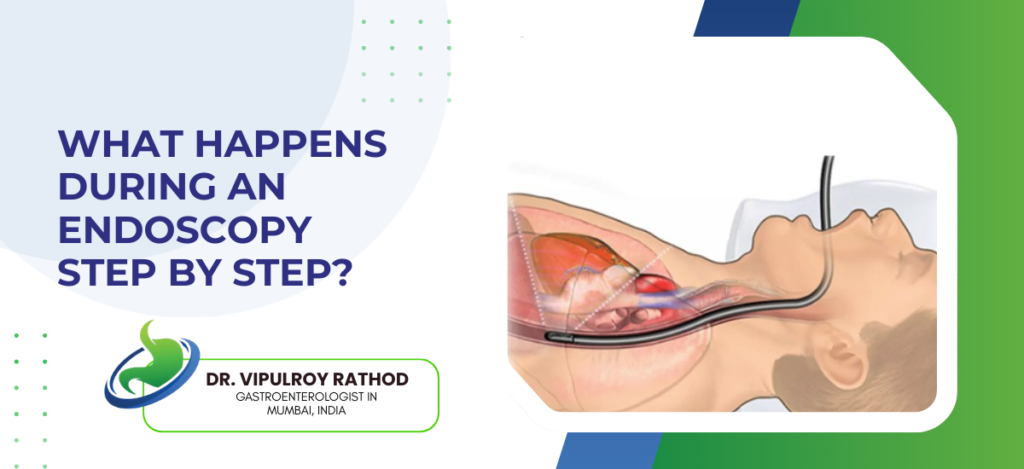
An endoscopy is a direct visual examination of the digestive tract using a thin, flexible tube with a camera at the tip. No surgical cuts. No general anesthesia in most cases. The procedure gives the doctor a real-time view of what’s happening inside your esophagus, stomach, or intestine that no external scan can match.
According to Dr. VipulRoy,
“Endoscopy is often the only way to see what’s actually happening inside. Scans tell you something is there. Endoscopy tells you exactly what it is and sometimes lets us treat it in the same sitting.” He explains that Endoscopic Treatment for GERD and Complex GI Conditions allows diagnosis and treatment to happen in a single procedure, which is what makes it so valuable for patients who have been dealing with unresolved GI symptoms for a long time.
What Happens Before and During the Procedure?
Most patients are more anxious about endoscopy than they need to be. The procedure itself is well-tolerated. Here is exactly what happens from the moment you arrive.
- Fasting beforehand is mandatory — You will be asked to avoid food and water for at least 6 to 8 hours before the procedure. This clears the stomach so the doctor gets a clean, unobstructed view of the lining. Anything left inside reduces visibility and increases risk.
- A sedative or throat spray is given — For upper endoscopy, a local anesthetic throat spray numbs the gag reflex. Light sedation is offered in most cases. You remain conscious but relaxed. Most patients remember very little of the procedure itself.
- The endoscope is passed through the mouth — A thin flexible tube roughly the diameter of a finger is guided down the throat. It passes through the esophagus into the stomach and then the first part of the small intestine if needed. As a gastroenterology specialist in Mumbai, Dr. Rathod performs this with precision to minimize discomfort at every stage.
- The doctor examines the lining in real time — High-definition images from the camera at the tip appear on a monitor. The doctor looks for inflammation, ulcers, polyps, bleeding sources, or abnormal tissue. Everything is documented as the scope moves through.
- Biopsies or treatment happen during the same procedure — If something needs to be sampled or removed, it happens right then. Polyps get taken out. Tissue samples get collected. Bleeding gets controlled. No second procedure needed in most cases.
What Happens After the Procedure?
Recovery from endoscopy is quick. But knowing what to expect helps.
- You rest for 20 to 30 minutes after the procedure — The sedation wears off during this time. Nursing staff monitor your vitals. You will feel drowsy but the discomfort is minimal for most patients.
- Mild bloating or throat soreness is normal — Air is used during the procedure to open up the GI tract for better visibility. Some of that passes out afterward causing temporary bloating. Throat soreness from the scope usually resolves within 24 hours.
- Results are discussed before you leave — In most cases the doctor reviews findings with you the same day. If biopsies were taken, those results typically come back within a few days. You can explore our previous blog What Is POEM Procedure and Who Performs It in Mumbai? to understand how endoscopic procedures extend beyond diagnosis into advanced therapeutic interventions.
- You cannot drive yourself home — Sedation affects coordination and judgment for several hours after. Arrange for someone to take you home. Most patients return to normal activity the following day without any restrictions.
Why Choose Dr. Vipulroy Rathod for Endoscopy in Mumbai?
Endoscopy is only as good as the person performing it. Lesions get missed. Biopsies get taken from the wrong site. Therapeutic interventions get skipped when they shouldn’t be. Dr. Vipulroy Rathod has performed over 30 years of diagnostic and therapeutic endoscopy at Fortis Hospital Mulund, including complex cases referred after incomplete procedures elsewhere. If you need an endoscopy done properly the first time, that experience is what makes the difference.
Start Your Treatment Journey Today
Frequently Asked Questions
Most patients feel no pain during the procedure. Throat discomfort and mild bloating afterward are common but resolve within 24 hours.
The procedure itself takes 15 to 30 minutes. With preparation and recovery time, plan for around 2 hours at the facility.
Yes. Endoscopy can identify suspicious tissue and collect biopsies for lab analysis. Early detection through endoscopy significantly improves treatment outcomes.
Yes. Sedation affects your ability to drive and make decisions for several hours after the procedure. Arrange for an adult to take you home.
Reference links-
- Endoscopy Overview and Indications — American Society for Gastrointestinal Endoscopy
- Upper GI Endoscopy Guidelines — American College of Gastroenterology
- Endoscopy Procedure and Safety — National Library of Medicine
- Digestive Endoscopy Standards — World Gastroenterology Organisation
