

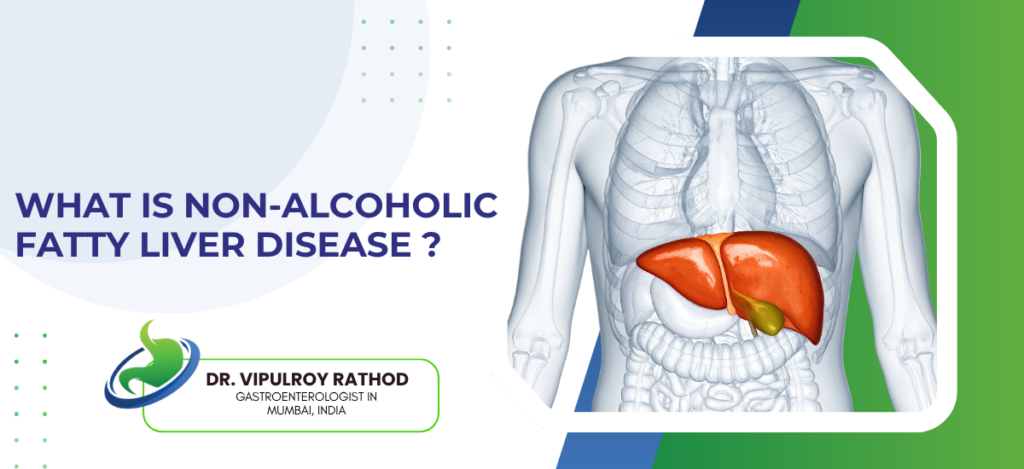
Non-alcoholic fatty liver disease or NAFLD is excess fat buildup in the liver that happens in people who drink little to no alcohol. It ranges from simple fatty liver that causes no harm to a more aggressive form called NASH where the fat triggers inflammation and scarring that can eventually progress to cirrhosis or liver failure if nobody catches it and steps in early enough.
According to Dr. Vipulroy Rathod, an experienced Gastroenterologist in Mumbai, “NAFLD is now the most common liver disease we see in clinic and the scary part is that most patients have no idea their liver is fatty until blood tests or an ultrasound done for something completely unrelated picks it up, which is why screening matters so much in anyone carrying metabolic risk factors.”
What causes it and who ends up with it?
Liver starts hoarding fat when the body’s metabolic wiring goes haywire, and the patients sitting in clinic with this diagnosis almost always share a cluster of risk factors that point to the same underlying mess even though each person’s route to getting here looks a bit different.
- Belly fat: Biggest culprit by a long stretch because visceral fat packed around the midsection screws with how the liver handles lipids, and patients carrying their weight around the gut rather than the hips tend to be at higher risk even when their BMI on paper doesn’t look all that bad.
- Insulin resistance and diabetes: Liver and insulin are in a tight relationship and when cells start ignoring insulin the liver compensates by cranking up fat production and storage, which is why a massive chunk of type 2 diabetics are walking around with fatty livers they’ve never been told about.
- Dodgy lipid levels: Triglycerides through the roof and HDL in the gutter is basically a recipe for the liver to start stockpiling fat, and patients with full-blown metabolic syndrome where all the numbers are off at once are pretty much the textbook profile for NAFLD showing up.
- Not moving enough: Sitting around all day independently drives fatty liver even in people whose weight looks perfectly normal, and the combo of a desk job, processed food on repeat, and zero exercise creates exactly the metabolic environment the liver needs the least.
If a scan has already flagged your liver as fatty, our fatty liver treatment page covers what management looks like from lifestyle overhaul through medical monitoring depending on how far down the track things have already gone.
How does it get found and what can be done about it?
Most patients stumble into this diagnosis completely sideways which is both lucky and unlucky, lucky because it usually means things are still early but unlucky because finding it was never the plan which means nobody was actually watching for it.
- Ultrasound and fibroscan: Regular abdominal ultrasound catches fatty liver easily and cheaply which is usually what tips everyone off, and fibroscan goes a step further by measuring how stiff the liver has become which tells the gastroenterologist whether the fat has started doing real damage or whether things are still sitting at the boring harmless end.
- Blood work: Elevated ALT and AST on a routine blood panel is often the thing that kicks off the whole investigation, and scoring tools like FIB-4 help estimate fibrosis risk from simple blood numbers alone which saves most patients from needing a liver biopsy they’d rather not have.
- Weight loss runs the show: No pill specifically treats NAFLD yet which means losing weight is genuinely the medicine here, and dropping just 7 to 10 percent of body weight through proper diet and regular exercise has been shown to pull fat out of the liver, calm inflammation down, and even wind back early fibrosis in patients who actually commit to it and don’t bounce back three months later.
- Watching for trouble: Main job after diagnosis is making sure boring fatty liver doesn’t quietly morph into NASH and then into fibrosis and then into cirrhosis, which means checking in with fibroscan or blood markers periodically to catch any worsening before things cross a line that can’t be uncrossed.
NAFLD ties in closely with broader metabolic health problems that ripple through the entire digestive system, and our fatty liver and diabetes blog gets into how these two conditions feed off each other and why tackling one while ignoring the other usually means neither actually gets properly sorted.
Why choose Dr. Vipulroy Rathod for pseudocyst drainage?
Dr. Vipulroy Rathod has over 30 years in gastroenterology and hepatology with more than 80,000 endoscopic procedures behind him, and fatty liver assessment is baked into how this clinic handles metabolic liver disease because spotting the gap between harmless fat sitting there doing nothing and early NASH that’s creeping toward fibrosis takes someone who’s tracked enough of these patients over enough years to read the trajectory before the numbers make it obvious.
What patients get here is proper risk stratification from day one rather than the classic “your liver is fatty, lose some weight, see you in a year” handoff that most fatty liver patients get at their first appointment and that’s exactly how people end up drifting for years without anyone actually monitoring whether the liver is holding steady or quietly getting worse behind the scenes.
.
 Call Now: +91 9820091763
Book your consultation today with one of India’s most experienced specialists for fatty liver evaluation.
Frequently Asked Questions
NAFLD is excess fat in the liver in people who don’t drink heavily, ranging from harmless simple fatty liver to the nastier NASH form where inflammation and scarring can march toward cirrhosis if the metabolic drivers behind it aren’t dealt with.
Absolutely, early NAFLD and even early NASH can be turned around through sustained weight loss of 7 to 10 percent with proper diet and exercise, though once fibrosis gets established the window for reversal starts closing and management becomes about holding the line rather than rolling things back.
Not even close, the vast majority of people with simple fatty liver never progress anywhere near cirrhosis, but the ones who tip into NASH with active inflammation and fibrosis carry a genuinely higher risk of getting there if the metabolic problems fuelling it don’t get addressed.
NAFLD comes from metabolic factors like obesity, diabetes, and insulin resistance in people who barely drink, while alcoholic liver disease is driven by heavy booze intake, though ironically both can end up causing the exact same kind of end-stage liver damage.
Reference links-
- NAFLD Diagnosis and Management Guidelines — American Association for the Study of Liver Diseases
- Non-Alcoholic Fatty Liver Disease Evidence — National Library of Medicine
