 Skip to content
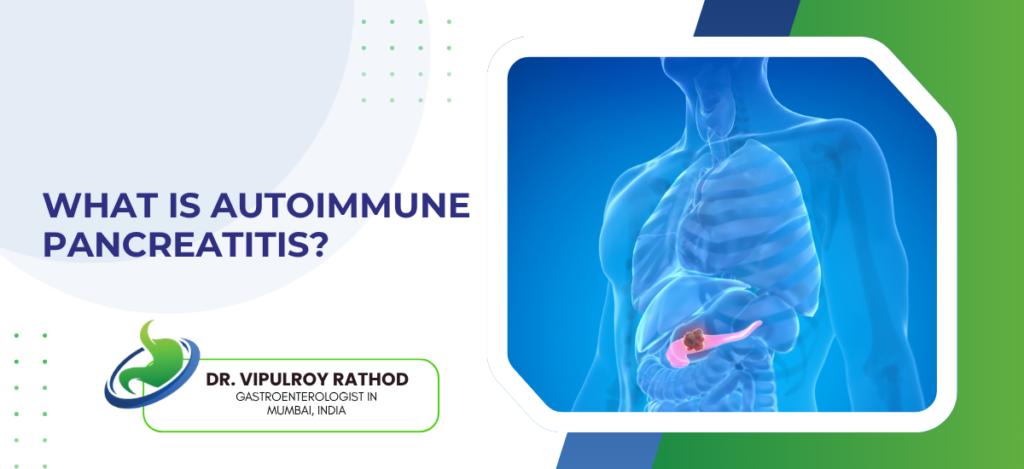
Autoimmune pancreatitis is a rare form of chronic pancreatic inflammation where the body’s own immune system attacks the pancreas instead of leaving it alone. It often mimics pancreatic cancer on imaging which is what makes it particularly tricky, and unlike alcohol or gallstone pancreatitis it responds dramatically well to steroid treatment which is both the main therapy and one of the ways doctors confirm the diagnosis.
According to Dr. Vipulroy Rathod, an experienced Gastroenterologist in Mumbai, “The biggest danger with autoimmune pancreatitis isn’t the disease itself but getting it confused with pancreatic cancer, because patients have had major surgeries to remove what everyone assumed was a tumour only for the pathology to come back showing autoimmune inflammation that would’ve responded to a course of steroids instead.”
What causes it and how does it show up?
Immune system basically picks a fight with the pancreas for reasons nobody’s fully cracked yet, and the way it shows up can look so much like cancer on scans that even radiologists who’ve been reading pancreatic imaging for decades sometimes can’t call it without extra workup.
- Type 1: More common globally with elevated IgG4 in the blood, and it likes to drag other organs into the mess including bile ducts, salivary glands, and kidneys, so patients sometimes rock up with jaundice, dry mouth, or kidney trouble before anyone even thinks to peek at the pancreas.
- Type 2: Rarer, IgG4 stays normal, usually keeps its business to the pancreas without pulling other organs in, and has a strong IBD connection which means any Crohn’s or UC patient developing weird pancreatic symptoms needs this somewhere on the list even if it’s not what most doctors would jump to first.
- Cancer mimic: Pancreas can puff up diffusely or grow a focal lump that looks dead identical to a tumour on CT, and this is where things get genuinely dangerous because bolting to the operating room without doing the full workup means patients lose chunks of their pancreas for a problem that pills would’ve sorted out.
- Symptoms: Painless jaundice tops the list which is also exactly what pancreatic head cancer looks like, throw in vague upper belly grumbling, weight falling off, and diabetes popping up out of nowhere and you’ve got a clinical picture that overlaps so heavily with malignancy that telling them apart without biopsy or IgG4 testing is basically a coin toss.
If you’ve been told you have a pancreatic mass or unexplained inflammation, our pancreatitis treatment page covers the full diagnostic and treatment pathway including how autoimmune causes get identified and managed.
How does it get diagnosed and treated?
Getting this call right is literally everything because the treatment is steroids not a surgeon, and whipping out part of someone’s pancreas when all it needed was immunosuppression is one of the most gut-wrenching avoidable mistakes in GI medicine when the proper homework gets done beforehand.
- IgG4 levels: Blood test showing jacked-up IgG4 is one of the biggest clues for Type 1, and while it’s not bulletproof on its own because some cancers can nudge IgG4 up slightly too, a properly elevated level in the right clinical setting points hard toward autoimmune disease and away from something that needs cutting out.
- EUS with biopsy: Endoscopic ultrasound gets the scope right up against the pancreas to see the mass in proper detail and grab tissue through fine needle biopsy, and this is often what finally breaks the tie between autoimmune pancreatitis and cancer when blood work and imaging alone can’t settle it.
- Steroid trial: When the clinical picture screams autoimmune loud enough a short steroid course gets started and if the pancreas responds dramatically with the mass melting away and jaundice clearing within weeks that response basically is the diagnosis, though this needs careful handling because trialling steroids on an actual cancer is not something anyone wants on their conscience.
- Long-term management: Most patients respond brilliantly to the first course but a decent number relapse the moment steroids get wound down, and these patients end up on maintenance immunosuppression with azathioprine to keep the whole thing from firing back up and doing more cumulative damage to a gland that’s already taken enough hits.
Telling autoimmune pancreatitis apart from malignancy is one of the most critical calls in pancreatic medicine, and our pancreatic cancer vs pancreatic cyst blog covers how different pancreatic findings get evaluated and why the diagnostic approach matters enormously when the wrong call can mean unnecessary surgery or missed cancer.
Why choose Dr. Vipulroy Rathod for autoimmune pancreatitis evaluation?
Dr. Vipulroy Rathod has over 30 years in advanced gastroenterology with more than 80,000 endoscopic procedures behind him including heavy EUS work evaluating pancreatic masses, and autoimmune pancreatitis specifically is one of those diagnoses where the gastroenterologist’s gut feeling looking at a mass on EUS and thinking “hang on this might not be cancer” before anyone grabs a scalpel is literally the difference between a patient popping steroids at home versus waking up in recovery missing half their pancreas for absolutely no reason.
What patients get here is a workup that refuses to sprint toward the worst-case scenario, because when a pancreatic mass turns up the pull to treat it as cancer immediately is totally understandable but experienced operators know autoimmune pancreatitis lives in that differential and blowing past the steps that would catch it is exactly how patients end up with life-altering surgery they never actually needed.
Book your consultation today with one of India’s most experienced specialists for pancreatic evaluation.
Frequently Asked Questions
Rare condition where the immune system goes after the pancreas causing inflammation that looks scarily like cancer on imaging but actually responds to steroids rather than needing anyone to operate.
Regular pancreatitis comes from gallstones or booze while autoimmune pancreatitis is the immune system’s doing, it responds to steroids instead of just supportive care, and it can convincingly impersonate cancer on scans which the other types basically never do.
Most patients do really well on steroids and hit remission, though a decent number flare back up once the dose comes down and end up needing long-term immunosuppression to stop the disease from coming back and chewing through more of the gland.
Both show up with painless jaundice, a mass on imaging, and weight loss, and the pancreatic swelling in autoimmune disease can look identical to a tumour on CT which is exactly why EUS biopsy and IgG4 testing need to happen before anyone makes surgical decisions they can’t take back.
Reference links-
- Autoimmune Pancreatitis Diagnosis and Management — American College of Gastroenterology
- IgG4-Related Pancreatic Disease — National Library of Medicine
