 Skip to content
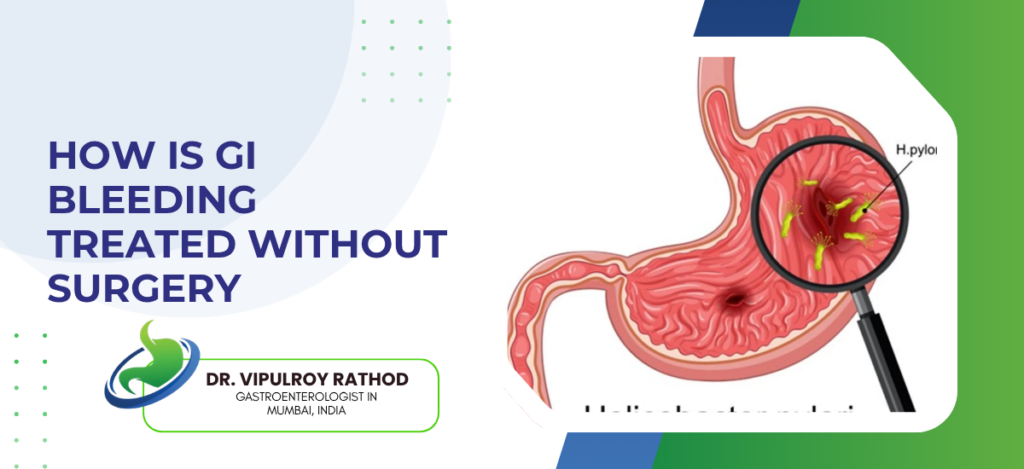
GI bleeding is often treated without surgery using endoscopic techniques such as clipping, heat cauterisation, or medication injection to seal bleeding vessels. For upper GI bleeds, intravenous proton pump inhibitors (PPIs) help reduce acid and support healing, while lower GI bleeding may be managed with medication or interventional radiology when needed.
According to Dr. Vipulroy Rathod, Gastroenterologist in Mumbai, “GI bleeding is one of those emergencies where endoscopic techniques have advanced to the point where most cases that would have needed surgery fifteen years ago are now handled entirely inside the scope without a single incision.”
What Endoscopic Treatments Stop GI Bleeding Without Surgery?
Different sources need different tools and matching the right one to the right bleeding point matters more than just getting a scope in fast.
- Injection Therapy: Adrenaline injected into and around a bleeding ulcer causes vasoconstriction and tamponade that stops active bleeding quickly, almost always combined with a second modality like clipping because injection alone carries higher rebleeding rates than combination treatment.
- Endoscopic Clipping: Mechanical clips applied directly to a bleeding vessel close it permanently without heat or chemical, particularly effective for Dieulafoy lesions, visible vessels in ulcer bases, and Mallory-Weiss tears where precision matters more than thermal spread.
- Argon Plasma Coagulation: Non-contact thermal coagulation that treats vascular lesions, radiation-induced proctitis, gastric antral vascular ectasia, and diffuse mucosal bleeding across wide surface areas where clipping or injection simply isn’t practical.
- Band Ligation for Varices: Oesophageal varices from portal hypertension causing catastrophic upper GI bleeding controlled through band ligation in the acute setting and then through elective sessions to obliterate remaining varices and prevent recurrence.
Right tool for right source changes outcomes and patients at experienced endoscopy centres reach surgery far less often than those where endoscopic technique is limited. Proper endoscopy handles the full range of GI bleeding without defaulting to surgical referral when the endoscopic solution exists.
When Is Surgery Actually Needed for GI Bleeding?
Minority of cases, but real situations exist and knowing when to stop attempting endoscopy matters as much as knowing how to do it.
- Haemodynamic Instability Despite Endoscopy: Massive ongoing haemorrhage where the patient can’t be stabilised despite resuscitation and endoscopic attempts, surgical exploration becomes the right call and delaying it for another scope session costs time the patient doesn’t have.
- Endoscopic Access Failure: Bleeding from jejunum or proximal ileum beyond scope reach, anatomical distortion from previous surgery preventing access to the bleeding point, these need surgical intervention because the scope physically cannot get where it needs to be.
- Aortoenteric Fistula: Bleeding from a vascular graft eroding into bowel is a surgical emergency regardless of endoscopic findings because the underlying vascular problem cannot be addressed through the scope no matter how experienced the endoscopist is.
- Recurrent Bleeding Despite Two Attempts: Two failed endoscopic attempts at the same bleeding source means the vessel is too large or lesion too complex for endoscopic haemostasis and surgical ligation gives more durable control than a third session with the same likely outcome.
Most GI bleeding gets sorted endoscopically when the right person is doing it and the right tools are available. Read more on procedures to understand what’s possible without surgery across the full range of GI conditions.
Why Choose Dr. Vipulroy Rathod
Dr. Vipulroy Rathod has been managing acute and chronic GI bleeding through injection therapy, clipping, argon plasma coagulation, and variceal band ligation for over 30 years at Fortis Hospital Mulund, with a case volume and endoscopic range that means bleeding sources other endoscopists send to surgery get controlled here without an incision in most cases, trained physicians from 35 countries in exactly this. Patients arrive in active bleed referred for surgical opinion and most leave having had the bleeding controlled endoscopically the same day without ever meeting a surgeon.
Start Your Treatment Journey Today
Frequently Asked Questions
Peptic ulcer bleeding is the most common cause of upper GI bleeding and is successfully managed endoscopically in the majority of cases.
Active GI bleeding is typically controlled within the same endoscopic session, usually within 30 to 60 minutes of the procedure starting.
Yes, repeated endoscopic band ligation sessions obliterate oesophageal varices and prevent recurrent bleeding without surgical intervention in most patients.
If endoscopy fails after two attempts, interventional radiology embolisation or surgical exploration becomes the next step depending on source and patient stability.
Reference links-
- Endoscopic Management of GI Bleeding — American Society for Gastrointestinal Endoscopy
- GI Bleeding Treatment Guidelines — World Gastroenterology Organisation
