 Skip to content
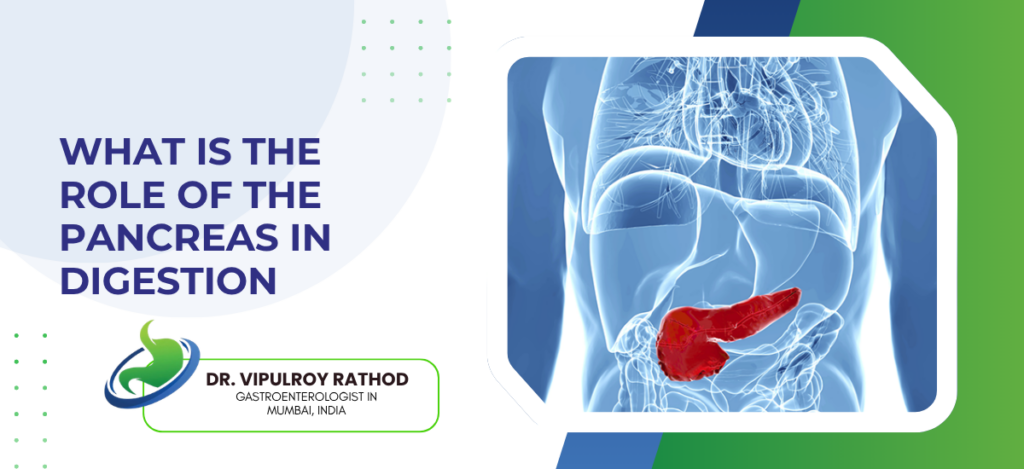
The pancreas acts as a vital digestive organ by producing enzyme-rich alkaline pancreatic juice. This juice breaks down proteins, fats, and carbohydrates in the small intestine while neutralising stomach acid to facilitate proper digestion. It plays a central role in nutrient absorption by ensuring food is converted into components the body can actually use.
According to Dr. Vipulroy, an experienced Gastroenterology specialist in Mumbai,
“The pancreas is one of the most overlooked organs until something goes seriously wrong with it.”
What the Pancreas Actually Does in Digestion
Most people have no idea what the pancreas does until a scan finds something. It runs two completely separate systems at once, quietly, without any obvious sign it exists.
- Enzymes: Amylase, lipase, and protease get pushed into the small intestine with every meal, and when that supply drops even partially food passes through largely unprocessed, which is why weight loss and malabsorption show up quickly once enzyme output falls.
- Bicarbonate: The stomach sends highly acidic content into the duodenum after every meal, and bicarbonate fluid from the pancreas neutralises it before digestion can proceed, because without that step the enzymes that follow cannot function properly at all.
- Hormones: Insulin and glucagon both originate from specialised cells inside the pancreas, one lowering blood sugar after meals and the other raising it between them, which is why pancreatic damage so often leads to diabetes alongside digestive problems.
- Coordination: The pancreatic duct and common bile duct share one entry point into the small intestine, so a single stone or tumour at that junction disrupts both digestion and bile flow simultaneously, which is why head of pancreas problems so often cause jaundice and digestive failure together.
Pancreatic problems rarely stay invisible for long once they start moving. Getting a proper evaluation while things are still manageable keeps far more options open than waiting until symptoms become obvious.
What Happens When the Pancreas Fails
The pancreas tends to fail quietly before it fails loudly. Symptoms come slowly, get attributed to other causes, and by the time something serious surfaces the condition has usually been building for months.
- Pancreatitis: When the pancreas inflames, digestive enzymes activate inside the gland before reaching the intestine, causing severe upper abdominal pain that frequently ends in emergency admission, and in serious cases tissue breakdown follows requiring intensive management.
- Scarring: Each episode of pancreatitis deposits scar tissue, and over years that accumulation reduces enzyme output while destroying insulin-producing cells, pushing patients toward malabsorption and diabetes developing together rather than as separate problems.
- Cancer: Tumours in the head of the pancreas press on both ducts simultaneously, so jaundice and digestive failure tend to appear together as the first obvious signs, by which point the disease has usually been progressing for quite a while already.
- Cysts: Fluid collections after pancreatitis can grow large enough to compress the stomach and duodenum, leaving patients feeling full after barely eating and losing weight without any clear explanation, a presentation that often takes months to properly investigate.
And these don’t stay isolated. One problem pulls others in faster than patients expect. Read how pancreatic cancer gets missed before options start narrowing.
Why Choose Dr. Vipulroy Rathod for Pancreatic Conditions in Mumbai
Pancreatic disease sits at the intersection of gastroenterology, endoscopy, and hepatobiliary medicine, and managing it well requires a specialist with comprehensive expertise across this spectrum. Dr. Vipulroy Rathod, one of the leading Gastroenterologists in Mumbai, has been managing pancreatic conditions at Fortis Hospital Mulund for over 30 years, with more than 20,000 EUS procedures to his credit, and patients who arrive with months of vague symptoms despite normal CT reports regularly find that EUS in experienced hands detects what everything else missed.
Start Your Treatment Journey Today
Frequently Asked Questions
It makes the enzymes that break food down and the hormones that control blood sugar, so when it stops working both systems fail together rather than one at a time.
Yes, but enzyme supplements with every meal and insulin injections for life become permanent requirements because nothing else takes over those two functions after removal.
Upper abdominal pain going into the back, weight dropping without reason, greasy stools, and new-onset diabetes after 50 are the ones that should push someone toward proper investigation rather than a wait and see approach.
If more than one of those symptoms is present and nothing else explains them, a specialist opinion is overdue rather than optional, because the earlier these things get properly evaluated the more treatment options remain available.
Reference links-
- Pancreatic Function and Digestive Physiology — American Society for Gastrointestinal Endoscopy
- Pancreatic Disease Diagnosis and Management — American College of Gastroenterology
