What Is ERCP and When Is It Recommended?
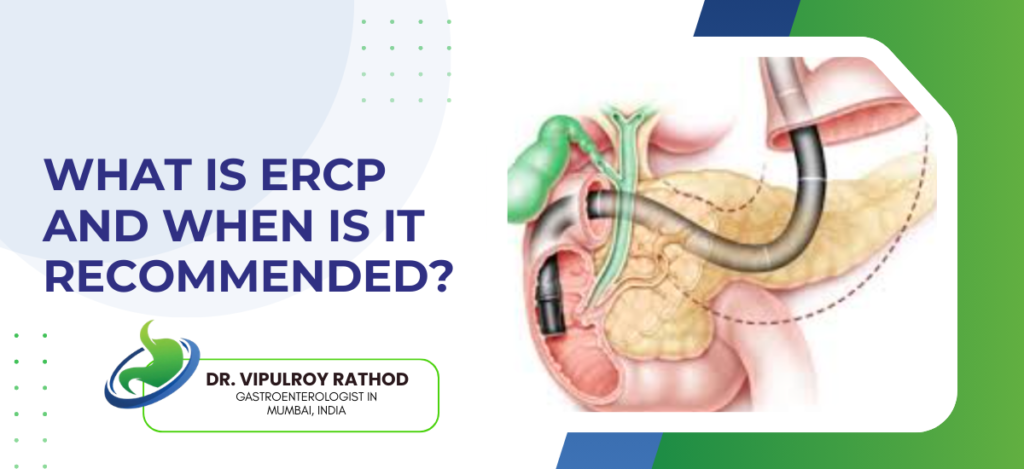
ERCP Endoscopic Retrograde Cholangiopancreatography is a procedure that accesses the bile duct and pancreatic duct from inside the digestive tract. No surgical incision. No separate imaging appointment. Diagnosis and treatment happen in the same sitting. According to Dr. VipulRoy, “Pancreatic and Biliary Stone Extraction through ERCP lets us remove stones, place stents, and take tissue samples all in one procedure. Patients who would have needed surgery ten years ago walk out the next morning.” What ERCP Actually Does Inside Your Body? Here’s what most people picture. Something complicated and scary. But ERCP is minimally invasive. Done under sedation. It diagnoses blockages in real time Bile duct stones, strictures, and tumour-related blockages get visualised directly during ERCP. No guessing from external scans. The doctor sees exactly what’s causing your problem and where. Stones get removed in the same session Biliary stones blocking your bile duct get extracted right there during the procedure. No surgery needed. Most patients feel dramatically better within 24 hours of stone removal. Stents get placed for strictures and blockages Narrowed bile ducts from cancer, inflammation, or surgical scarring get opened with stent placement during ERCP. That restores bile flow and relieves jaundice faster than any alternative approach. Tissue sampling happens during the procedure Suspicious areas inside bile ducts get biopsied through ERCP. Confirmed tissue diagnosis without surgery means faster treatment decisions and significantly less risk for you overall. Sphincterotomy treats sphincter dysfunction When the sphincter controlling bile duct drainage is too tight ERCP cuts it precisely. That simple intervention resolves recurrent biliary pain that medication alone never adequately fixes.Know more about how EUS works for your specific situation at Gastroenterology specialist in mumbai. When Does Your Doctor Actually Recommend ERCP? Not every bile duct problem needs ERCP. But certain situations make it the most effective and least invasive option available. Honestly, knowing when it’s the right call takes genuine clinical experience. Bile duct stones causing jaundice or infection Jaundice, fever, and right upper abdominal pain together often signal a bile duct stone. That combination needs ERCP urgently. Waiting makes things significantly worse very quickly. Blocked bile ducts from pancreatic cancer Pancreatic cancer frequently blocks the bile duct as it grows. ERCP places a stent to restore drainage and relieve jaundice while the oncology treatment plan gets finalised for you. Chronic pancreatitis with ductal complications Pancreatic duct strictures and stones causing recurrent pain get treated through ERCP. Surgery used to be the only option for these patients. Now it often isn’t. Post-surgical bile duct complications Bile leaks or strictures after gallbladder or liver surgery get managed effectively through ERCP without reoperation. That’s a genuinely significant advantage for patients already recovering from surgery. For more on advanced biliary endoscopy expertise, read our previous blog on What Conditions Can EUS Diagnose. Why Choose Dr. VipulRoy Rathod for ERCP? Dr. Vipulroy Rathod has spent three decades performing ERCP on some of the most complex biliary cases in India. Patients arrive after failed procedures elsewhere or after being told surgery is their only remaining option. And honestly? That’s exactly where his 30 years of focused biliary endoscopy experience makes the biggest difference. Don’t let a blocked bile duct sit untreated because you haven’t found the right specialist yet. Think you could benefit from specialized care? Reach out today to explore your treatment options. Book Appointment Call now Frequently Asked Questions Is ERCP painful and how long does recovery take? It’s done under sedation so there’s no pain during the procedure. Most patients go home the next day feeling significantly better already. Can ERCP fail and what happens then? In difficult anatomy cases ERCP occasionally can’t access the duct. EUS-guided drainage then offers an alternative route without surgery. How is ERCP different from a regular endoscopy? Regular endoscopy examines the gut surface. ERCP goes inside your bile and pancreatic ducts to diagnose and treat duct-specific problems directly. Is ERCP safe for elderly or high-risk patients? Yes. Its minimally invasive nature actually makes it safer than surgery for elderly and medically complex patients who can’t tolerate general anaesthesia well. References links ERCP Overview and Indications — American Society for Gastrointestinal Endoscopy Biliary Stone Management — American College of Gastroenterology ERCP Clinical Guidelines — National Library of Medicine Pancreatic and Biliary Disease — World Gastroenterology Organisation
What Is ERCP and When Is It Recommended? Read More »