

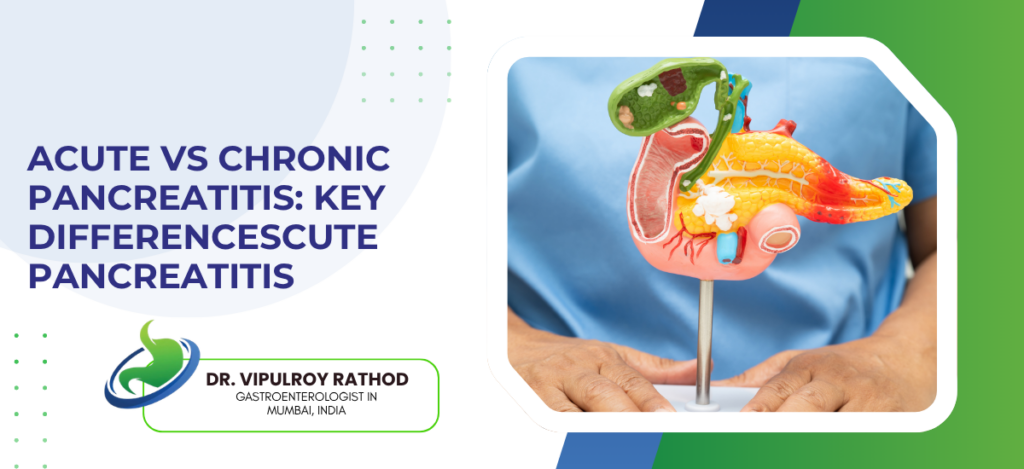
Acute pancreatitis is a sudden attack of pancreatic inflammation that comes on fast and usually resolves with treatment, while chronic pancreatitis is long-term irreversible damage where the gland slowly loses its ability to function over years. Both involve the same organ but they behave completely differently in terms of how they start, how they progress, and what can realistically be done about them.
According to Dr. Vipulroy Rathod, an experienced Gastroenterologist in Mumbai, “Patients often assume chronic pancreatitis is just acute pancreatitis that never went away, but they’re fundamentally different conditions because acute is about sudden inflammation that can heal completely while chronic is about permanent structural damage that only gets managed not reversed.”
How do they actually differ?
Same organ but that’s genuinely where the similarity ends, because what’s happening inside the gland, what the patient goes through, and where things are headed long-term look nothing alike once you dig past the shared name.
- How it starts: Acute smacks you out of nowhere with pain bad enough to send you to the emergency department within hours, while chronic sneaks up over months or years with pain that comes and goes and slowly ratchets up until you finally go see someone after putting it off way longer than you should have.
- What happens to the gland: Acute inflammation can heal up completely if the episode is mild and whatever triggered it gets sorted, while chronic means permanent scarring, calcifications, and structural wrecking of the gland that isn’t coming back no matter what anyone does from that point on.
- Main culprits: Gallstones are the number one trigger for acute attacks while alcohol does most of the damage behind chronic disease, though repeated acute hits from any cause can eventually batter the pancreas into chronic territory if it never catches a proper break between episodes.
- How the pain behaves: Acute pain is intense and constant, peaks within hours, and gradually backs off over days as things settle, while chronic pain is a different beast entirely with episodes lasting days or weeks that often flare after eating and make daily life properly miserable for patients who’ve been dealing with it for years.
If pancreatic symptoms have been coming and going and you want to know what treatment actually looks like, our pancreatitis treatment page covers the full range of medical and endoscopic management for both acute and chronic pancreatic conditions.
Why does getting this distinction right matter for treatment?
Treating one like the other doesn’t just waste everyone’s time it can actively set patients back, because the goals, the drugs, the procedures, and the monitoring calendars are built around fundamentally different problems even though both happen to be called pancreatitis.
- Acute approach: IV fluids, proper pain control because the pain is genuinely savage, gut rest initially, and urgent ERCP if a gallstone is jammed causing the whole mess, with the aim being to get the patient through the episode in one piece and then fix the trigger so it doesn’t land them back in hospital again.
- Chronic approach: Pain management becomes the main war because the damage is done and isn’t reversing, enzyme supplements step in to do the job the scarred pancreas can’t handle anymore, nutritional support tackles the malabsorption that comes with a gland that’s basically retired from active duty, and endoscopic work like stenting or ductal stone removal helps when blockages are fuelling the pain.
- Different complications: Acute complications like necrosis and organ failure are dramatic and immediate emergencies, while chronic complications like diabetes from destroyed insulin cells, malnutrition from enzyme deficiency, and pancreatic duct stones are slow-burners that quietly eat away at quality of life over years without any single crisis moment.
- Cancer link: Chronic pancreatitis carries a meaningfully elevated long-term pancreatic cancer risk that a one-off acute episode simply doesn’t, which is why patients with established chronic disease need ongoing surveillance and any new or shifting symptoms get chased down more aggressively than they would in someone who just had a single acute attack and recovered.
Getting the right diagnosis early shapes everything that follows, and our chronic pancreatitis treatment without surgery blog gets into how endoscopic and medical management handles chronic pancreatic disease without anyone needing to go under the knife.
Why choose Dr. Vipulroy Rathod for pancreatitis management?
Dr. Vipulroy Rathod has over 30 years in advanced gastroenterology with more than 80,000 endoscopic procedures behind him, and pancreatitis in both its forms makes up a fat chunk of that because handling the acute emergencies one day and the chronic long-haul cases the next requires someone who’s equally comfortable with urgent ERCP for jammed stones and meticulous pancreatic duct work for chronic strictures without hesitating at either end of that spectrum.
What patients here pick up on is that the distinction between acute and chronic gets nailed down from the first assessment rather than being treated as the same condition with the same plan, because lumping them together and hoping one approach covers both is exactly the kind of lazy shortcut that leaves patients bouncing between clinics for years without anyone properly getting to the bottom of what’s actually happening inside their pancreas.
Book your consultation today with one of India’s most experienced specialists for pancreatitis evaluation and management.
Frequently Asked Questions
Acute is sudden inflammation that can fully heal with proper treatment while chronic involves permanent irreversible damage to the pancreas that only gets managed over time rather than cured no matter how aggressive the treatment gets.
It absolutely can especially when repeated acute episodes from ongoing alcohol use or recurrent gallstone attacks pile up enough cumulative damage to tip the pancreas past the point where the scarring becomes permanent and the gland can’t bounce back anymore.
Severe acute pancreatitis with necrosis or organ failure can kill fast, while chronic pancreatitis is a slow grind that destroys pancreatic function piece by piece and raises cancer risk over years, making both dangerous but in completely different ways and on completely different timelines.
Combination of medications, nerve blocks when drugs alone aren’t cutting it, enzyme supplements to take workload off the damaged gland, and endoscopic procedures like duct stenting or stone removal when physical blockages inside the pancreas are keeping the pain cycle going.
Reference links-
- Acute and Chronic Pancreatitis Guidelines — American College of Gastroenterology
- Pancreatitis Classification and Management — National Library of Medicine
