 Skip to content
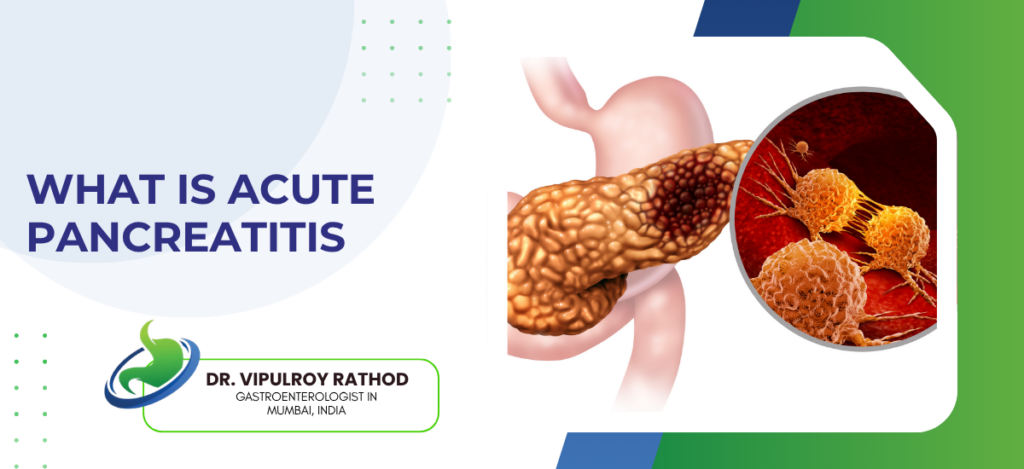
Acute pancreatitis is sudden inflammation of the pancreas that comes on fast and can range from a mild episode that settles in days to a life-threatening emergency needing ICU care. Gallstones and heavy alcohol use cause the vast majority of cases, and while most patients recover with supportive treatment a significant minority develop complications like necrosis, infection, or organ failure that change the picture completely.
According to Dr. Vipulroy Rathod, an experienced Gastroenterologist in Mumbai, “Acute pancreatitis is one of those conditions where the first 48 to 72 hours tell you almost everything about how the rest of the course is going to go, and getting the severity assessment right early is what separates patients who go home in a week from those who end up in the ICU for a month.”
What causes it and what does it feel like?
The pancreas is one of those organs most people forget exists until it goes off, and when it does the pain is the kind that has patients telling you it’s the worst thing they’ve ever experienced in their entire lives.
- Gallstones: Most common cause by a mile because a stone can jam where the bile duct and pancreatic duct share an opening, blocking drainage and basically making the gland start eating itself from the inside which is as bad as it sounds.
- Alcohol: Second biggest trigger that usually builds up over years of heavy drinking rather than one bad night, though some patients cop their first attack after a particularly rough weekend and have zero idea it was coming.
- Other triggers: High triglycerides, certain meds, post-ERCP inflammation, autoimmune causes, and sometimes nothing identifiable at all which gets called idiopathic, and these rarer causes are why the workup can’t just tick off stones and alcohol and stop there.
- The pain: Severe upper belly pain that drills straight through to the back, usually hits after eating, gets worse lying flat, comes with nausea and vomiting that won’t quit, and is intense enough that most people end up in the emergency department because there’s simply no sitting through it at home.
If recurrent abdominal pain has you worried about what might be going on with your pancreas, our pancreatitis treatment page covers the full range of diagnostic and management options available for pancreatic conditions.
How does it get treated?
No pill fixes pancreatitis once it’s kicked off so the whole approach is about backing the body up while the pancreas sorts itself out, jumping on complications before they spiral, and nailing down what caused it so the same thing doesn’t land you back in hospital three months later.
- Supportive care: IV fluids to keep blood flowing to the pancreas, pain management that actually does the job because pancreatitis pain is genuinely savage, nothing by mouth initially to let the gland rest, and tight monitoring to catch any organ function dipping before it turns into full-blown failure.
- Early feeding: Old school thinking was starve the patient for days but that’s been completely flipped now because starting oral food as soon as someone can handle it actually speeds recovery and gets people out of hospital faster than the old nil-by-mouth-for-a-week approach ever did.
- ERCP for stuck stones: When a gallstone is jammed at the bottom of the bile duct triggering the whole attack, urgent ERCP to yank it out and open the duct up cuts both how severe the episode gets and how long the patient spends recovering, and this is one scenario where interventional endoscopy genuinely rewrites how the disease plays out.
- Complication management: Pancreatic necrosis, infected collections, pseudocysts, organ failure, each one needs its own specific response from antibiotics and drainage through to necrosectomy in the worst cases, and deciding when to go in versus when to hold off is one of the hardest calls in all of GI medicine because getting the timing wrong in either direction makes things worse.
Understanding how pancreatitis connects to other pancreatic problems helps put the bigger picture together, and our pancreatic cancer vs pancreatic cyst blog covers how different pancreatic findings get evaluated and why the diagnostic approach matters so much whenever the pancreas is involved.
Why choose Dr. Vipulroy Rathod for acute pancreatitis management?
Dr. Vipulroy Rathod has over 30 years in advanced gastroenterology with more than 80,000 endoscopic procedures behind him, and pancreatitis makes up a big part of that because managing it properly means knowing when to scope urgently for a stuck stone, when to drain a collection that’s getting dangerous, when to back off and let the body handle things, and when to escalate to interventions that most gastroenterologists haven’t done enough of to feel confident calling.
What patients here get is a severity assessment nailed down from the start that drives everything after it, because the gap between mild pancreatitis that wraps up in days and severe pancreatitis that puts someone in intensive care for weeks is a gap that only gets navigated well by someone who’s managed both ends of that spectrum more times than they can count.
Book your consultation today with one of India’s most experienced specialists for pancreatitis evaluation and management.
Frequently Asked Questions
Gallstones and heavy alcohol use are behind the vast majority of cases, though high triglycerides, certain medications, post-ERCP inflammation, and autoimmune causes can trigger it too and sometimes no cause gets found at all despite thorough investigation.
Mild cases usually settle within a week with hospital supportive care, while severe cases with complications like necrosis or organ failure can drag on for weeks to months of intensive management before the patient is well enough to leave.
Most patients recover fully but severe cases with infected necrosis or multi-organ failure carry a real mortality risk, which is exactly why early severity assessment and aggressive complication management matters as much as it does.
It absolutely can especially if whatever caused it doesn’t get addressed, so gallstone pancreatitis patients usually need the gallbladder out and alcohol-related cases need sustained complete abstinence to stop the cycle from repeating.
Reference links-
- Acute Pancreatitis Management Guidelines — American College of Gastroenterology
- Pancreatitis Clinical Evidence — National Library of Medicine
