 Skip to content
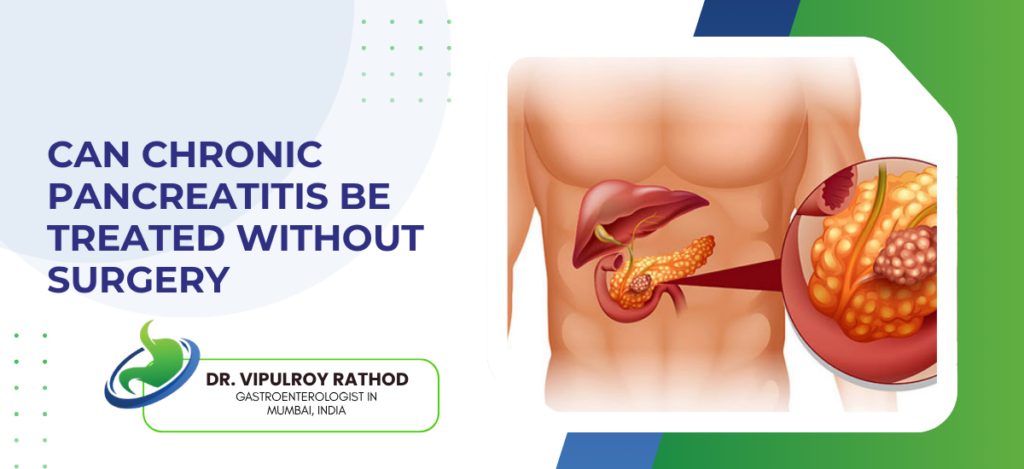
Yes, chronic pancreatitis can often be managed without surgery through lifestyle changes, medications, and endoscopic procedures. The main goals are to control pain, improve digestion, and manage diabetes when present. Common non-surgical treatments include pain relief medication, pancreatic enzyme supplements, strict avoidance of alcohol and tobacco, and a low-fat diet.
According to Dr. Vipulroy Rathod, Gastroenterologist in Mumbai, “Chronic pancreatitis is a condition where the right non-surgical management early on prevents the kind of disease progression that eventually forces surgical intervention, and most patients who end up needing surgery got there because endoscopic and medical options were not used properly or early enough.”
What Non-Surgical Treatments Actually Work Here?
Several. Sequence matters more than most people realise and getting it wrong early creates the surgical case that didn’t need to exist.
- Pain at Root Cause: Ductal hypertension drives most chronic pancreatitis pain and decompressing it endoscopically changes the trajectory completely for patients where obstruction is the driver, not just neural inflammation that medication alone won’t fix anyway.
- Enzyme Replacement: As pancreatitis destroys enzyme-producing tissue exocrine insufficiency develops and oral replacement corrects malabsorption, improves nutrition, and reduces the postprandial pain most patients are blaming on the pancreatitis itself when it’s actually the deficiency underneath.
- ERCP for Ductal Stones: Stones and strictures removed or dilated endoscopically, most patients discharged within 48 hours, no incision, and a proportion of them report more pain relief from this single intervention than from months of medication that was addressing the symptom not the cause.
- EUS-Guided Pseudocyst Drainage: Fluid collections causing nausea and gastric outlet symptoms drained transmurally without surgery and patient avoids surgical recovery entirely for what sounds like a complex problem but isn’t when done by someone who does it regularly.
Non-surgical management works when matched properly to the presentation rather than defaulting to surgical referral because it’s the easier path. A proper treatment plan sequences these correctly without skipping steps.
When Does Surgery Actually Become Necessary?
Minority of cases. But real situations exist and recognising them matters as much as knowing when to avoid surgery.
- Endoscopy Reaches Its Limits: Stones too impacted for ERCP even with lithotripsy, strictures too complex for stenting, pseudocysts in positions not accessible transmurally these move to surgical discussion but genuinely represent a small fraction of cases at centres with real endoscopic range.
- Malignancy Can’t Be Excluded: When a mass develops in the context of chronic pancreatitis that EUS biopsy can’t call benign definitively, surgery becomes diagnostic and potentially curative and delaying it to repeat non-surgical attempts costs progression time nobody recovers.
- Structural Complications: Splenic artery pseudoaneurysm bleeding, splenic vein thrombosis causing portal hypertension, pancreatic head fibrosis not responding to stenting endoscopy doesn’t fix structural problems regardless of who’s doing it.
- Pain That Didn’t Respond to a Real Attempt: Patients who’ve genuinely had proper endoscopic intervention, enzyme replacement, dietary modification, and optimised pain management without relief are surgical candidates, but that sequence needs to have actually happened properly first.
Most chronic pancreatitis doesn’t reach surgery when the right specialist manages it from the start, and regular surveillance for malignant change is part of the same picture not a separate conversation.
Why Choose Dr. Vipulroy Rathod
Dr. Vipulroy Rathod has been managing chronic pancreatitis through ERCP, EUS-guided drainage, and endoscopic ductal intervention for over 30 years at Fortis Hospital Mulund, keeping patients out of the operating theatre through properly sequenced non-surgical treatment that most gastroenterologists refer to surgeons too early, trained physicians from 35 countries in exactly this. Patients arrive having been told surgery is the only option and most leave with a plan that addresses what’s actually driving the symptoms rather than managing around them.
Start Your Treatment Journey Today
Frequently Asked Questions
Yes, endoscopic ductal decompression, enzyme replacement, and targeted pain management control chronic pancreatitis pain without surgery in most patients.
ERCP for pancreatic duct stones or strictures takes 45 to 90 minutes under sedation with most patients discharged the following day.
No, but chronic pancreatitis increases lifetime pancreatic cancer risk and requires regular EUS surveillance to detect malignant change early.
Yes, low-fat diet, alcohol cessation, small frequent meals, and pancreatic enzyme supplementation significantly reduce symptom burden without surgical intervention.
Reference links-
- Chronic Pancreatitis Management Guidelines — American College of Gastroenterology
- Non-Surgical Pancreatitis Treatment — World Gastroenterology Organisation
