 Skip to content
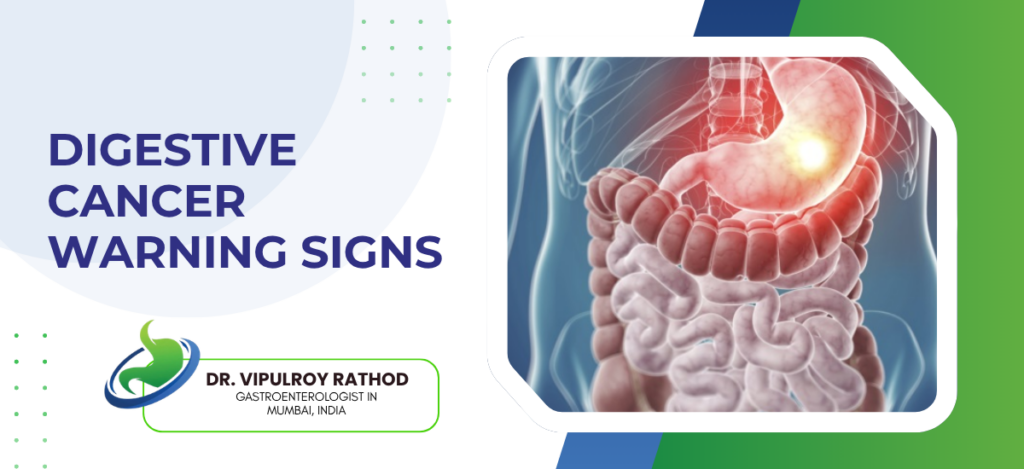
Early warning signs of digestive (gastrointestinal) cancer often show up as vague, persistent issues: unexplained weight loss, chronic indigestion, blood in stool or vomit, difficulty swallowing, ongoing abdominal pain or bloating, and feeling full unusually fast. If these stick around for several weeks, get them evaluated. Don’t wait.
According to Dr. Vipulroy Rathod an experienced, Gastroenterologist specialist in Mumbai,
“Most digestive cancers are completely manageable when found early, but too many patients arrive only after months of dismissed symptoms that should have triggered proper investigation much sooner.”
What Are the Early Warning Signs of Digestive Cancer?
Here’s the problem. Most of these symptoms get mistaken for acidity, IBS, or stress. Months go by. By the time someone investigates properly, the window has often shifted.
- Weight Loss Without Reason: Dropping 4-5 kg with no change in diet or activity isn’t something to explain away. It’s one of the earliest signals of GI malignancy and most patients dismiss it completely.
- Blood. Anywhere in GI Output: Dark tarry stools, visible blood in vomit — this means active bleeding inside the GI tract. Not a symptom to monitor. Needs evaluation same week.
- Pain That Keeps Coming Back: Dull abdominal discomfort that returns regardless of what you eat or how many antacids you take isn’t gastritis. Something else is going on and it needs a proper look.
- Food Getting Stuck Going Down: Progressive swallowing difficulty for solid foods is a known early sign of oesophageal and stomach cancer. Both are very treatable at early stage. Both get missed because patients wait too long.
So no, none of this automatically means cancer. But it does mean something is wrong. A specialist in GI cancer treatment is where this investigation needs to start.
When Should You Actually See a Specialist?
Most people have a threshold that’s too high. Here’s what actually matters.
- Still Symptomatic at Three Weeks: A GI symptom that hasn’t cleared in three weeks isn’t going to clear on its own. Stop the repeat prescriptions. See someone who can actually look inside.
- Family History You’re Ignoring: Parent or sibling with colorectal, stomach, or pancreatic cancer? Your risk is higher. Screening needs to start earlier than standard guidelines suggest, not at the same age as everyone else.
- Something New After 45: New digestive complaints after 45 carry different clinical weight than the same complaint at 28. It’s not automatically serious but it’s not something to brush off with “probably stress.”
- Normal CT, Still Feeling Wrong: This one catches people off guard. A clean CT does not rule out early digestive cancer. EUS and targeted endoscopy find lesions external scans miss regularly, especially sub-2cm tumours where treatment outcomes are actually good.
But don’t stop at one normal report. Read more on pancreatic cancer symptoms specifically what EUS finds that CT doesn’t.
Why Choose Dr. Vipulroy Rathod
Dr. Vipulroy Rathod has been doing this since 1998. Over 30 years in gastroenterology, with a focused EUS practice that’s trained physicians from 35+ countries. Not many specialists in South Asia handle the full range of GI cancer cases from early detection through complex endoscopic intervention. He does. Patients come in after months of being told everything looks fine. Most of them leave with an actual answer. That’s not always comfortable but it’s what they needed.
📞 Call Now: +91 9820091763
Start Your Treatment Journey Today
Frequently Asked Questions
Colorectal, stomach, liver, pancreatic, oesophageal, and gallbladder cancers are all classified as digestive cancers.
Yes, many early symptoms overlap with common GI conditions, which is why persistent symptoms need specialist evaluation.
Yes, tissue biopsy through endoscopy or EUS is required for a confirmed diagnosis in most cases.
EUS and advanced endoscopy can detect lesions under 1 cm, often before symptoms develop or scans show anything.
Reference links-
- Early Detection of GI Cancers — World Gastroenterology Organisation
- Digestive Cancer Symptoms and Screening — American College of Gastroenterology
