

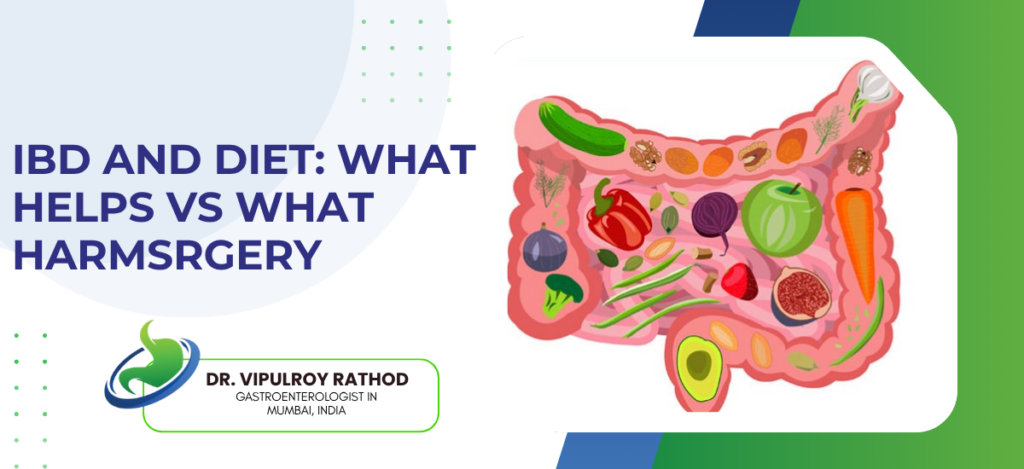
Diet doesn’t cause inflammatory bowel disease but it absolutely affects how the disease behaves day to day. Certain foods can trigger flares, worsen symptoms, and make an already inflamed gut harder to manage, while others can calm things down, support healing, and help patients stay in remission longer between episodes.
According to Dr. Vipulroy Rathod, an experienced Gastroenterologist in Mumbai, “Patients always ask what they should and shouldn’t eat and the honest answer is that there’s no single IBD diet that works for everyone, but there are clear patterns in what tends to help versus what consistently makes things worse and learning those patterns early saves a lot of unnecessary flares down the line.”
What foods tend to help IBD patients?
Nobody has cracked the one perfect IBD diet and frankly anyone charging money to tell you they have is full of it, but certain eating habits genuinely do show up as helpful often enough across patients that they’re worth weaving into how you eat every day.
- Low-residue when flaring: Gut is fired up so you strip fibre back and lean on white rice, bananas, cooked carrots, lean protein, basically anything that lets the bowel wall breathe instead of forcing it to wrestle with roughage it absolutely cannot process right now.
- Omega-3 foods: Salmon, mackerel, walnuts, flaxseed, won’t replace your meds but they do soften the environment inside the gut and patients who eat them consistently tend to notice fewer random symptom spikes showing up out of nowhere between visits.
- Fermented stuff when things are calm: Yoghurt and kefir feed gut bacteria diversity which helps the immune system stop acting so erratically, but timing is everything here because lobbing these in while the gut is still angry and reactive will properly blow up in your face.
- Grazing not gorging: Little and often beats three big meals because it puts way less pressure on the digestive tract at any given moment, and a surprising number of patients who flip to this pattern say the bloating, the urgency, and the general gut drama all quiet down noticeably.
If persistent gut trouble has you wondering whether something deeper is going on, our colonoscopy page walks through the whole procedure including what prep looks like and what exactly the gastroenterologist is hunting for once the scope goes in.
What foods tend to make things worse?
Every gut has its own personal enemies list but the stuff below lands on the problem roster so consistently across IBD patients that being careful with it is just common sense, especially when the disease is active or remission feels like it could wobble at any moment.
- Fried and greasy stuff: Deep-fried food and processed high-fat meals are hands down the most commonly reported trigger going because they speed the gut up, crank inflammation higher, and are genuinely brutal for a damaged bowel to deal with which is why most patients learn this lesson the hard way pretty early on.
- Dairy when your gut says no: Plenty of IBD patients handle dairy just fine but a decent number pick up lactose intolerance from the disease or from years of inflammation battering the lining, and muscling through it just piles cramping and diarrhoea on top of whatever the IBD is already throwing at you.
- Sugar and packaged junk: High sugar and ultra-processed food have been tied to inflammation spikes and microbiome shifts that do IBD zero favours, and patients who bin the sugary drinks, skip the fast food runs, and stop snacking out of packets usually find their symptoms get less random and way more manageable.
- Booze and coffee: Both smack the gut lining on contact and can set off urgency, cramping, and loose stools even in people whose bowels are perfectly healthy, so for someone whose gut is already on the ropes adding these into the regular rotation is basically picking a fight you already know you’re going to lose.
Managing IBD properly goes well past just policing what lands on your plate because the gut talks to broader metabolic health in ways most patients never think about, and our fatty liver and diabetes blog gets into how overlapping metabolic problems mess with chronic GI conditions and change what treatment can realistically pull off.
Why choose Dr. Vipulroy Rathod for IBD dietary guidance and management?
Dr. Vipulroy Rathod has over 30 years in advanced gastroenterology with more than 80,000 procedures behind him, and dietary counselling is baked right into how this clinic runs IBD care because pills alone don’t cover the full picture and honestly what goes into the gut between appointments matters just as much as whatever medication is stopping the inflammation from kicking off again.
What patients catch on to pretty fast here is that nobody walks out with the same photocopied food list regardless of what’s actually happening inside, because what someone with active Crohn’s ileitis needs on their plate looks absolutely nothing like what someone with UC sitting comfortably in remission can safely eat and handing both the same generic advice is exactly the kind of lazy shortcut that ends up blindsiding people with avoidable flares three months later.
Book your consultation today with one of India’s most experienced specialists for IBD evaluation and management.
Frequently Asked Questions
Diet doesn’t cause IBD but it has a massive influence on how often flares happen, how bad they get, and how well remission holds up over time, which is why sorting out what to eat is genuinely part of the treatment rather than just a nice-to-have afterthought.
No chance, because triggers and tolerances are wildly different from one patient to the next, though pulling back on fibre during flares and leaning into anti-inflammatory foods during quiet periods is a reasonable starting point for most people.
Some handle it perfectly fine while others pick up lactose intolerance from the disease itself or from years of inflammation wearing down the bowel lining, so the only real answer is test it individually and see how your gut responds rather than following a blanket rule.
Not forever because fibre matters for long-term gut health, but during active flares dialling it back gives the inflamed bowel room to settle before slowly bringing it back in as things improve and the gut starts cooperating again.
Reference links-
- Dietary Management in IBD — American College of Gastroenterology
- Nutrition and Inflammatory Bowel Disease — National Library of Medicine
