Dr. Vipulroy Rathod

Author name: Dr. Rathod Medical Foundation

Does Smoking and Alcohol Increase Digestive Cancer Risk

Yes, smoking and alcohol significantly increase the risk of developing digestive cancers, acting independently and combining to magnify the danger. Tobacco is directly linked to oesophageal, stomach, pancreatic, and colorectal cancer while alcohol causes chronic inflammation and tissue damage, raising risk for liver, oesophageal, stomach, and colorectal cancers.  According to Dr. Vipulroy Rathod, an experienced Gastroenterologist in Mumbai, “Smoking and alcohol are not just general health risks, they are direct carcinogens for the digestive tract and patients who combine both habits are in a risk category that warrants active surveillance, not just lifestyle advice.” How Does Smoking Increase Digestive Cancer Risk? Tobacco carcinogens don’t stay in the lungs. They travel through the bloodstream, hit the liver, and make contact with digestive tract lining at multiple points along the way. Oesophageal Cancer, Direct Contact: Tobacco smoke and chewing tobacco expose oesophageal lining directly to nitrosamines and risk of squamous cell carcinoma in smokers runs roughly 3 to 5 times higher than non-smokers, climbing further with duration and quantity. Stomach Cancer Gets Worse with H. Pylori: Smoking independently raises stomach cancer risk but also makes existing H. pylori infection more aggressive and harder to eradicate, so a smoker with H. pylori is in a meaningfully worse position than a non-smoker with the same infection. Pancreatic Cancer, Risk Doubles: One of the most consistent findings across studies is that smoking roughly doubles lifetime pancreatic cancer risk and it doesn’t drop back to baseline quickly on quitting, around 10 years of cessation before risk normalises significantly. Colorectal Cancer Builds Over Decades: Risk becomes statistically significant after 30 to 40 pack-years, which means patients who smoked heavily in their 20s and 30s are in a higher colonoscopy surveillance category now even if they stopped years ago. Habit history matters as much as current habits. Specialist in GI cancer treatment factors in cumulative exposure not just what you’re doing today. How Does Diabetes Increase Pancreatic Disease Risk? Alcohol is a Group 1 carcinogen. No safe level for cancer risk has been established and the GI tract takes the most direct hit of any organ system. Liver Cancer Through Cirrhosis: Chronic alcohol use causes cirrhosis and cirrhosis is the strongest single risk factor for hepatocellular carcinoma, cirrhotic patients carry a 1 to 5% annual liver cancer risk regardless of whether they’ve stopped drinking by that point. Colorectal Cancer, Even Moderate Drinking: Risk rises linearly with consumption and even 1 to 2 drinks per day is associated with measurably increased colorectal cancer risk in large population studies, something most patients are genuinely surprised to hear when told directly. Oesophageal Cancer with Smoking Combined: Alcohol and tobacco act synergistically on oesophageal tissue and the combined risk is multiplicative not additive, heavy drinkers who smoke sit in a risk category that justifies regular upper endoscopy surveillance rather than waiting for symptoms to show up. Stomach Cancer Through Mucosal Damage: Alcohol directly damages gastric mucosal lining and chronic exposure creates persistent inflammation that increases H. pylori susceptibility and accelerates the gastritis to cancer progression sequence faster than either factor alone. Both together are worse than either alone and risk doesn’t reset quickly after stopping. Read more on AI in GI endoscopy to understand how modern detection tools are changing early cancer surveillance. Why Choose Dr. Vipulroy Rathod Dr. Vipulroy Rathod has 30 years in gastroenterology and EUS since 1998. Trained physicians from 35 countries. Sees smoking and alcohol-related GI cancers regularly at Fortis Hospital Mulund and investigates them properly rather than managing symptoms while the underlying malignancy goes undetected.Patients with decades of combined habits and vague GI symptoms come in regularly. Most leave with a clear picture of what’s actually happening. Better than finding out later when options narrow. Start Your Treatment Journey Today Book Appointment Call now Frequently Asked Questions Which digestive cancer is most strongly linked to smoking? Oesophageal, pancreatic, and stomach cancers have the strongest established links to smoking among digestive cancers. Does quitting smoking reduce digestive cancer risk? Yes, risk decreases progressively after quitting though for pancreatic cancer it takes around 10 years to approach baseline. Is any amount of alcohol safe from a digestive cancer perspective? No safe threshold has been established. Even moderate alcohol consumption is associated with increased colorectal and liver cancer risk. How soon after stopping alcohol does liver cancer risk reduce? Risk reduces gradually but cirrhosis-related liver cancer risk persists even after alcohol cessation in already-cirrhotic patients.   Reference links- Alcohol, Tobacco and GI Cancer Risk — World Gastroenterology Organisation Smoking and Digestive Cancer Evidence — American College of Gastroenterology

Does Smoking and Alcohol Increase Digestive Cancer Risk Read More »
What Is the Link Between Diabetes and Pancreatic Disease

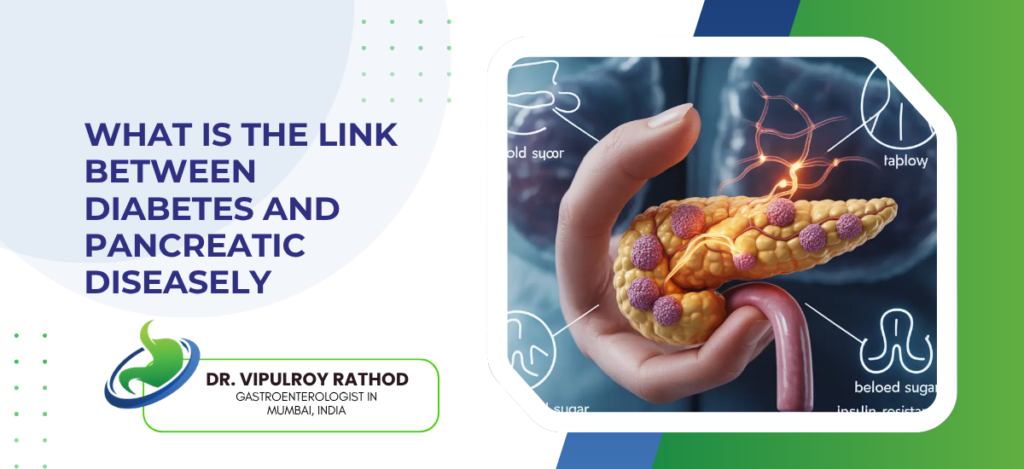
Diabetes and pancreatic disease run in both directions. Pancreas produces insulin and damage it through chronic pancreatitis or a tumour and diabetes follows directly. But it works the other way too: long-standing Type 2 diabetes roughly doubles pancreatic cancer risk. New onset diabetes after 50 with no obvious metabolic cause is a recognised early warning of underlying pancreatic pathology. Gets missed constantly. According to Dr. Vipulroy Rathod, an experienced Gastroenterologist in Mumbai, “The diabetes-pancreas connection is one of the most clinically underappreciated relationships in gastroenterology, where patients get managed for blood sugar for months while the underlying pancreatic pathology driving it goes completely uninvestigated.” How Does Pancreatic Disease Cause Diabetes? Pancreas does two jobs. Digestion and blood sugar regulation. Damage one and the other doesn’t escape. Chronic Pancreatitis Destroys Beta Cells: Repeated inflammation progressively wipes out insulin-producing cells and by the time pancreatogenic diabetes shows up the pancreatic damage has been building for years without anyone joining the dots. Tumours Disrupt Insulin Directly: Cancer in the pancreatic head or body interferes with insulin-producing tissue causing sudden glucose dysregulation, and new onset diabetes in a non-obese 55-year-old with no family history is not just an endocrine problem but needs proper pancreatic investigation. Surgery Removes What’s Left: Partial or total pancreatectomy for cancer or severe pancreatitis removes insulin-producing tissue directly, post-surgical diabetes is almost inevitable, and management is completely different from standard Type 2. Cysts Press on Surrounding Tissue: Large cysts impairing both exocrine and endocrine function at once, glucose abnormalities alongside a known cyst, that combination should always prompt reassessment of the cyst itself not just tighter diabetic control. Not one-directional. Specialist in pancreatitis treatment assesses both sides rather than treating blood sugar in isolation. How Does Diabetes Increase Pancreatic Disease Risk? Long-standing diabetes doesn’t just follow pancreatic disease. It actively creates conditions that drive it. Persistent Hyperglycaemia Inflames Pancreatic Tissue: Chronically elevated blood sugar drives low-grade systemic inflammation that damages the pancreas over time, and this is a real mechanism not a theoretical association, which is why long-term Type 2 diabetics carry meaningfully elevated pancreatic cancer risk. High Insulin Levels Feed Abnormal Cells: Insulin resistance means high circulating insulin which acts as a growth signal for abnormal pancreatic cells, and the association across studies is consistent enough to take seriously even where the full mechanism isn’t completely mapped yet. New Onset Diabetes After 50, No Obvious Cause: That presentation needs pancreatic imaging before anyone starts metformin, not after six months of managed blood sugar but before, because this is a recognised early signal of pancreatic malignancy that keeps getting filed away as routine endocrine disease. 10 Plus Years of Poor Control: Risk accumulates and patients with a decade or more of poorly managed diabetes sit in a genuinely different risk category that most are never told about, longer duration and worse control means higher cumulative cellular damage to pancreatic tissue. Managing diabetes without ever checking the pancreas is a gap worth closing. Read more on therapeutic endoscopy to understand what proper investigation looks like. Why Choose Dr. Vipulroy Rathod Dr. Vipulroy Rathod brings 30 years of experience in gastroenterology and has been practising EUS since 1998, with training experience for physicians from 35 countries. At Fortis Hospital Mulund, he regularly manages the overlap between diabetes and pancreatic disease, ensuring both aspects are investigated thoroughly rather than simply referring blood sugar concerns elsewhere. Many patients live with years of managed diabetes without ever having their pancreas properly evaluated, and that diagnostic gap is addressed here. Start Your Treatment Journey Today Book Appointment Call now Frequently Asked Questions Can diabetes be caused by pancreatic disease? Yes, chronic pancreatitis and pancreatic cancer both damage insulin-producing cells and directly cause diabetes. Is new onset diabetes after 50 a sign of pancreatic cancer? It can be. New diabetes without obvious metabolic cause after 50 warrants pancreatic investigation before standalone management. Does treating pancreatic disease improve diabetes control? In some cases yes, particularly when the underlying pancreatic cause is identified and treated early before permanent cell damage occurs. How is pancreatogenic diabetes different from Type 2 diabetes? Pancreatogenic diabetes involves both insulin deficiency and impaired glucagon response, making it harder to manage than standard Type 2. Reference links- Diabetes and Pancreatic Cancer Risk — American College of Gastroenterology Pancreatogenic Diabetes — World Gastroenterology Organisation

What Is the Link Between Diabetes and Pancreatic Disease Read More »

What Is Pancreatic Cancer and Why Is It Hard to Detect Early

Pancreatic cancer is a malignant tumour that develops in the tissues of the pancreas, an organ sitting deep behind the stomach responsible for digestion and insulin production. It’s hard to detect early because the pancreas has no nerve endings that register pain until disease has already spread, early symptoms like indigestion, mild back pain, and fatigue are indistinguishable from common conditions, and standard imaging misses small tumours routinely. According to Dr. Vipulroy Rathod, an experienced Gastroenterologist in Mumbai, “Pancreatic cancer is one of the few cancers where the biology itself works against early detection by the time the patient feels something is wrong, the disease has usually already progressed beyond where surgery is straightforward.” What Is Pancreatic Cancer and How Does It Develop? Not a single disease, pancreatic cancer includes different cell types, can arise in different parts of the pancreas, and behaves differently, making it essential to understand the specific type when planning treatment decisions Exocrine Tumours, the Most Common: Around 95% of pancreatic cancers are exocrine, specifically pancreatic ductal adenocarcinoma aggressive, fast-growing, and typically found at advanced stage because it produces no distinct early symptoms until it obstructs something. Endocrine Tumours, Rarer but Different: Pancreatic neuroendocrine tumours develop from hormone-producing cells, grow more slowly than exocrine types, and actually carry a better prognosis when caught before metastasis a completely different clinical picture from PDAC. How It Spreads: Pancreatic cancer invades local blood vessels and nerves early, spreads to liver and lungs, and does this quietly because the pancreas sits in a location where pressure and obstruction symptoms only appear after significant local spread has already happened. What Triggers It: Chronic pancreatitis, smoking, diabetes, obesity, BRCA2 mutations, and a family history of pancreatic cancer are the main established risk factors, though a meaningful number of cases show up in patients with none of these. Early diagnosis changes everything here. A specialist in pancreatic cancer treatment will know exactly which investigation pathway applies to your specific presentation. Why Is Pancreatic Cancer So Difficult to Detect Early? Several reasons, and they compound each other in a way that makes this particular cancer uniquely difficult to catch. Location Is the Core Problem: Pancreas sits deep in the retroperitoneum, surrounded by other organs, no direct access without imaging and that means a tumour can grow to a significant size before causing any physical obstruction or pain that brings a patient in. Symptoms That Fool Everyone: Early pancreatic cancer produces nausea, vague upper abdominal discomfort, fatigue, mild back pain none of which is specific, all of which get attributed to gastritis, muscle strain, or stress for months before anyone investigates further. CT Misses Small Tumours: Standard CT scans regularly miss pancreatic lesions under 2cm and those are exactly the ones where surgical resection is still possible and outcomes are meaningfully better so the investigation tool most GPs order first is also the one most likely to miss what matters. No Routine Screening Exists: Unlike colorectal or cervical cancer there’s no population-level screening programme for pancreatic cancer in India, so high-risk patients with family history or chronic pancreatitis aren’t being systematically monitored unless they’re with a specialist who knows to watch them. But early detection is possible with the right approach. Read more on endoscopic procedures without surgery to understand how minimally invasive investigation works in practice. Why Choose Dr. Vipulroy Rathod Dr. Vipulroy Rathod has been working in gastroenterology and EUS since 1998  over 30 years building diagnostic accuracy in exactly the cases where standard investigations stop finding things. Trained physicians from 35 countries. Manages pancreatic cancer from initial suspicion through staging and intervention at Fortis Hospital Mulund. Patients arrive with vague symptoms, normal CT reports, months of no answers. Most leave with a real finding and a clear next step. That’s not luck. That’s 30 years of knowing where to look. Start Your Treatment Journey Today Book Appointment Call now Frequently Asked Questions What are the earliest symptoms of pancreatic cancer? Unexplained weight loss, mild upper abdominal pain, new onset diabetes, and jaundice are the most recognised early signals. Can pancreatic cancer be detected by a blood test? CA 19-9 is a tumour marker used alongside imaging but is not specific enough for standalone early detection. What is the survival rate for pancreatic cancer detected early? Early-stage surgical resection gives a 5-year survival rate of around 20 to 30%, significantly better than late-stage diagnosis. Who should get regular EUS screening for pancreatic cancer? People with BRCA2 mutations, chronic pancreatitis, or two or more first-degree relatives with pancreatic cancer should be on active surveillance. Reference links- Pancreatic Cancer Diagnosis and Management — American College of Gastroenterology Early Detection of Pancreatic Cancer — World Gastroenterology Organisation

What Is Pancreatic Cancer and Why Is It Hard to Detect Early Read More »

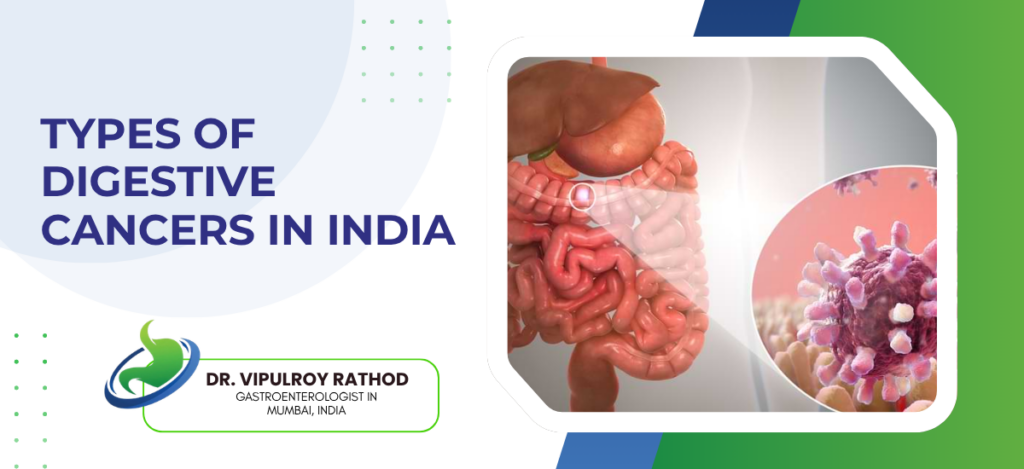
Types of Digestive Cancers in India

Digestive cancers in India: colorectal, stomach, oesophageal, liver, pancreatic, gallbladder, small intestine. Gallbladder cancer rates in northern and northeastern India are among the highest anywhere in the world. Most cases get picked up late. Early symptoms feel like acidity or IBS, patients wait, and by the time anyone investigates properly the window has already shifted. According to Dr. Vipulroy Rathod, an experienced Gastroenterologist in Mumbai, “Digestive cancers in India carry a disproportionate burden because most patients come in at stage three or four, and that happens simply because the early symptoms don’t feel serious enough to investigate properly.” What Are the Main Types of Digestive Cancers? Not one disease. Seven distinct cancers, different locations, different triggers, different investigation needs treating them as one category is where things go wrong clinically. Colorectal Cancer: Most preventable GI cancer if caught through colonoscopy, yet patients typically show up after months of rectal bleeding they kept hoping would sort itself out without anyone looking. Stomach Cancer: Linked to H. pylori, high salt intake, smoked food more common in South and Northeast India, almost always misread as chronic gastritis and treated with antacids until it’s well past early stage. Oesophageal Cancer: Tobacco chewing drives most cases here, progressive swallowing difficulty is the giveaway, and patients sit with that symptom for an embarrassingly long time before getting scoped. Gallbladder Cancer: Highest global rates in Gangetic plains, the gallbladder stays quiet until the tumour has spread to adjacent structures, so first presentation is almost always late. That’s just the clinical reality with this one. Standard scans miss a lot across these types. Specialist in endoscopic ultrasound gets imaging clarity that external investigations don’t come close to. Which Digestive Cancers Get Missed Most in India? Some of these almost always come in late. Not occasionally. Almost always. Pancreatic Cancer: Sits behind the stomach, no early alarm symptoms, and by the time jaundice or real weight loss shows up it’s usually stage three or beyond this is not an exception, it’s the pattern. Small Intestine Cancer: Standard scope doesn’t reach it. CT misses small lesions. Patients get investigated for everything else for months before anyone thinks to specifically look there. Liver Cancer in Hepatitis Patients: Hepatitis B and C carriers have real liver cancer risk but many aren’t on any active surveillance programme, so it shows up incidentally rather than through planned monitoring when treatment still works well. Oesophageal in Tobacco Users: Public awareness of the chewing tobacco and oesophageal cancer link is poor, patients don’t volunteer the habit, and the full picture only emerges after the disease is already established. Chronic heartburn isn’t always reflux. Sometimes it’s the beginning of something else. Read more on heartburn after every meal to know when it needs investigating rather than managing. Why Choose Dr. Vipulroy Rathod Dr. Vipulroy Rathod 30 years in gastroenterology. EUS since 1998. Trained physicians across 35 countries. Handles GI cancers from initial detection through staging and complex endoscopic intervention at Fortis Hospital Mulund, and has seen enough cases to know exactly where standard investigations stop finding things. Months of inconclusive reports. Vague symptoms nobody pinned down. Patients like that come in regularly and most leave with a clear diagnosis. Not a better guess. Start Your Treatment Journey Today Book Appointment Call now Frequently Asked Questions Which digestive cancer is most common in India? Colorectal, stomach, and gallbladder cancers are among the most commonly diagnosed digestive cancers in India. Can digestive cancers be detected before symptoms appear? Yes, EUS and colonoscopy can detect early-stage GI cancers before significant symptoms develop in high-risk patients. What makes gallbladder cancer so common in northern India? Gallstones, genetic factors, and water quality in the Gangetic plains are linked to higher gallbladder cancer rates in northern India. Is chronic acidity a risk factor for digestive cancer? Yes, untreated chronic acid reflux can lead to Barrett’s oesophagus which significantly increases oesophageal cancer risk over time. Reference links- GI Cancer Incidence in India — Indian Council of Medical Research Digestive Cancer Types and Risk Factors — World Gastroenterology Organisation

Types of Digestive Cancers in India Read More »

Top 5 Early Signs of IBD

Inflammatory bowel disease (IBD) is a long-term condition that affects the digestive tract and can quietly progress if ignored in its early stages. Many patients confuse early symptoms with common digestive issues, which delays diagnosis and treatment. However, identifying the early signs of IBD can help prevent complications and improve long-term gut health. View this post on Instagram A post shared by Dr. Vipulroy Rathod (@drvipulroyrathod) Dr. Vipulroy Rathod, a leading gastroenterologist in Mumbai, shares the top 5 early warning signs of IBD that should not be ignored. Early detection and timely IBD treatment in Mumbai can significantly improve outcomes and quality of life. What is IBD and Why Early Detection Matters? IBD mainly includes conditions like Crohn’s disease and Ulcerative colitis, both of which cause chronic inflammation in the digestive tract. Unlike occasional digestive discomfort, IBD symptoms tend to persist and gradually worsen. Early diagnosis helps: Prevent complications like strictures and fistulas Reduce long-term intestinal damage Improve response to advanced gastroenterology treatment in Mumbai Sign #1: Persistent Diarrhea Having frequent loose stools for several weeks is a typical early symptom of IBD. This type of diarrhea, unlike brief infections, does not disappear by itself and can be linked to urgency. Failure to treat may cause the body to dry out and disrupt the balance of electrolytes. Persistent diarrhea is an indication of intestinal inflammation which is why it is important to get checked by a doctor. Sign #2: Abdominal Pain and Cramping Chronic inflammation in the intestines can lead to recurring abdominal pain. This pain is usually cramp-like and may worsen after eating or during bowel movements. In some cases, the pain may vary in intensity and location, making it easy to mistake for common digestive issues. However, recurring patterns should not be ignored. Sign #3: Blood in Stool The presence of blood in stool is a key warning sign that should never be ignored. It may appear bright red or darker depending on the affected area of the intestine. This symptom indicates active inflammation or ulceration in the digestive tract and requires prompt medical investigation to identify the underlying cause. Sign #4: Unexplained Weight Loss IBD hampers the body’s capacity to uptake nutrients, which results in unplanned weight loss. Gut inflammation can limit the absorption of nutrients even if your nutrition has stayed the same. Along with slow loss of weight, you might also have reduced appetite and deficiency in certain nutrients, which would collectively affect your health in a negative way. Sign #5: Fatigue and Weakness Persistent fatigue is a common but overlooked symptom of IBD. Chronic inflammation and nutrient deficiencies can leave you feeling constantly tired. In many cases, fatigue is linked to anemia or poor nutrient absorption, which reduces energy levels and affects daily functioning. Noticing any of these symptoms? Early consultation with a specialist can help you avoid complications and start the right treatment. Book Appointment When Should You See a Gastroenterologist? If you experience digestive symptoms that persist for more than two to three weeks, it is important to seek medical attention rather than ignoring them. Signs such as ongoing diarrhea, blood in stool, unexplained weight loss, or continuous abdominal pain may indicate an underlying inflammatory condition like IBD. Consulting a gastroenterologist in Mumbai at an early stage helps in identifying the exact cause of symptoms and prevents complications. Timely evaluation also ensures that you receive the right treatment before the condition progresses further. How is IBD Diagnosed? Diagnosing inflammatory bowel disease (IBD) usually requires a combination of clinical examination and the use of diagnostic tools. A doctor may recommend a colonoscopy as it is the most effective method to visually examine the intestines and identify the areas that are inflamed or damaged. Often, biopsy taken during the colonoscopy is considered the definitive way of confirming the diagnosis. In addition, blood tests are performed to check for anemia or infection, while stool tests are used to rule out other intestinal diseases. In the end, the integration of these diagnostic techniques provides a full understanding of the disease and helps to determine the right IBD treatment in Mumbai. Treatment Options for IBD Treatment for inflammatory bowel disease (IBD) is aimed at controlling inflammation, relieving symptoms, and maintaining long-term remission. The approach is highly individualized and depends on the severity, type, and progression of the disease. Treatment focuses on controlling inflammation and improving quality of life. Common options include: Anti-inflammatory medications Immunosuppressants Biologic therapies Dietary and lifestyle modifications Regular monitoring and follow-ups With expert care, many patients achieve long-term remission through personalized gastroenterology treatment in Mumbai. Frequently Asked Questions Is it okay if I disregard the early symptoms of IBD if they appear and disappear? Actually, it is not a wise decision to overlook such signs. Symptoms including diarrhea or pain in the abdomen that one might consider light or happening occasionally might be the beginning of the disease. If remaining unaddressed these signs might be signs of now becoming severe inflammation. What are the typical first signs people notice? First and foremost, a lot of people face changes in their bowel habits, for example, very frequent diarrhea or even belly pain. In addition, fatigue and spotting blood in the stool are other signs that lead most people to get medical consultation. Is there a permanent cure for IBD? Nowadays, IBD is thought of as a lifelong disease. Although it is not possible to totally cure it, a large number of people can keep their symptoms under control very well and do a normal daily life if they follow treatment properly. How do I know if it’s IBD and not IBS? The two disorders might feel alike in the beginning but they are totally different. With IBD, there is inflammation and damage inside the intestines which one can see, while IBS does not cause any damage to the structure of the intestines and is more related to the way the gut works. Who should I consult if I suspect IBD? If your symptoms persist,

Top 5 Early Signs of IBD Read More »

Causes of Pancreatic Disease

Pancreas problems, primarily pancreatitis (inflammation), are most commonly caused by gallstones blocking the duct and excessive alcohol consumption. Other major causes include high triglyceride levels, smoking, infections, abdominal trauma, certain medications, and genetic factors, which cause digestive enzymes to activate prematurely, damaging the organ According to Dr. Vipulroy Rathod, an experienced Gastroenterologist in Mumbai, “Pancreatic conditions are frequently detected late because the organ sits deep and early symptoms are easy to dismiss. The patients who do well are almost always the ones who came in before the symptoms became obvious.” What Actually Causes Pancreatic Disease? Usually not one thing. A combination, building quietly for years before anything surfaces. Alcohol, First and Most Often: Years of heavy drinking inflame the pancreas repeatedly until the damage stops being reversible, and cancer risk is already elevated long before the patient connects drinking to a pancreatic complaint. Gallstones in Wrong Place: Stone lodges in common bile duct, enzymes back up, acute pancreatitis follows and if nobody sorts the underlying cause it becomes chronic faster than most people expect. Smoking: Risk of pancreatic cancer roughly doubles in smokers compared to non-smokers and most patients presenting with pancreatic symptoms either don’t mention it or assume it’s unrelated because nobody told them otherwise. Genetics Nobody Checked For: BRCA2, PRSS1, SPINK1 mutations tie directly to hereditary pancreatitis and elevated cancer risk, and a significant number of patients carrying these have no idea their family history puts them in a different clinical category entirely. Two or three of these sitting in the background at once is more common than people think. Proper evaluation from a specialist in pancreatitis treatment will surface that fast. Who Is Actually at Risk for Pancreatic Disease? Not everyone equally. Some people genuinely need to be watching this more carefully. Past 50, New GI Symptoms: Pancreatic cancer clusters heavily in this age group and the risk doesn’t level off, so new upper abdominal symptoms after 50 need investigation not a repeat antacid script. Diabetics Whose Numbers Shifted Suddenly: Sudden loss of blood sugar control or new onset diabetes without clear metabolic reason is an earlier pancreatic signal that gets filed away as a purely endocrine issue and investigated too late. High BMI: Visceral fat drives chronic low-grade inflammation and that inflammation shows up consistently as a background factor in pancreatic cancer cases, BMI over 30 puts you in a measurably worse position. One Relative with Pancreatic Cancer, That’s Enough: Single first-degree relative roughly doubles to triples lifetime risk and two relatives takes it into a range where active surveillance should already be happening, not being considered. More than one of these? Don’t file it away. Read more on pancreatic cyst treatment to see what early intervention actually looks like before symptoms force the decision. Why Choose Dr. Vipulroy Rathod Dr. Vipulroy Rathod has been in gastroenterology and interventional endoscopy for over 30 years. EUS focus since 1998. Trained physicians from 35 countries. Manages pancreatitis, cysts, and pancreatic cancer end-to-end at Fortis Hospital Mulund and has done so long enough that the cases other specialists find complex are fairly routine at this point. Patients arrive after months of normal reports. Most leave with an actual diagnosis. Not a referral. Not a maybe. An answer. 📞 Call Now: +91 9820091763   Start Your Treatment Journey Today Book Appointment Call now Frequently Asked Questions What are the first signs of pancreatic disease? Upper abdominal pain, unexplained weight loss, nausea, and new onset diabetes are the most common early signs. Can pancreatic disease be prevented? Avoiding alcohol, quitting smoking, and maintaining a healthy weight significantly reduce the risk of pancreatic disease. Is pancreatic disease hereditary? Yes, genetic mutations and family history of pancreatic conditions increase risk and warrant early surveillance. How is pancreatic disease diagnosed? EUS, CT scan, MRI, and blood tests including amylase and lipase levels are used depending on the condition. Reference links- Pancreatic Disease Risk Factors — American College of Gastroenterology Pancreatitis Causes and Management — World Gastroenterology Organisation  

Causes of Pancreatic Disease Read More »

Digestive Cancer Warning Signs

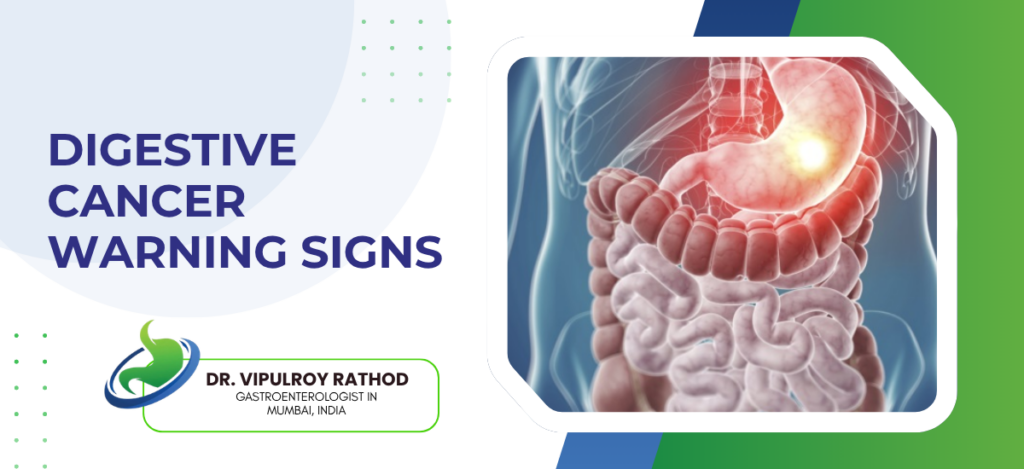
Early warning signs of digestive (gastrointestinal) cancer often show up as vague, persistent issues: unexplained weight loss, chronic indigestion, blood in stool or vomit, difficulty swallowing, ongoing abdominal pain or bloating, and feeling full unusually fast. If these stick around for several weeks, get them evaluated. Don’t wait. According to Dr. Vipulroy Rathod an experienced, Gastroenterologist specialist in Mumbai, “Most digestive cancers are completely manageable when found early, but too many patients arrive only after months of dismissed symptoms that should have triggered proper investigation much sooner.” What Are the Early Warning Signs of Digestive Cancer? Here’s the problem. Most of these symptoms get mistaken for acidity, IBS, or stress. Months go by. By the time someone investigates properly, the window has often shifted. Weight Loss Without Reason: Dropping 4-5 kg with no change in diet or activity isn’t something to explain away. It’s one of the earliest signals of GI malignancy and most patients dismiss it completely. Blood. Anywhere in GI Output: Dark tarry stools, visible blood in vomit — this means active bleeding inside the GI tract. Not a symptom to monitor. Needs evaluation same week. Pain That Keeps Coming Back: Dull abdominal discomfort that returns regardless of what you eat or how many antacids you take isn’t gastritis. Something else is going on and it needs a proper look. Food Getting Stuck Going Down: Progressive swallowing difficulty for solid foods is a known early sign of oesophageal and stomach cancer. Both are very treatable at early stage. Both get missed because patients wait too long. So no, none of this automatically means cancer. But it does mean something is wrong. A specialist in GI cancer treatment is where this investigation needs to start. When Should You Actually See a Specialist? Most people have a threshold that’s too high. Here’s what actually matters. Still Symptomatic at Three Weeks: A GI symptom that hasn’t cleared in three weeks isn’t going to clear on its own. Stop the repeat prescriptions. See someone who can actually look inside. Family History You’re Ignoring: Parent or sibling with colorectal, stomach, or pancreatic cancer? Your risk is higher. Screening needs to start earlier than standard guidelines suggest, not at the same age as everyone else. Something New After 45: New digestive complaints after 45 carry different clinical weight than the same complaint at 28. It’s not automatically serious but it’s not something to brush off with “probably stress.” Normal CT, Still Feeling Wrong: This one catches people off guard. A clean CT does not rule out early digestive cancer. EUS and targeted endoscopy find lesions external scans miss regularly, especially sub-2cm tumours where treatment outcomes are actually good. But don’t stop at one normal report. Read more on pancreatic cancer symptoms specifically what EUS finds that CT doesn’t. Why Choose Dr. Vipulroy Rathod Dr. Vipulroy Rathod has been doing this since 1998. Over 30 years in gastroenterology, with a focused EUS practice that’s trained physicians from 35+ countries. Not many specialists in South Asia handle the full range of GI cancer cases from early detection through complex endoscopic intervention. He does. Patients come in after months of being told everything looks fine. Most of them leave with an actual answer. That’s not always comfortable but it’s what they needed. 📞 Call Now: +91 9820091763 Start Your Treatment Journey Today Book Appointment Call now Frequently Asked Questions What types of cancer fall under digestive cancer? Colorectal, stomach, liver, pancreatic, oesophageal, and gallbladder cancers are all classified as digestive cancers. Can digestive cancer symptoms be confused with acidity or IBS? Yes, many early symptoms overlap with common GI conditions, which is why persistent symptoms need specialist evaluation. Is endoscopy necessary to confirm digestive cancer? Yes, tissue biopsy through endoscopy or EUS is required for a confirmed diagnosis in most cases. How early can digestive cancers be detected with modern tools? EUS and advanced endoscopy can detect lesions under 1 cm, often before symptoms develop or scans show anything. Reference links- Early Detection of GI Cancers — World Gastroenterology Organisation Digestive Cancer Symptoms and Screening — American College of Gastroenterology

Digestive Cancer Warning Signs Read More »

Most Common Pancreatic Diseases in India

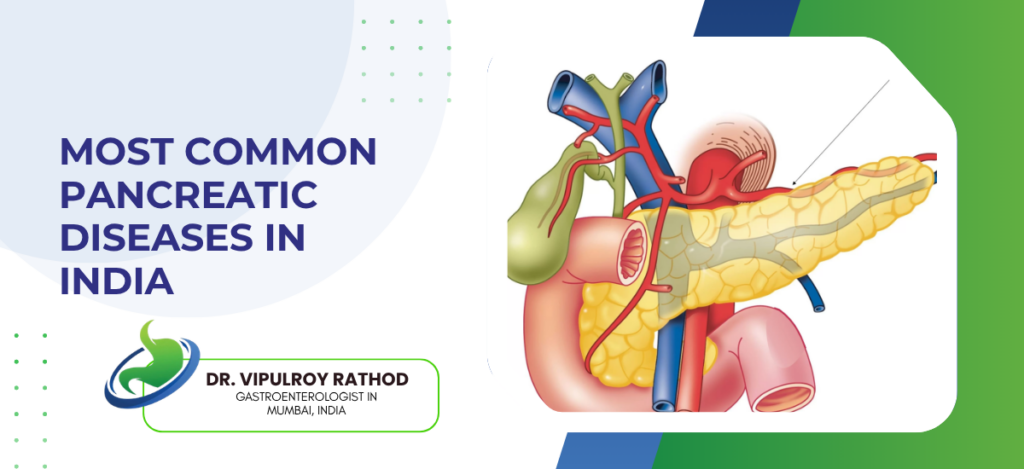
Pancreatic diseases in India range from acute pancreatitis triggered by gallstones or alcohol to chronic conditions like pancreatic cancer and cysts that develop silently over months. Several of these conditions share overlapping symptoms, get misdiagnosed repeatedly, and reach a specialist only after significant damage has already occurred. According to Dr. Vipulroy Rathod, an experienced Gastroenterology specialist in Mumbai,“Pancreatic disease in India is diagnosed late more often than it should be, and that gap between first symptom and right diagnosis is where the real damage happens.” Common Pancreatic Diseases Seen in India Same conditions, different patients, same story. Across Indian hospitals the pattern repeats a handful of pancreatic diseases showing up again and again, each one getting missed longer than it should. Pancreatitis: Gallstones and alcohol are behind most cases in India, and while the mild ones settle down with fluids and rest, the severe ones don’t wait  necrosis, infected collections, organ stress, these move fast and need proper specialist care rather than general ward management. Chronic pancreatitis: What makes India different here is the high rate of tropical chronic pancreatitis, a variant that targets younger patients with no alcohol history at all, and progresses toward diabetes and severe malnutrition faster than the alcohol-related form seen in Western countries. Pancreatic cancer: Incidence is climbing, catch rate at a treatable stage is not, and the gap between those two things is where lives are lost  upper abdominal pain, unexplained weight loss, new-onset diabetes after 50 all get explained away for months before anyone orders the right investigation. Cysts: Routine imaging is finding more of these than ever before, most are harmless, but the ones that aren’t need real EUS characterisation and a clear decision pathway rather than another CT in six months and a note saying monitor. These conditions don’t announce themselves clearly and that’s precisely the problem. Getting a proper assessment early keeps treatment options open that simply won’t exist after the disease has had another six months to progress. Why These Conditions Get Diagnosed Late in India It’s not just one reason. It’s several things working together, and understanding them helps explain why pancreatic cases so consistently arrive at specialists in a state that’s already difficult to reverse. Symptoms: Pain, bloating, back ache, weight dropping none of these point specifically at the pancreas, so patients cycle through GPs and get treated for gastritis, stress, IBS, dietary issues, anything but the actual problem, sometimes for over a year before the right referral happens. Imaging: Standard abdominal ultrasound is where most Indian patients start, and it simply doesn’t catch a significant chunk of pancreatic pathology small tumours, early ductal changes, subtle structural shifts things that would show up immediately on EUS from inside the stomach but don’t register on an external scan at all. Access: EUS isn’t widely available outside major cities, and that’s not a small problem a patient in a smaller city with early pancreatic cancer has almost no realistic path to the right diagnosis before the disease moves past the point where treatment can make a meaningful difference. Awareness: New-onset diabetes after 50 should always mean checking the pancreas, painless jaundice should always mean urgent investigation, and neither of those things happens consistently enough across the Indian healthcare system, which is where weeks of delay become months, and months change outcomes.  You can read how drainage outcomes shift significantly when the right specialist is involved from the beginning rather than after things have already escalated. Pancreatitis: When the pancreas inflames, digestive enzymes activate inside the gland before reaching the intestine, causing severe upper abdominal pain that frequently ends in emergency admission, and in serious cases tissue breakdown follows requiring intensive management. Scarring: Each episode of pancreatitis deposits scar tissue, and over years that accumulation reduces enzyme output while destroying insulin-producing cells, pushing patients toward malabsorption and diabetes developing together rather than as separate problems. Cancer: Tumours in the head of the pancreas press on both ducts simultaneously, so jaundice and digestive failure tend to appear together as the first obvious signs, by which point the disease has usually been progressing for quite a while already. Cysts: Fluid collections after pancreatitis can grow large enough to compress the stomach and duodenum, leaving patients feeling full after barely eating and losing weight without any clear explanation, a presentation that often takes months to properly investigate. And these don’t stay isolated. One problem pulls others in faster than patients expect. Read how pancreatic cancer gets missed before options start narrowing. Why Choose Dr. Vipulroy Rathod for Pancreatic Diseases in Mumbai Pancreatic disease sits at the intersection of gastroenterology, endoscopy, and hepatobiliary medicine, and managing it well requires a specialist with comprehensive expertise across this spectrum. Dr. Vipulroy Rathod, one of the leading Gastroenterologists in Mumbai, has been managing pancreatic conditions at Fortis Hospital Mulund for over 30 years, with more than 20,000 EUS procedures to his credit, and patients who arrive with months of vague symptoms despite normal CT reports regularly find that EUS in experienced hands detects what everything else missed. Start Your Treatment Journey Today Book Appointment Call now Frequently Asked Questions What is the most common pancreatic disease in India? Acute pancreatitis from gallstones and alcohol leads the numbers, but tropical chronic pancreatitis is far more common in India than in Western countries and it hits younger patients with no drinking history, which makes it easy to miss early. Is pancreatic cancer common in India? Less common than in the West, but rising, and the real problem isn’t the incidence  it’s that almost every case gets found too late for surgery, which is a diagnostic failure more than anything else. Can pancreatic diseases be treated without surgery? Many can, with acute pancreatitis managed medically, cysts and fluid collections handled through EUS without any incision, and chronic pancreatitis complications addressed endoscopically, though resectable pancreatic cancer and certain high-risk cysts still need surgical intervention. What test best diagnoses pancreatic disease in India? EUS gives the most accurate picture by far,

Most Common Pancreatic Diseases in India Read More »

What Is the Role of the Pancreas in Digestion

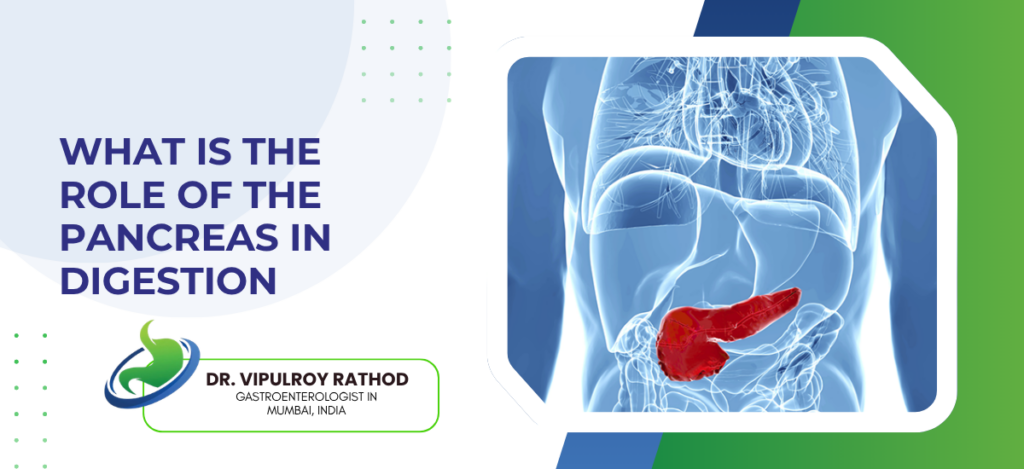
The pancreas acts as a vital digestive organ by producing enzyme-rich alkaline pancreatic juice. This juice breaks down proteins, fats, and carbohydrates in the small intestine while neutralising stomach acid to facilitate proper digestion. It plays a central role in nutrient absorption by ensuring food is converted into components the body can actually use. According to Dr. Vipulroy, an experienced Gastroenterology specialist in Mumbai, “The pancreas is one of the most overlooked organs until something goes seriously wrong with it.” What the Pancreas Actually Does in Digestion Most people have no idea what the pancreas does until a scan finds something. It runs two completely separate systems at once, quietly, without any obvious sign it exists. Enzymes: Amylase, lipase, and protease get pushed into the small intestine with every meal, and when that supply drops even partially food passes through largely unprocessed, which is why weight loss and malabsorption show up quickly once enzyme output falls. Bicarbonate: The stomach sends highly acidic content into the duodenum after every meal, and bicarbonate fluid from the pancreas neutralises it before digestion can proceed, because without that step the enzymes that follow cannot function properly at all. Hormones: Insulin and glucagon both originate from specialised cells inside the pancreas, one lowering blood sugar after meals and the other raising it between them, which is why pancreatic damage so often leads to diabetes alongside digestive problems. Coordination: The pancreatic duct and common bile duct share one entry point into the small intestine, so a single stone or tumour at that junction disrupts both digestion and bile flow simultaneously, which is why head of pancreas problems so often cause jaundice and digestive failure together. Pancreatic problems rarely stay invisible for long once they start moving. Getting a proper evaluation while things are still manageable keeps far more options open than waiting until symptoms become obvious. What Happens When the Pancreas Fails The pancreas tends to fail quietly before it fails loudly. Symptoms come slowly, get attributed to other causes, and by the time something serious surfaces the condition has usually been building for months. Pancreatitis: When the pancreas inflames, digestive enzymes activate inside the gland before reaching the intestine, causing severe upper abdominal pain that frequently ends in emergency admission, and in serious cases tissue breakdown follows requiring intensive management. Scarring: Each episode of pancreatitis deposits scar tissue, and over years that accumulation reduces enzyme output while destroying insulin-producing cells, pushing patients toward malabsorption and diabetes developing together rather than as separate problems. Cancer: Tumours in the head of the pancreas press on both ducts simultaneously, so jaundice and digestive failure tend to appear together as the first obvious signs, by which point the disease has usually been progressing for quite a while already. Cysts: Fluid collections after pancreatitis can grow large enough to compress the stomach and duodenum, leaving patients feeling full after barely eating and losing weight without any clear explanation, a presentation that often takes months to properly investigate. And these don’t stay isolated. One problem pulls others in faster than patients expect. Read how pancreatic cancer gets missed before options start narrowing. Why Choose Dr. Vipulroy Rathod for Pancreatic Conditions in Mumbai Pancreatic disease sits at the intersection of gastroenterology, endoscopy, and hepatobiliary medicine, and managing it well requires a specialist with comprehensive expertise across this spectrum. Dr. Vipulroy Rathod, one of the leading Gastroenterologists in Mumbai, has been managing pancreatic conditions at Fortis Hospital Mulund for over 30 years, with more than 20,000 EUS procedures to his credit, and patients who arrive with months of vague symptoms despite normal CT reports regularly find that EUS in experienced hands detects what everything else missed. Start Your Treatment Journey Today Book Appointment Call now Frequently Asked Questions What does the pancreas do in simple terms? It makes the enzymes that break food down and the hormones that control blood sugar, so when it stops working both systems fail together rather than one at a time. Can you live without a pancreas? Yes, but enzyme supplements with every meal and insulin injections for life become permanent requirements because nothing else takes over those two functions after removal. What are the early signs of pancreatic problems? Upper abdominal pain going into the back, weight dropping without reason, greasy stools, and new-onset diabetes after 50 are the ones that should push someone toward proper investigation rather than a wait and see approach. When should I see a gastroenterologist for pancreatic symptoms? If more than one of those symptoms is present and nothing else explains them, a specialist opinion is overdue rather than optional, because the earlier these things get properly evaluated the more treatment options remain available. Reference links- Pancreatic Function and Digestive Physiology — American Society for Gastrointestinal Endoscopy Pancreatic Disease Diagnosis and Management — American College of Gastroenterology

What Is the Role of the Pancreas in Digestion Read More »

What Symptoms of Pancreatic Cancer Can EUS Detect Early

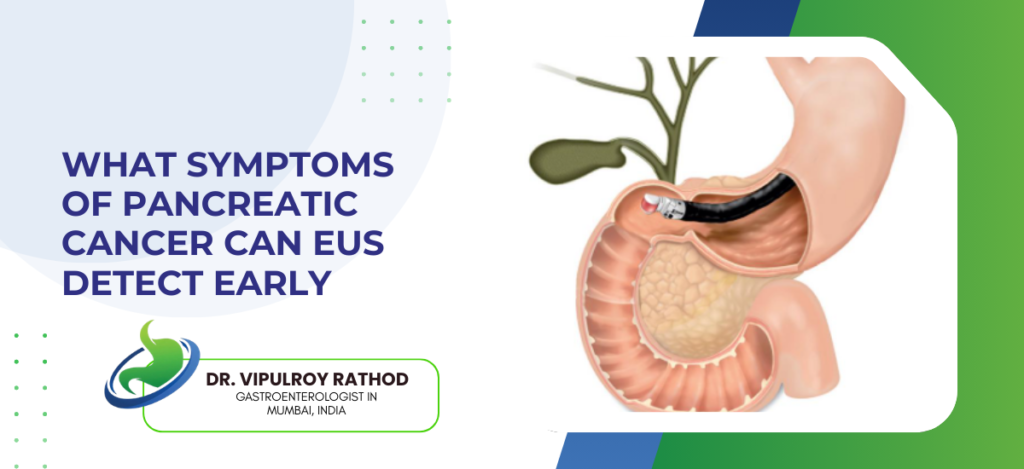
Pancreatic cancer rarely announces itself clearly. By the time symptoms become obvious, most cases have already progressed beyond early stage. That’s the clinical reality. But certain vague early warning signs, when evaluated properly through EUS by the right specialist, lead to early detection that completely changes treatment outcomes. The symptoms themselves don’t diagnose cancer. The investigation that follows them does. According to Dr. Vipulroy Rathod, “Pancreatic Cancer Treatment outcomes depend almost entirely on how early the diagnosis happens. When patients come with vague symptoms and normal CT scans, EUS is where the real answer gets found.” Early Symptoms That Should Trigger EUS Evaluation? These symptoms alone don’t confirm pancreatic cancer. But in combination, or when they persist without explanation, they’re exactly the kind of clinical picture that needs EUS investigation and not just another CT scan. Unexplained Weight Loss. Take It Seriously. Losing weight without trying and without a clear reason is one of the earliest flags for pancreatic disease. Most patients dismiss it. Most doctors attribute it to stress or diet. But unexplained weight loss alongside any upper abdominal discomfort needs proper investigation.  Not Just Gastritis. Dull persistent discomfort in the upper abdomen or back that doesn’t respond to standard gastritis treatment needs deeper investigation. As a Gastroenterologist in Mumbai with 25 years of focused EUS practice, Dr. Vipulroy Rathod regularly finds early pancreatic pathology in patients referred with months of unresolved upper abdominal symptoms that nobody else investigated properly. New Onset Diabetes. After 50. Developing diabetes suddenly after the age of 50 without obvious risk factors is a recognised early indicator of pancreatic disease. The pancreas produces insulin. When a tumour grows, it disrupts that function.  Jaundice. Early Detection Window. Yellowing of the skin or eyes means the bile duct is obstructed. When pancreatic cancer causes jaundice it means the tumour has grown toward the bile duct. That’s still potentially operable.  Persistent Nausea and Loss of Appetite. Not IBS. Patients dismissed with IBS or functional GI disorder for months sometimes have early pancreatic pathology that standard investigations never picked up.  Why EUS Finds What Other Scans Miss? CT scans and ultrasounds miss early pancreatic cancer regularly. That’s not a failure of those tools. It’s a limitation of imaging from outside the body for an organ sitting deep behind other structures. EUS removes that limitation entirely by imaging from inside your stomach wall. Lesions Under 2cm. Found by EUS. Tumours smaller than two centimetres are frequently invisible on CT. EUS picks them up because the probe sits millimetres from the pancreatic surface. That proximity gives image clarity nothing external can match for this specific organ honestly. Ductal Changes. Early Warning Signs. Subtle changes in the pancreatic duct diameter or wall that precede visible tumour formation get detected through EUS. These changes often precede a visible mass by months. Finding them early is where EUS genuinely changes clinical outcomes for patients. EUS Biopsy. Tissue Confirms Everything. When EUS finds something suspicious, fine needle aspiration gets tissue from the lesion immediately in the same session. Histological confirmation without surgery. Your oncologist gets a definitive answer faster than any other diagnostic pathway available in India. For more on how EUS diagnoses conditions that other investigations miss, read our previous blog on What is Enteroscopy and How is It Different From Colonoscopy. Why Choose Dr. Vipulroy Rathod for Early Pancreatic Cancer Detection? Dr. Vipulroy Rathod has spent over 25 years building a diagnostic accuracy in pancreatic EUS that directly changes patient outcomes. Patients arrive with vague symptoms, normal CT reports, and months of unanswered questions. They leave with real answers. Don’t wait for symptoms to become obvious before investigating properly. With pancreatic cancer, the early window is everything. Still getting normal results but something is clearly wrong? A specialist evaluation of the small bowel may be what’s missing. Book Appointment Call now Frequently Asked Questions Can EUS detect pancreatic cancer even when CT scan results are normal? Yes. EUS regularly finds small pancreatic lesions and ductal abnormalities that CT scans miss at early stages when tumours are still small. Which symptom combination should make someone request an EUS immediately? Unexplained weight loss combined with upper abdominal discomfort or new onset diabetes after 50 is a strong indication for EUS evaluation without delay. How long does EUS take for pancreatic cancer investigation? Around 30 to 45 minutes under sedation. Biopsy and staging happen in the same session so you leave with far more information than any external scan provides.   Is EUS surveillance recommended for people with family history of pancreatic cancer? Absolutely. High-risk individuals benefit significantly from regular EUS surveillance which catches precancerous changes and early lesions before symptoms develop. Reference links- Pancreatic Cancer Early Detection — American College of Gastroenterology EUS in Pancreatic Malignancy Diagnosis — American Society for Gastrointestinal Endoscopy Early Pancreatic Cancer Symptoms and Diagnosis — National Library of Medicine Pancreatic Cancer Surveillance Guidelines — World Gastroenterology Organisation

What Symptoms of Pancreatic Cancer Can EUS Detect Early Read More »

Scroll to Top
Call Now Button