Dr. Vipulroy Rathod

Author name: Dr. Rathod Medical Foundation

How Is GI Bleeding Treated Without Surgery

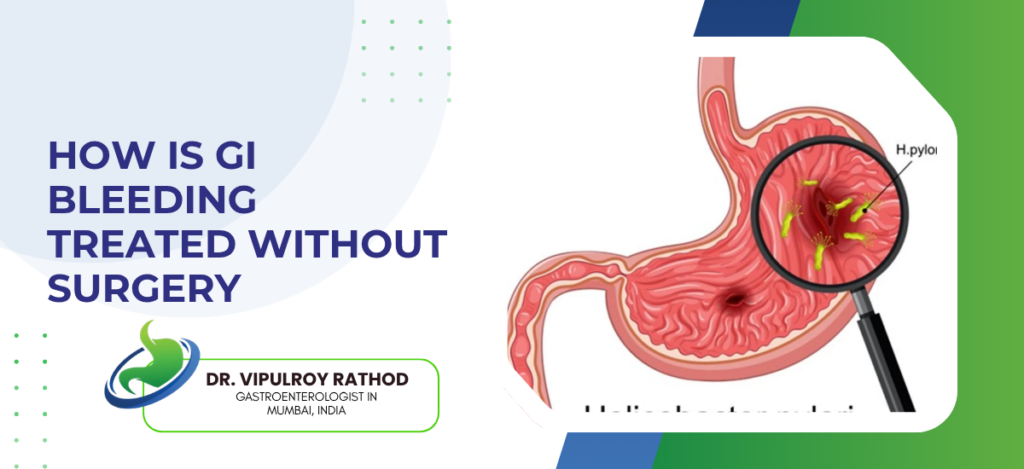
GI bleeding is often treated without surgery using endoscopic techniques such as clipping, heat cauterisation, or medication injection to seal bleeding vessels. For upper GI bleeds, intravenous proton pump inhibitors (PPIs) help reduce acid and support healing, while lower GI bleeding may be managed with medication or interventional radiology when needed. According to Dr. Vipulroy Rathod, Gastroenterologist in Mumbai, “GI bleeding is one of those emergencies where endoscopic techniques have advanced to the point where most cases that would have needed surgery fifteen years ago are now handled entirely inside the scope without a single incision.” What Endoscopic Treatments Stop GI Bleeding Without Surgery? Different sources need different tools and matching the right one to the right bleeding point matters more than just getting a scope in fast. Injection Therapy: Adrenaline injected into and around a bleeding ulcer causes vasoconstriction and tamponade that stops active bleeding quickly, almost always combined with a second modality like clipping because injection alone carries higher rebleeding rates than combination treatment. Endoscopic Clipping: Mechanical clips applied directly to a bleeding vessel close it permanently without heat or chemical, particularly effective for Dieulafoy lesions, visible vessels in ulcer bases, and Mallory-Weiss tears where precision matters more than thermal spread. Argon Plasma Coagulation: Non-contact thermal coagulation that treats vascular lesions, radiation-induced proctitis, gastric antral vascular ectasia, and diffuse mucosal bleeding across wide surface areas where clipping or injection simply isn’t practical. Band Ligation for Varices: Oesophageal varices from portal hypertension causing catastrophic upper GI bleeding controlled through band ligation in the acute setting and then through elective sessions to obliterate remaining varices and prevent recurrence. Right tool for right source changes outcomes and patients at experienced endoscopy centres reach surgery far less often than those where endoscopic technique is limited. Proper endoscopy handles the full range of GI bleeding without defaulting to surgical referral when the endoscopic solution exists. When Is Surgery Actually Needed for GI Bleeding? Minority of cases, but real situations exist and knowing when to stop attempting endoscopy matters as much as knowing how to do it. Haemodynamic Instability Despite Endoscopy: Massive ongoing haemorrhage where the patient can’t be stabilised despite resuscitation and endoscopic attempts, surgical exploration becomes the right call and delaying it for another scope session costs time the patient doesn’t have. Endoscopic Access Failure: Bleeding from jejunum or proximal ileum beyond scope reach, anatomical distortion from previous surgery preventing access to the bleeding point, these need surgical intervention because the scope physically cannot get where it needs to be. Aortoenteric Fistula: Bleeding from a vascular graft eroding into bowel is a surgical emergency regardless of endoscopic findings because the underlying vascular problem cannot be addressed through the scope no matter how experienced the endoscopist is. Recurrent Bleeding Despite Two Attempts: Two failed endoscopic attempts at the same bleeding source means the vessel is too large or lesion too complex for endoscopic haemostasis and surgical ligation gives more durable control than a third session with the same likely outcome. Most GI bleeding gets sorted endoscopically when the right person is doing it and the right tools are available. Read more on procedures to understand what’s possible without surgery across the full range of GI conditions. Why Choose Dr. Vipulroy Rathod Dr. Vipulroy Rathod has been managing acute and chronic GI bleeding through injection therapy, clipping, argon plasma coagulation, and variceal band ligation for over 30 years at Fortis Hospital Mulund, with a case volume and endoscopic range that means bleeding sources other endoscopists send to surgery get controlled here without an incision in most cases, trained physicians from 35 countries in exactly this. Patients arrive in active bleed referred for surgical opinion and most leave having had the bleeding controlled endoscopically the same day without ever meeting a surgeon. Start Your Treatment Journey Today Book Appointment Call now Frequently Asked Questions What is the most common cause of upper GI bleeding treated without surgery? Peptic ulcer bleeding is the most common cause of upper GI bleeding and is successfully managed endoscopically in the majority of cases. How quickly does endoscopic treatment stop GI bleeding? Active GI bleeding is typically controlled within the same endoscopic session, usually within 30 to 60 minutes of the procedure starting. Can variceal bleeding be permanently treated without surgery? Yes, repeated endoscopic band ligation sessions obliterate oesophageal varices and prevent recurrent bleeding without surgical intervention in most patients. What happens if endoscopy fails to stop GI bleeding? If endoscopy fails after two attempts, interventional radiology embolisation or surgical exploration becomes the next step depending on source and patient stability. Reference links- Endoscopic Management of GI Bleeding — American Society for Gastrointestinal Endoscopy GI Bleeding Treatment Guidelines — World Gastroenterology Organisation

How Is GI Bleeding Treated Without Surgery Read More »
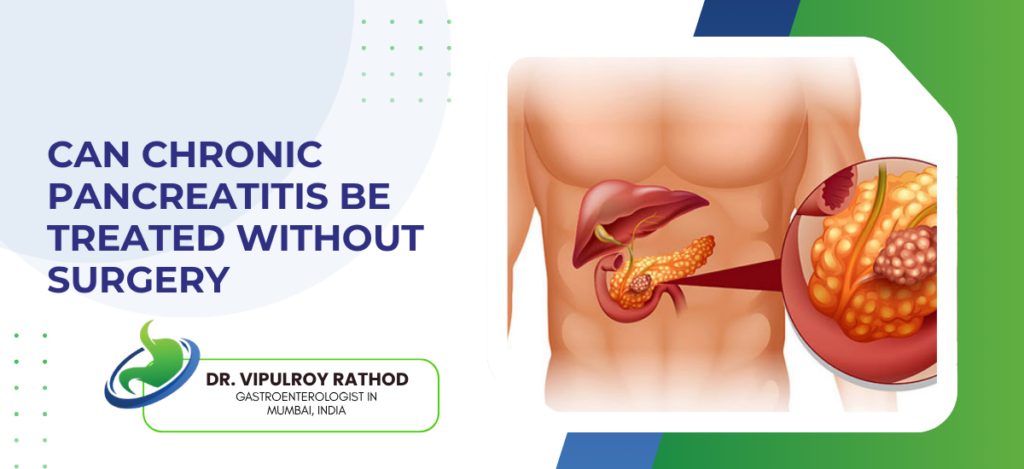
Can Chronic Pancreatitis Be Treated Without Surgery

Yes, chronic pancreatitis can often be managed without surgery through lifestyle changes, medications, and endoscopic procedures. The main goals are to control pain, improve digestion, and manage diabetes when present. Common non-surgical treatments include pain relief medication, pancreatic enzyme supplements, strict avoidance of alcohol and tobacco, and a low-fat diet. According to Dr. Vipulroy Rathod, Gastroenterologist in Mumbai, “Chronic pancreatitis is a condition where the right non-surgical management early on prevents the kind of disease progression that eventually forces surgical intervention, and most patients who end up needing surgery got there because endoscopic and medical options were not used properly or early enough.” What Non-Surgical Treatments Actually Work Here? Several. Sequence matters more than most people realise and getting it wrong early creates the surgical case that didn’t need to exist. Pain at Root Cause: Ductal hypertension drives most chronic pancreatitis pain and decompressing it endoscopically changes the trajectory completely for patients where obstruction is the driver, not just neural inflammation that medication alone won’t fix anyway. Enzyme Replacement: As pancreatitis destroys enzyme-producing tissue exocrine insufficiency develops and oral replacement corrects malabsorption, improves nutrition, and reduces the postprandial pain most patients are blaming on the pancreatitis itself when it’s actually the deficiency underneath. ERCP for Ductal Stones: Stones and strictures removed or dilated endoscopically, most patients discharged within 48 hours, no incision, and a proportion of them report more pain relief from this single intervention than from months of medication that was addressing the symptom not the cause. EUS-Guided Pseudocyst Drainage: Fluid collections causing nausea and gastric outlet symptoms drained transmurally without surgery and patient avoids surgical recovery entirely for what sounds like a complex problem but isn’t when done by someone who does it regularly. Non-surgical management works when matched properly to the presentation rather than defaulting to surgical referral because it’s the easier path. A proper treatment plan sequences these correctly without skipping steps. When Does Surgery Actually Become Necessary? Minority of cases. But real situations exist and recognising them matters as much as knowing when to avoid surgery. Endoscopy Reaches Its Limits: Stones too impacted for ERCP even with lithotripsy, strictures too complex for stenting, pseudocysts in positions not accessible transmurally  these move to surgical discussion but genuinely represent a small fraction of cases at centres with real endoscopic range. Malignancy Can’t Be Excluded: When a mass develops in the context of chronic pancreatitis that EUS biopsy can’t call benign definitively, surgery becomes diagnostic and potentially curative and delaying it to repeat non-surgical attempts costs progression time nobody recovers. Structural Complications: Splenic artery pseudoaneurysm bleeding, splenic vein thrombosis causing portal hypertension, pancreatic head fibrosis not responding to stenting endoscopy doesn’t fix structural problems regardless of who’s doing it. Pain That Didn’t Respond to a Real Attempt: Patients who’ve genuinely had proper endoscopic intervention, enzyme replacement, dietary modification, and optimised pain management without relief are surgical candidates, but that sequence needs to have actually happened properly first. Most chronic pancreatitis doesn’t reach surgery when the right specialist manages it from the start, and regular surveillance for malignant change is part of the same picture not a separate conversation. Why Choose Dr. Vipulroy Rathod Dr. Vipulroy Rathod has been managing chronic pancreatitis through ERCP, EUS-guided drainage, and endoscopic ductal intervention for over 30 years at Fortis Hospital Mulund, keeping patients out of the operating theatre through properly sequenced non-surgical treatment that most gastroenterologists refer to surgeons too early, trained physicians from 35 countries in exactly this. Patients arrive having been told surgery is the only option and most leave with a plan that addresses what’s actually driving the symptoms rather than managing around them. Start Your Treatment Journey Today Book Appointment Call now Frequently Asked Questions Can chronic pancreatitis pain be controlled without surgery? Yes, endoscopic ductal decompression, enzyme replacement, and targeted pain management control chronic pancreatitis pain without surgery in most patients. How long does ERCP treatment for chronic pancreatitis take? ERCP for pancreatic duct stones or strictures takes 45 to 90 minutes under sedation with most patients discharged the following day. Can exercise reduce colorectal cancer risk in genetically predisposed patients? No, but chronic pancreatitis increases lifetime pancreatic cancer risk and requires regular EUS surveillance to detect malignant change early.   Can diet changes help chronic pancreatitis without surgery? Yes, low-fat diet, alcohol cessation, small frequent meals, and pancreatic enzyme supplementation significantly reduce symptom burden without surgical intervention. Reference links- Chronic Pancreatitis Management Guidelines — American College of Gastroenterology Non-Surgical Pancreatitis Treatment — World Gastroenterology Organisation

Can Chronic Pancreatitis Be Treated Without Surgery Read More »
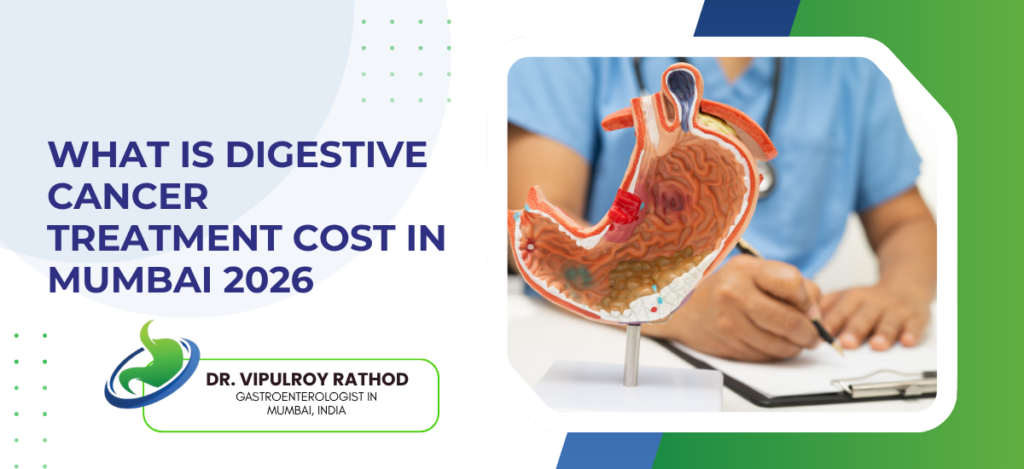
What Is Digestive Cancer Treatment Cost in Mumbai 2026

Digestive cancer treatment cost in Mumbai in 2026 starts at Rs 80,000 for early endoscopic Digestive cancer treatment costs in Mumbai in 2026 generally range from ₹2,25,000 to over ₹10,00,000, depending largely on the cancer stage, treatment approach such as surgery, chemotherapy, or radiation, and the hospital selected. Surgical treatment commonly costs around ₹3–4.5 lakh, while chemotherapy may range from approximately ₹2–8 lakh. According to Dr. Vipulroy Rathod, Gastroenterologist in Mumbai, “The most expensive digestive cancer treatment is always late-stage disease, finding it early doesn’t just improve survival, it reduces treatment complexity and cost significantly and that is a clinical and financial reality most patients don’t consider until they’re already in the middle of it.” What Actually Drives the Cost Up? Stage at diagnosis matters more than hospital name, surgeon reputation, or which treatment protocol gets chosen. Stage: Same colorectal cancer at Stage 1 costs a fraction of what Stage 3 demands with surgery plus months of chemotherapy stacked on top, and most patients only discover this gap exists after they’ve already arrived at the wrong stage. Approach: Endoscopic removal costs far less than surgery, shorter stay, no ICU, quicker recovery, but this option disappears once cancer has grown past the stage where the scope can handle it without a knife getting involved. Chemotherapy: Rs 60,000 to Rs 1,50,000 per cycle, up to 12 cycles for Stage 3 colorectal cancer, and patients are often blindsided by how the scan costs, supportive medications, and outpatient visits quietly add to the main treatment bill over months. Hospital: High-volume centres charge more upfront but the real financial risk with cheaper low-volume options is complications and repeat procedures that nobody quotes in the initial bill. Early detection keeps the cost in a range where treatment is actually curative, specialist in cancer catches it early enough for those options to still exist rather than managing advanced disease after the window has already closed. What Does Each Treatment Actually Cost in Mumbai 2026? Ballpark figures only, real cost varies with case complexity, hospital, and how cleanly the procedure goes. Endoscopic: Rs 80,000 to Rs 2,50,000 for early mucosal stomach or oesophageal cancers, day procedure, discharged same day or next morning, and the only patients who reach this option are the ones who got investigated before the cancer outgrew it. Colorectal: Laparoscopic colectomy Rs 3,50,000 to Rs 6,00,000, chemotherapy for Stage 3 at Rs 60,000 to Rs 1,50,000 per cycle over 6 to 12 cycles, total episode cost crossing Rs 15,00,000 before supportive care gets factored in. Pancreatic: Whipple procedure Rs 6,00,000 to Rs 15,00,000, ICU standard, adjuvant chemotherapy adds more, and outcomes here depend heavily on which centre does it and how many of these they actually do per year. Palliative: Bile duct stenting Rs 80,000 to Rs 1,50,000, EUS-guided drainage Rs 1,00,000 to Rs 2,00,000, these manage advanced disease without surgery at significantly lower hospitalisation cost when cure is no longer realistic. Treatment picture changes completely when disease is caught early and the endoscopic option is still available. Read more on procedures to understand what endoscopic treatment delivers compared to surgical alternatives. Why Choose Dr. Vipulroy Rathod Dr. Vipulroy Rathod has been performing endoscopic resection, EUS-guided intervention, and therapeutic endoscopy for over 30 years at Fortis Hospital Mulund, consistently giving patients access to curative endoscopic treatment that avoids surgery entirely when disease is caught at the right stage, trained physicians from 35 countries in doing exactly this rather than defaulting to surgical referral when the endoscopic option still exists. Patients who come in early spend less, recover faster, and leave wit Start Your Treatment Journey Today Book Appointment Call now Frequently Asked Questions How much does colorectal cancer treatment cost in Mumbai? Laparoscopic colorectal surgery costs Rs 3,50,000 to Rs 6,00,000 with chemotherapy adding Rs 60,000 to Rs 1,50,000 per cycle for advanced stages. Is endoscopic cancer treatment cheaper than surgery in Mumbai? Yes, endoscopic resection for early GI cancers costs Rs 80,000 to Rs 2,50,000 compared to Rs 3,00,000 to Rs 15,00,000 for surgical approaches. Can exercise reduce colorectal cancer risk in genetically predisposed patients? Does health insurance cover digestive cancer treatment in Mumbai?Most health insurance policies cover surgery and chemotherapy but coverage for endoscopic procedures varies significantly by policy and insurer. What is the cheapest way to treat digestive cancer in Mumbai? Early detection allowing endoscopic resection is most cost-effective, avoiding surgery, ICU admission, and prolonged chemotherapy entirely. Reference links- GI Cancer Treatment Guidelines India — Indian Council of Medical Research Digestive Cancer Management Costs — World Gastroenterology Organisation

What Is Digestive Cancer Treatment Cost in Mumbai 2026 Read More »

Can Healthy Habits Reduce Genetic Risk of Digestive Cancer

Yes, healthy habits can significantly help reduce the risk of digestive cancers, even in people with a genetic predisposition. Maintaining a healthy weight, exercising regularly, eating fibre-rich foods, and avoiding smoking and alcohol can lower risk by reducing inflammation and limiting long-term cellular damage. According to Dr. Vipulroy Rathod, an experienced, Gastroenterologist in Mumbai, “Genetic risk is real but it is not a fixed sentence, patients with strong family history who come in for surveillance regularly and make the right lifestyle changes give themselves a meaningfully different clinical picture than those who assume the outcome is already decided.” How Do Healthy Habits Reduce Genetic Risk of Digestive Cancer? Genes set the starting point. What happens next is not fixed. Diet Changes Gene Expression: High fibre diet reduces colorectal cancer risk even in Lynch syndrome carriers by changing gut microbiome composition and reducing bile acid concentration in the colon, red and processed meat pushes genetically susceptible cells toward malignancy faster by producing carcinogenic compounds during digestion. Exercise:Physical activity cuts colorectal cancer risk by 20 to 30% in population studies. Not 2 to 3%. Twenty to thirty. For someone already at genetic risk that is not a marginal number, it shifts the entire clinical picture and most patients are never told this directly. Tobacco and Alcohol Multiply Risk, Not Add: Both are independent carcinogens and in someone with BRCA2 or Lynch syndrome they don’t just add to existing risk, they multiply it, quitting both removes the environmental accelerant from a system already predisposed to malignant change. MetabolicRisk: BMI above 30 in a Lynch syndrome carrier that combination warrants aggressive surveillance, not just lifestyle advice at the end of a routine consultation that the patient forgets by the time they reach the car park. Lifestyle changes reduce risk. Don’t eliminate it. Specialist in GI cancer treatment combines both rather than treating them as separate conversations that happen in different rooms. What Surveillance Should High-Risk Patients Actually Get? Healthy habits and surveillance work together. One without the other leaves gaps that matter clinically. Lynch Syndrome, Not Every 10 Years: Standard population colonoscopy interval is 10 years, Lynch syndrome carriers need it every 1 to 2 years from age 20 to 25, polyps removed at that frequency never get the chance to become the cancer their genetics predicted. BRCA2 mutation significantly elevates pancreatic cancer risk. Annual EUS surveillance for BRCA2 carriers finds pancreatic lesions at resectable stage. Most of these patients have zero symptoms when the lesion is found. That’s the whole point of surveillance and it only works if someone actually orders it. Family History Without Known Mutation: One first-degree relative with colorectal cancer means colonoscopy starting 10 years before that relative’s diagnosis age, two relatives or one diagnosed under 50 means surveillance as aggressive as Lynch syndrome regardless of what the genetic test shows. Upper GI surveillance for gastric cancer risk gets skipped constantly in India. Patients with family history of stomach cancer or H. pylori positive status in high-incidence families need regular upper endoscopy, finding early gastric cancer at mucosal stage means endoscopic resection without surgery. Genetics is the starting point. Surveillance changes the ending. Read more on FASGE fellowship to understand the expertise behind this surveillance approach. Why Choose Dr. Vipulroy Rathod Dr. Vipulroy Rathod has been evaluating pancreatic cysts through EUS since 1998, with over 30 years of experience differentiating benign cysts from those with malignant potential using fine needle aspiration, cyst fluid analysis, and EUS morphology that CT cannot replicate. Trained physicians from 35 countries in exactly this pancreatic cyst assessment at Fortis Hospital Mulund. Patients arrive with a cyst report and no idea what it means. Most leave knowing exactly what type of cyst it is, whether it needs treatment, and what monitoring looks like if it doesn’t. Start Your Treatment Journey Today Book Appointment Call now Frequently Asked Questions Does diet alone prevent genetic digestive cancer risk? No, diet reduces risk significantly but must be combined with active surveillance through colonoscopy and EUS for high-risk patients. At what age should Lynch syndrome carriers start colonoscopy? Lynch syndrome carriers should start colonoscopy surveillance at age 20 to 25 or 10 years before the earliest family diagnosis. Can exercise reduce colorectal cancer risk in genetically predisposed patients? Yes, regular physical activity reduces colorectal cancer risk by 20 to 30% even in patients with genetic predisposition. Do BRCA2 mutation carriers need pancreatic cancer surveillance? Yes, annual EUS surveillance is recommended for BRCA2 carriers given their significantly elevated lifetime risk of pancreatic cancer. Reference links- Genetic Risk and GI Cancer Prevention — American College of Gastroenterology Hereditary GI Cancer Surveillance Guidelines — World Gastroenterology Organisation

Can Healthy Habits Reduce Genetic Risk of Digestive Cancer Read More »

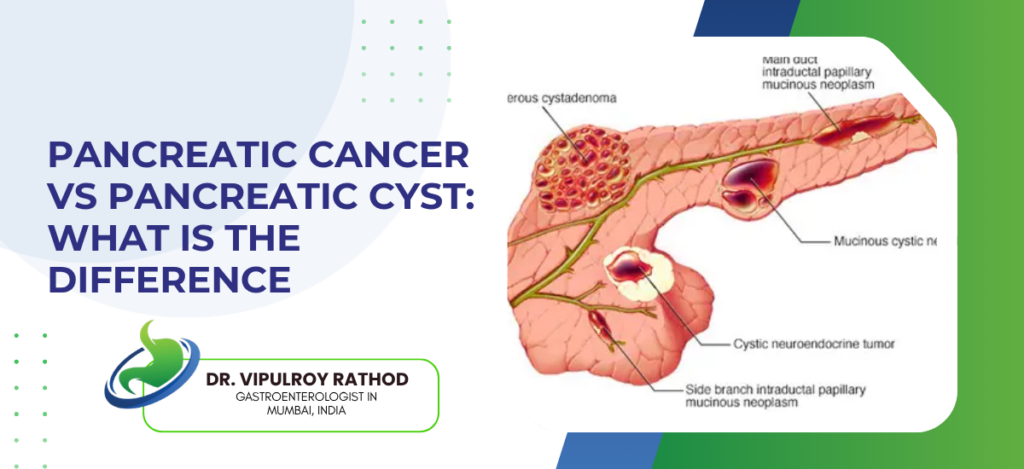
Pancreatic Cancer vs Pancreatic Cyst: What Is the Difference

Pancreatic cysts are fluid-filled sacs in or on the pancreas, most are benign and found incidentally on imaging, but some carry malignant potential and need monitoring or treatment. Pancreatic cancer is solid malignant tumour growth in pancreatic tissue, aggressive, and life-threatening when found late. According to Dr. Vipulroy Rathod, an experienced, Gastroenterologist in Mumbai, “A pancreatic cyst report from a scan does not tell you whether you need to watch it, treat it, or remove it  that answer comes from EUS and the specialist reading it, not from the CT report alone.” How Are Pancreatic Cancer and Pancreatic Cysts Different? Same organ, completely different pathology. And the consequences of treating one like the other go in both directions. What They Are: Pancreatic cancer is solid tumour, malignant from the start, grows and invades surrounding tissue, pancreatic cyst is fluid-filled space, most are benign pseudocysts from prior pancreatitis or serous cystadenomas that carry virtually no cancer risk at all. How They’re Found: Cancer usually found because patient has symptoms, weight loss, jaundice, abdominal pain, cysts found incidentally on CT or MRI done for something completely unrelated, patient had no symptoms, no idea the cyst was there. Which Cysts Actually Worry Specialists: Serous cystadenomas essentially benign, pseudocysts benign in context of pancreatitis, mucinous cystic neoplasms and IPMNs carry real malignant potential especially when cyst is large, has solid components, or shows worrying ductal features on EUS that plain CT simply doesn’t show. Symptoms: Pancreatic cancer causes progressive pain, weight loss, jaundice, new onset diabetes, most pancreatic cysts cause no symptoms at all and produce no clinical signs until they’re either very large or already transforming, which is exactly why active surveillance matters for the right cyst types. Not all cysts need treatment. Not all cysts are safe to ignore. Specialist in pancreatic cancer treatment knows exactly which category a cyst falls into and what the next step actually is When Does a Pancreatic Cyst Become a Concern? Most patients with incidental cysts are told to repeat the scan in six months. That’s not always the right answer. Size and Growth Rate: Cysts growing more than 5mm per year or already above 3cm at first detection need proper EUS evaluation not just a repeat CT, growth rate matters as much as absolute size and CT alone doesn’t give you the detail needed to assess wall changes. Solid Components Inside the Cyst: Mural nodule inside a cyst changes the risk profile significantly, that finding on EUS moves the clinical decision from surveillance to intervention discussion immediately regardless of cyst size. Ductal Involvement: Main pancreatic duct dilation alongside a cyst is a worrying combination, specifically in IPMN cases, and EUS with fine needle aspiration of cyst fluid for CEA and amylase levels gives information no external scan provides. Patient Risk Profile: Family history of pancreatic cancer, BRCA2 mutation carrier, chronic pancreatitis history alongside a cyst of uncertain type, that combination changes surveillance frequency and investigation intensity compared to a low-risk patient with a simple serous cyst. Finding a cyst on a scan is not reassurance. It’s the beginning of an investigation that needs the right specialist. Read more on pancreatic cyst treatment to understand what proper evaluation and management actually involves. Why Choose Dr. Vipulroy Rathod Dr. Vipulroy Rathod has been evaluating pancreatic cysts through EUS since 1998, with over 30 years of experience differentiating benign cysts from those with malignant potential using fine needle aspiration, cyst fluid analysis, and EUS morphology that CT cannot replicate. Trained physicians from 35 countries in exactly this pancreatic cyst assessment at Fortis Hospital Mulund. Patients arrive with a cyst report and no idea what it means. Most leave knowing exactly what type of cyst it is, whether it needs treatment, and what monitoring looks like if it doesn’t. Start Your Treatment Journey Today Book Appointment Call now Frequently Asked Questions Are all pancreatic cysts dangerous? No. Most pancreatic cysts are benign but certain types like IPMNs and mucinous cysts carry malignant potential and need proper surveillance. Can a pancreatic cyst turn into cancer? Yes, mucinous cystic neoplasms and main duct IPMNs have significant malignant potential and require regular EUS monitoring or surgical removal. How is a pancreatic cyst different from pancreatic cancer on imaging? Cysts appear as fluid-filled spaces on CT while cancer appears as a solid mass, but small cancers and complex cysts need EUS for accurate differentiation.   What test best evaluates a pancreatic cyst? EUS with fine needle aspiration and cyst fluid analysis for CEA and amylase levels gives the most accurate characterisation of pancreatic cysts. Reference links- Pancreatic Cyst Evaluation Guidelines — American College of Gastroenterology Pancreatic Cysts and Malignant Potential — World Gastroenterology Organisation

Pancreatic Cancer vs Pancreatic Cyst: What Is the Difference Read More »

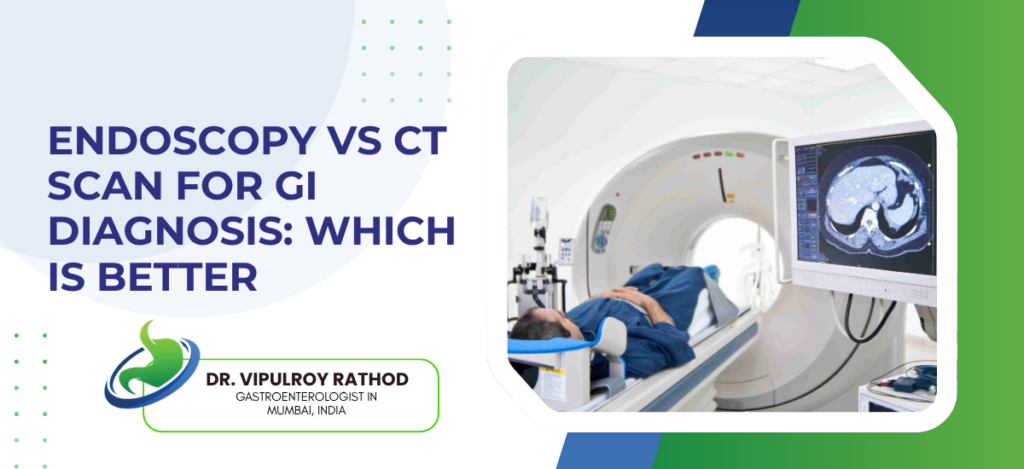
Endoscopy vs CT Scan for GI Diagnosis: Which Is Better

Endoscopy allows direct visual examination of the digestive tract lining and enables biopsy collection, making it ideal for diagnosing ulcers, inflammation, and suspected cancers. CT scans are better for evaluating surrounding abdominal organs, structural anatomy, and emergencies such as perforations, abscesses, or deeper masses that extend beyond the digestive tract. According to Dr. Vipulroy Rathod, an experienced Gastroenterologist in Mumbai, “CT and endoscopy answer different questions and the mistake clinicians make is treating them as interchangeable when they are not, ordering CT first for a mucosal problem means the diagnosis gets delayed by weeks while the endoscopy that would have found it same day gets ordered second.” What Does Endoscopy Do Better Than CT? Mucosal disease. Anything at the lining level of the GI tract. CT does not see this and was never designed to. Early Mucosal Cancers: Flat mucosal lesions in the stomach, oesophagus, and colon invisible on CT found routinely through endoscopy, removed in same session through EMR or ESD without surgery, outcome completely changes because endoscopy found it at mucosal stage before CT would have shown anything at all. Ulcers and Active Bleeding: CT cannot confirm active GI bleeding source with the accuracy endoscopy provides, ulcers identified and treated through injection, clipping, or coagulation in same session, patient avoids surgery entirely in most cases. H. Pylori and Mucosal Biopsy: CT shows nothing for gastritis and H. pylori infection, endoscopy takes biopsy from affected tissue directly, confirms diagnosis in days, treatment starts with actual evidence rather than clinical assumption. Polyp Detection and Removal: Colonoscopy finds and removes colorectal polyps before they progress to cancer in same session, CT colonography misses flat polyps under 6mm routinely and cannot remove anything it does find regardless. When the clinical question is what’s happening at the lining level, endoscopy answers it and CT does not. Specialist in endoscopy treatment gets to the right answer without sending patient through unnecessary investigations first. What Does CT Do Better Than Endoscopy? Anything involving organ size, masses, metastasis, lymph nodes, or structures endoscopy cannot reach. Distant Metastasis: Liver metastasis, lung spread, peritoneal disease, enlarged distant lymph nodes  CT maps all of this in one scan, endoscopy sees none of it because the camera stays inside the GI tract lumen. Organ Assessment Beyond GI Tract: Pancreatic size and obvious masses, adrenal glands, kidneys, retroperitoneal structures CT covers the whole abdomen in one go, endoscopy is organ-specific and reaches only what the scope physically enters. Bowel Obstruction and Perforation: Acute presentations needing fast anatomical overview, obstruction location, free air from perforation, CT is the right first investigation here, endoscopy carries risk in acute obstruction and is not the appropriate starting point. Pre-surgical Staging Overview: Broad anatomical staging before surgery needs CT for the full picture, though EUS adds T and N staging accuracy for oesophageal, gastric, and pancreatic cancers that CT alone consistently gets wrong. For staging, anatomy, and distant spread CT is right. For mucosal disease, biopsy, and treatment endoscopy wins every time. Read more on advanced GI procedures without open surgery to see what endoscopy actually delivers beyond just diagnosis. Why Choose Dr. Vipulroy Rathod Dr. Vipulroy Rathod has over 30 years of diagnostic and therapeutic endoscopy experience including EUS since 1998, and has spent enough time reading CT reports followed by endoscopy findings to know exactly where CT stops being reliable and endoscopy needs to take over. Trained physicians from 35 countries in making exactly this distinction at Fortis Hospital Mulund. Patients come in having had three CT scans and no endoscopy. Most leave with a finding the CT never showed. Same day. Right investigation. Start Your Treatment Journey Today Book Appointment Call now Frequently Asked Questions When should endoscopy be chosen over CT scan for GI problems? Endoscopy is preferred for mucosal disease, ulcers, early cancers, bleeding, polyps, and any condition requiring biopsy or direct treatment. Can CT scan replace colonoscopy for colorectal cancer screening? No. CT colonography misses flat polyps and cannot remove lesions it finds, making colonoscopy the gold standard for colorectal screening. Is EUS better than CT for pancreatic cancer staging? Yes. EUS provides superior T and N staging accuracy for pancreatic cancer and finds sub-2cm lesions CT consistently misses. Can both endoscopy and CT be done together for GI diagnosis? Yes. Many cases need both, CT for overall staging and anatomy, endoscopy for mucosal assessment and tissue confirmation through biopsy. Reference links- Endoscopy vs Imaging in GI Diagnosis — American Society for Gastrointestinal Endoscopy GI Diagnostic Tools and Guidelines — World Gastroenterology Organisation

Endoscopy vs CT Scan for GI Diagnosis: Which Is Better Read More »

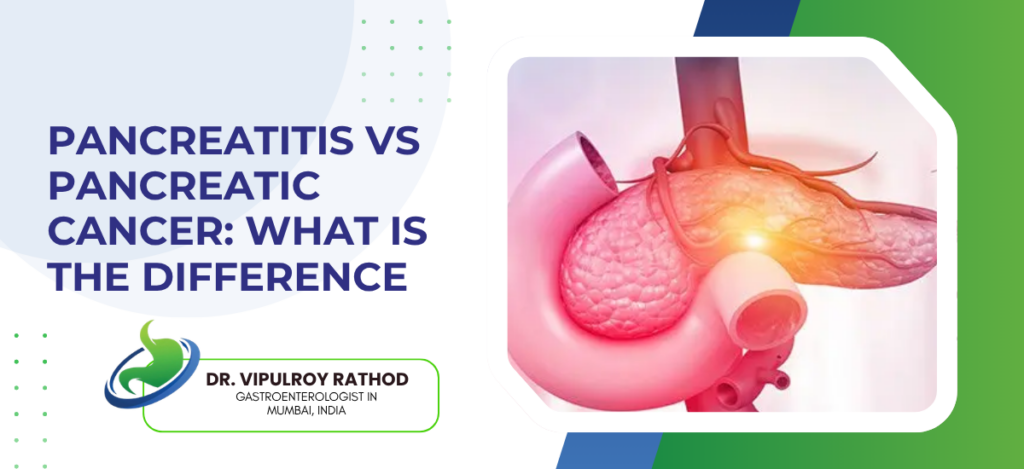
Pancreatitis vs Pancreatic Cancer: What Is the Difference

Pancreatitis is inflammation of the pancreas, acute or chronic, caused by gallstones, alcohol, or other triggers, treatable and often reversible. Pancreatic cancer is malignant tumour growth in pancreatic tissue, progressive, life-threatening if not caught early. Both cause upper abdominal pain, nausea, and weight loss which is why they get confused constantly. Key difference: pancreatitis responds to treatment and stabilises, pancreatic cancer progresses regardless and needs urgent investigation. According to Dr. Vipulroy Rathod, an experienced Gastroenterologist in Mumbai, “Pancreatitis and pancreatic cancer overlap in symptoms enough that patients get treated for one while actually having the other, and that diagnostic gap costs time nobody can afford when cancer is the actual problem.” How Are Pancreatitis and Pancreatic Cancer Different? Same organ. Completely different disease processes. And the consequences of mixing them up are not small. What Causes Each: Pancreatitis has identifiable triggers in most cases, gallstones, alcohol, certain medications, high triglycerides, pancreatic cancer often shows up with no obvious cause the patient or their doctor thought to question. Pain behaves differently: Pancreatitis pain is episodic, severe, radiates to back, improves with fasting, pancreatic cancer pain is relentless and progressive, doesn’t improve with diet changes or treatment, just keeps getting worse until someone investigates properly. Amylase and lipase spike dramatically in acute pancreatitis. In pancreatic cancer both are often completely normal. CA 19-9 elevated in cancer but also in benign conditions. Ordering only the wrong blood panel and stopping there is how cancer gets missed for months in patients who look like they have pancreatitis. Imaging: CT shows swelling and fluid in pancreatitis, calcifications in chronic cases, pancreatic cancer shows mass but sub-2cm tumours are missed on CT routinely, need EUS to actually find them. Getting the right diagnosis from the start changes everything that follows. Specialist in pancreatitis treatment investigates both possibilities properly rather than defaulting to the easier diagnosis. What Does Endoscopy Treat in Digestive Diseases? These patterns keep getting missed. Worth knowing what to flag. Idiopathic: No identifiable trigger for pancreatitis, no alcohol, no gallstones, no medication, symptoms still present. That combination needs cancer ruled out before pancreatitis gets managed as standalone condition and the real problem stays hidden another six months. Weight loss that doesn’t stop: Pancreatitis weight loss stabilises once inflammation treated. Progressive weight loss continuing despite treatment is not a pancreatitis pattern. Needs EUS. New-Onset DiabetesNew diabetes appearing at same time as upper GI symptoms in patient over 50 with no metabolic risk factors. Tumour disrupting insulin-producing tissue. Gets filed under endocrine disease. Pancreas never checked. First acute episode after 50 with no cause: Needs EUS to rule out cancer before pancreatitis gets treated as standalone. Not after three months of management. Before. Pancreatitis that doesn’t behave like pancreatitis needs a second look before more treatment goes in the wrong direction. Read more on advanced GI procedures without open surgery to understand what proper investigation looks like. Why Choose Dr. Vipulroy Rathod Dr. Vipulroy Rathod has over 30 years of experience distinguishing pancreatitis from pancreatic cancer in cases where standard imaging leaves uncertainty, with EUS expertise since 1998 that helps detect malignancies hidden behind inflammatory disease even when CT scans and blood tests appear inconclusive. He has trained physicians from 35 countries in this specialised diagnostic approach at Fortis Hospital Mulund. Patients often arrive after being treated for pancreatitis for months while an underlying condition remains undetected, and identifying that missed diagnosis is a key part of his clinical expertise. Start Your Treatment Journey Today Book Appointment Call now Frequently Asked Questions Can pancreatitis turn into pancreatic cancer? Chronic pancreatitis increases pancreatic cancer risk over time but most pancreatitis cases do not progress to cancer. How do doctors tell pancreatitis apart from pancreatic cancer? EUS, CT, MRI, blood tests including CA 19-9, amylase, and lipase, and clinical pattern together differentiate the two conditions accurately. Is pancreatic cancer always painful? Not always early on. Pain becomes more consistent as disease progresses and tumour compresses surrounding nerves and structures. Can pancreatitis and pancreatic cancer occur together?Yes, chronic pancreatitis can coexist with pancreatic cancer and the pancreatitis can actually mask the cancer making diagnosis harder. Can pancreatitis and pancreatic cancer occur together?Yes, chronic pancreatitis can coexist with pancreatic cancer and the pancreatitis can actually mask the cancer making diagnosis harder.Can pancreatitis and pancreatic cancer occur together?Yes, chronic pancreatitis can coexist with pancreatic cancer and the pancreatitis can actually mask the cancer making diagnosis harder. Can pancreatitis and pancreatic cancer occur together? Yes, chronic pancreatitis can coexist with pancreatic cancer and the pancreatitis can actually mask the cancer making diagnosis harder. Reference links- Pancreatitis and Pancreatic Cancer Differentiation — American College of Gastroenterology Pancreatic Disease Diagnosis Guidelines — World Gastroenterology Organisation

Pancreatitis vs Pancreatic Cancer: What Is the Difference Read More »

Indigestion After Every Meal

Most people have dealt with that uncomfortable, heavy feeling after a big meal at some point. But what happens when it’s not just once in a while — what if it happens every single time you eat, regardless of what’s on your plate? That’s when indigestion stops being a passing inconvenience and starts becoming a real problem worth investigating. Medically, this condition is referred to as dyspepsia. It’s not a disease on its own, but rather a collection of symptoms that point toward something going wrong in the digestive process. For some people, it’s been going on for years, and they’ve simply learned to live with the discomfort — which, unfortunately, is not the right approach. Dr. Vipulroy Rathod, a globally recognized gastroenterologist in Mumbai, India, puts it plainly:  “When patients visit me and tell they have indigestion after every meal, my first advice to them is you must not accept this as normal. Persistent dyspepsia is your gut’s way of communicating that something is not functioning properly. Most of the time, after we figure out the root cause, treatment is quite easy. However, if it remains untreated for a long time, the situation can become more and more complicated.” Dr. Rathod has been a source of help to patients from India and around the world who suffer from chronic digestive problems by helping them get rid of these problems permanently. His method is not only about relieving symptoms rather, it is about finding out the reason behind them. What Exactly Is Indigestion and Why Does It Keep Happening? The stomach matters a lot in digestion. When you eat, it starts working right away, producing acid, contracting muscles to break down food. These processes happen without you thinking about them. But sometimes, the stomach can’t handle what you’re eating. You feel a burning in your chest or notice food just sitting there without moving through. If this happens after every meal, something’s wrong. It’s not a one-off issue There’s a pattern. Something consistently messes with digestion. The problem isn’t temporary. You need to figure out what’s causing it – before symptoms get worse. What Could Be Causing It? Common Reasons Behind Post-Meal Indigestion There’s rarely one single explanation. Several conditions — some quite common, others less so — can lead to indigestion that shows up meal after meal: Acid Reflux or GERD One of the most frequent culprits. Stomach acid pushes back up into the esophagus, creating burning and discomfort, especially after larger meals or when lying down too soon after eating. Gastritis The stomach lining becomes inflamed, often due to an H. pylori bacterial infection, long-term use of painkillers like ibuprofen, or excessive alcohol consumption. Peptic Ulcers Open sores in the stomach or upper small intestine that get aggravated when stomach acid comes into contact with food. Functional Dyspepsia A surprisingly common condition where there's no visible structural problem, yet the digestive system consistently underperforms. It's often linked to gut-brain communication issues. Gastroparesis The stomach empties too slowly, so food lingers much longer than it should, leading to bloating, nausea, and fullness that lasts for hours. Hiatal Hernia Part of the stomach slides up through the diaphragm into the chest cavity, which disrupts normal digestive mechanics and worsens reflux. Food Intolerances Lactose, gluten, or other food sensitivities can create consistent post-meal discomfort if the offending food is a regular part of your diet. Eating Habits Eating too fast, skipping meals and then overeating, or regularly reaching for greasy or highly spiced food puts ongoing strain on the digestive system. Understanding which of these applies to you is what drives the treatment decision. Persistent indigestion after meals deserves proper attention. Schedule a consultation with Dr. Vipulroy Rathod for an in-depth evaluation and a treatment plan built around your specific needs. Book Appointment Symptoms That Tell You It’s More Than Just Overeating There’s a difference between feeling a bit full after a heavy meal and experiencing symptoms that follow you after every sitting, no matter what or how much you’ve eaten. Here’s what to pay attention to: Burning or aching in the upper abdomen — not just heartburn, but a deeper discomfort that starts during or shortly after eating. Bloating that doesn’t go away quickly — a sense of tightness or pressure in the stomach that can last for hours. Nausea — sometimes mild, sometimes strong enough to put you off food entirely. Frequent belching or gas — the body’s attempt to release built-up pressure in the stomach. Feeling full after just a few bites — known as early satiety, this is particularly associated with gastroparesis and functional dyspepsia. Regurgitation — food or acid coming back up, sometimes with a sour or bitter taste. Heartburn — a burning feeling that travels from the stomach up into the chest or throat. Dr. Rathod advises that if any of these symptoms are accompanied by significant weight loss, difficulty swallowing, blood in the stool, or persistent vomiting, medical evaluation should not be delayed. These could point to something more serious that requires urgent attention. Treatment: What Actually Helps With Chronic Indigestion? The good news is that most causes of chronic indigestion are very treatable. The approach depends on what’s been found: Acid-reducing medications such as proton pump inhibitors (PPIs) or H2 blockers are commonly prescribed for GERD, gastritis, and ulcer-related indigestion. Antibiotics combined with acid suppressants are used specifically to clear pylori infections. Prokinetics — medications that help the stomach contract and empty more efficiently — are useful when gastroparesis or slow digestion is the issue. Dietary adjustments are almost always part of the plan. Reducing fatty foods, spicy dishes, caffeine, and carbonated drinks removes a lot of the strain on an already irritated gut. Stress management plays a bigger role than most people expect. The gut and brain are deeply connected, and chronic stress is a genuine driver of functional digestive issues. Endoscopic treatment may be required in some cases — for instance, when a hiatal hernia needs correction or when ulcers

Indigestion After Every Meal Read More »

What Is the Role of Endoscopy in Digestive Diseases

Endoscopy is a key part of modern gastroenterology, allowing doctors to directly examine the digestive tract using a flexible camera. It helps diagnose, stage, and treat conditions such as ulcers, inflammation, cancer, bleeding, and celiac disease, making it essential for both accurate diagnosis and minimally invasive treatment. According to Dr. Vipulroy Rathod, Gastroenterologist in Mumbai, “Endoscopy changed digestive disease management completely because it moved diagnosis and treatment from assumption based on external imaging to direct visualisation and intervention inside the organ itself, and that difference in accuracy is not marginal.” What Does Endoscopy Diagnose in Digestive Diseases? Conditions missed entirely through scans get picked up through endoscopy. Not occasionally. Regularly. That’s the point. Early GI Cancers, Found Before Symptoms: Upper endoscopy and colonoscopy find mucosal cancers and precancerous changes before patients feel anything wrong, and superficial lesions found this way can be removed in the same session without surgery through EMR or ESD that option only exists because someone looked early enough. Ulcers and Gastritis: Direct visualisation of stomach lining finds ulcers, erosions, mucosal damage that CT misses routinely, biopsy confirms H. pylori or rules malignancy out on the spot. IBD Mucosal Picture: Colonoscopy with biopsy gives actual mucosal activity, extent, and treatment response for Crohn’s and ulcerative colitis, external imaging gives an approximation, this gives the real picture. EUS for Pancreas and Bile Duct: Pancreatic lesions, ductal changes, bile duct stones, nodal involvement all from inside the stomach wall at proximity no external scan comes close to for these structures. Right tool for right clinical picture. Specialist in endoscopy treatment knows which one applies without sending patient through three investigations first. What Does Endoscopy Treat in Digestive Diseases? Not just diagnosis. Endoscopy treats. Same session, no surgery, patient goes home. Polyps Out Before They Turn: Colonoscopic polypectomy removes precancerous colorectal polyps before cancer develops, no incision, no recovery ward, no surgical risk, patient out same day this is standard practice and it consistently works. Bleeding Stopped on the Spot: Active GI bleeding from ulcers, varices, vascular lesions controlled through endoscopic clipping, injection, or argon plasma coagulation in same session as diagnosis, most cases no general anaesthetic needed. ERCP, No Surgery for Bile Duct Stones: Stones in common bile duct causing jaundice and pancreatitis removed endoscopically, stents placed for strictures same procedure, recovery days not weeks, open surgery avoided completely. Tumour Resection, No Knife: Early mucosal stomach and oesophageal cancers removed through ESD in one piece, margins confirmed histologically, patient avoids major surgery  works only when cancer found early, which is the whole argument for surveillance. Endoscopy is where digestive disease management actually happens for patients who get properly investigated. Read more on therapeutic endoscopy to understand what’s possible without surgery. Why Choose Dr. Vipulroy Rathod Dr. Vipulroy Rathod has performed tens of thousands of diagnostic and therapeutic endoscopic procedures over 30 years, with specific mastery in EUS, ESD, ERCP, and third space endoscopy that most gastroenterologists in India refer out rather than handle themselves. Trained physicians from 35 countries in advanced endoscopic techniques at Fortis Hospital Mulund. Patients who need endoscopy done properly the first time, not repeated after an incomplete attempt elsewhere, come here. Diagnosis confirmed, treatment done, same session. That’s the standard here. Start Your Treatment Journey Today Book Appointment Call now Frequently Asked Questions What conditions does upper GI endoscopy diagnose? Upper endoscopy diagnoses ulcers, gastritis, GERD, oesophageal cancer, stomach cancer, and H. pylori related disease among others. Is endoscopy painful? Endoscopy is performed under sedation and most patients experience minimal discomfort during and after the procedure. Can endoscopy treat cancer without surgery? Yes, early mucosal cancers of the stomach and oesophagus can be completely removed through endoscopic submucosal dissection without open surgery. How long does a diagnostic endoscopy take? Most diagnostic upper endoscopies take 15 to 30 minutes and colonoscopies 30 to 45 minutes under sedation. Reference links- Role of Endoscopy in GI Disease — American Society for Gastrointestinal Endoscopy Endoscopy Guidelines and Indications — World Gastroenterology Organisation

What Is the Role of Endoscopy in Digestive Diseases Read More »

Why Is Early Detection of Digestive Cancer Important

Early detection of digestive cancer is critical because stage at diagnosis directly determines survival, treatment options, and quality of life. Colorectal cancer caught at Stage 1 has over 90% 5-year survival while Stage 4 drops below 15%. Pancreatic cancer found early enough for surgery gives 20 to 30% 5-year survival versus under 5% when found late. The biology doesn’t change. What changes is what’s still possible when you find it. According to Dr. Vipulroy Rathod, an experienced Gastroenterologist in Mumbai, “Early detection isn’t just about finding cancer sooner, it is about finding it while something can still be done about it, and for most digestive cancers that window is narrower than patients and even some doctors realise.” How Does Early Detection Change Digestive Cancer Outcomes? Stage at diagnosis determines more than any treatment advance in recent years. Everything else is secondary to what stage the patient walks in at. Surgery Stays Possible: Early GI cancers are resectable and some are removable through endoscopic resection without open surgery at all, once disease reaches Stage 3 or 4 surgery comes off the table in most cases and gets replaced with systemic treatment that controls rather than cures. Endoscopic Resection, No Surgery Needed: Superficial stomach and oesophageal cancers at mucosal level can be taken out entirely through EMR or ESD without cutting the patient open, that option disappears once tumour has grown past the submucosa and nobody gets it back. Less Aggressive Treatment: Early stage cancers need less chemotherapy or none at all in some cases, late stage disease means prolonged multi-agent regimens with significant side effect burden for however long treatment runs. Survival Gap Is Enormous: Stage 1 colorectal above 90%, Stage 4 under 15%, Stage 1 gastric above 95% with endoscopic resection, Stage 4 under 10%  not marginal differences, completely different clinical pictures that share only the same name. Finding it early changes everything that follows. Specialist in GI cancer treatment builds treatment plans around early findings rather than managing advanced disease after the window has already closed. What Gets in the Way of Early Detection in India? Several things compound each other. Most are fixable once patients understand them. Symptoms Feel Ordinary: Acidity, bloating, mild abdominal discomfort, irregular bowel movements these are early cancer symptoms that get managed with antacids for months while disease progresses quietly in the background and nobody connects the dots. Normal CT Stops Investigation Dead: CT misses early pancreatic lesions, small mucosal stomach cancers, sub-2cm oesophageal tumours routinely, normal CT report gives false reassurance, investigation stops, EUS would have found something in the same patient on the same day. No Routine Screening Happening: Colonoscopy after 45, upper GI endoscopy for high-risk groups, EUS surveillance for pancreatic cancer family history none of this happens routinely in India outside specialist centres so cancers that should be found early aren’t. Referral Chain Takes Too Long: GP to gastroenterologist referral takes time, patients cycle through multiple consultations before anyone orders the investigation that actually finds something, every month of delay in pancreatic adenocarcinoma changes what stage they arrive at for treatment. Early detection is possible with the right approach and the right investigation. Read more on EUS guided drainage success rates to understand what advanced endoscopic intervention delivers when disease is caught in time. Why Choose Dr. Vipulroy Rathod Dr. Vipulroy Rathod 30 years gastroenterology, EUS since 1998, trained physicians from 35 countries. Finds early GI cancers at Fortis Hospital Mulund that CT-dependent workups missed completely, has been doing this long enough to know exactly where standard investigations stop being reliable. Patients come in with months of managed symptoms and clean scan reports. Most leave with a real finding. That gap is the whole point of coming here. Start Your Treatment Journey Today Book Appointment Call now Frequently Asked Questions At what age should digestive cancer screening start in India? Colonoscopy screening should start at 45 for average risk individuals and earlier for those with family history of GI cancers. Can digestive cancer be completely cured if caught early? Yes, Stage 1 colorectal and stomach cancers have cure rates above 90% with surgery or endoscopic resection when caught at mucosal level. How is early digestive cancer detected without obvious symptoms? EUS, colonoscopy, and upper endoscopy find early cancers in high-risk patients before symptoms develop through active surveillance. What is the most important test for early digestive cancer detection? EUS is the most sensitive tool for early pancreatic and upper GI cancers while colonoscopy remains gold standard for colorectal cancer. Reference links- Early GI Cancer Detection Guidelines — American College of Gastroenterology Digestive Cancer Screening and Survival — World Gastroenterology Organisation

Why Is Early Detection of Digestive Cancer Important Read More »

Scroll to Top
Call Now Button