 Skip to content
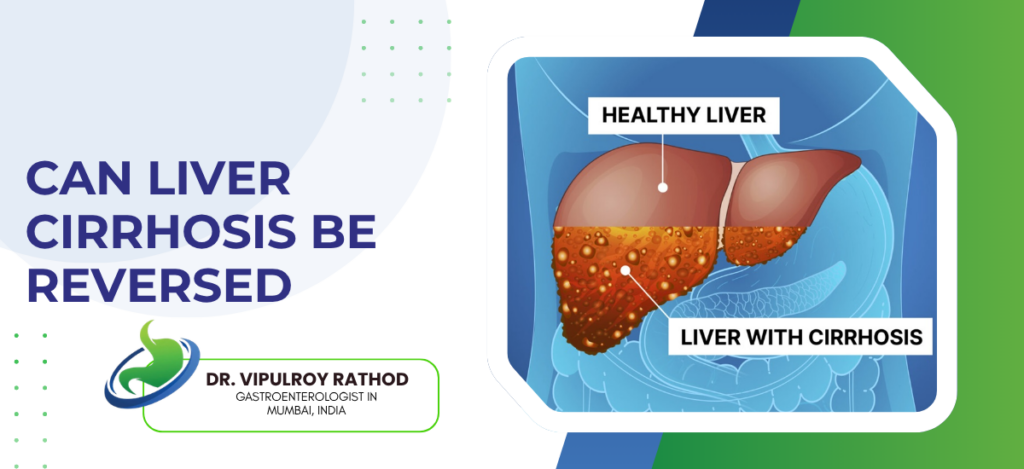
Cirrhosis is generally considered permanent, but not always irreversible. While advanced scarring (decompensated cirrhosis) is typically not reversible, early-stage cirrhosis (compensated) can sometimes be partially reversed or managed to prevent further damage by addressing the underlying cause.
According to Dr. Vipulroy Rathod, an experienced Gastroenterologist in Mumbai, “Patients hear cirrhosis and assume the liver is done, but the reality is more nuanced than that because early fibrosis caught at the right time and treated properly can show real improvement on repeat imaging, while advanced cirrhosis needs a completely different management strategy focused on preventing decompensation.”
When can liver damage actually improve?
Catch it while the scarring is still forming and there’s genuine room to push things back, but miss that window and you’re managing rather than reversing.
- Early fibrosis: Yank out whatever’s causing the damage, whether that’s alcohol, a virus, or fat buildup, and the liver can actually remodel itself over months to years because the deeper architecture isn’t wrecked yet and collagen bands haven’t fully hardened into permanent scar tissue.
- Alcohol damage: Fastest responder of all causes when patients quit completely, with dramatic turnarounds on fibroscan within a year of abstinence in some cases, but once it crosses into proper cirrhosis quitting still helps slow things down without rebuilding what’s already gone.
- Hepatitis treatment: Hep C antivirals and hep B suppression have genuinely rewritten the playbook here, with patients who were teetering on the edge of cirrhosis at diagnosis actually downstaging on follow-up imaging after two or three years of sustained viral clearance which wasn’t even possible a decade ago.
- Fatty liver: Losing 7 to 10 percent of body weight and keeping it off makes a measurable dent in both liver fat and fibrosis scores, though the emphasis is on keeping it off because dropping weight for a few months then gaining it back doesn’t cut it since the liver needs a consistently improved metabolic environment to actually heal.
If you’ve been told you have liver disease at any stage, our liver cirrhosis treatment page lays out what’s available from medical management through endoscopic intervention depending on where your liver currently sits.
What happens when cirrhosis can't be reversed?
Different ball game entirely where reversal is off the table and what’s left is keeping the liver compensated for as long as possible while jumping on complications before they spiral into something that lands the patient in hospital.
- Decompensation prevention: Job number one is keeping ascites from pooling, skin from going yellow, and the brain clear of toxin fog, because every month the liver holds its ground on the compensated side is a month where the patient’s life stays close to normal.
- Varices: Pressure builds in the portal vein until veins in the oesophagus and stomach start ballooning, and if one pops the bleeding is the kind that kills fast which is why band ligation through a scope handles this preventively before it becomes an emergency rather than after.
- Ascites and brain fog: Belly fluid gets diuretics and salt restriction first with paracentesis when pills aren’t doing enough, while encephalopathy gets lactulose and rifaximin which don’t fix the broken liver but do keep the patient functional and out of hospital which at this stage is realistically what treatment looks like.
- Transplant: Only thing that actually changes the long-term trajectory once the liver is past holding together with medication and endoscopy, and getting evaluated before things get desperate matters because transplant lists have real wait times and patients need to be strong enough to survive the surgery when their turn comes.
Endoscopy runs through pretty much every stage of cirrhosis care, and our role of endoscopy in digestive diseases blog gives a wider look at how these tools work across GI and liver conditions well beyond cirrhosis alone.
Why choose Dr. Vipulroy Rathod for liver cirrhosis management?
Dr. Vipulroy Rathod has been at gastroenterology and hepatology for over 30 years with more than 80,000 endoscopic procedures behind him, handling everything from variceal banding and ascites workup to fibrosis staging and transplant coordination all under one specialist at Mumbai’s top hospitals where that concentration of experience under one person genuinely matters when every staging decision and timing call directly shapes how many functional years a patient walks away with.
Patients here get told straight where things stand, whether the liver has a genuine shot at recovering or whether the conversation needs to move toward long-term complication control, with no vague reassurances that waste months and no kicking hard conversations down the road because what people need at this point is clarity on the situation and honest options rather than false comfort.
Book your consultation today with one of India’s most experienced specialists for liver cirrhosis evaluation.
Frequently Asked Questions
Early fibrosis before true cirrhosis can sometimes reverse with aggressive treatment of the underlying cause, but established cirrhosis with structural scarring is generally permanent though its progression can be slowed.
Alcohol abstinence can reverse early fibrosis and significantly slow progression in early cirrhosis, but damage that has already reached advanced structural scarring won’t undo itself even with complete abstinence.
Yes, untreated non-alcoholic fatty liver disease can progress through fibrosis stages into cirrhosis over years, which is why sustained weight loss and metabolic control matter before the damage becomes irreversible.
Transplant evaluation becomes necessary when cirrhosis reaches decompensated stages with recurrent complications that medical and endoscopic management can no longer adequately control on their own.
Reference links-
- Liver Fibrosis Reversibility Evidence — National Library of Medicine
- Cirrhosis Management Guidelines — American Association for the Study of Liver Diseases
