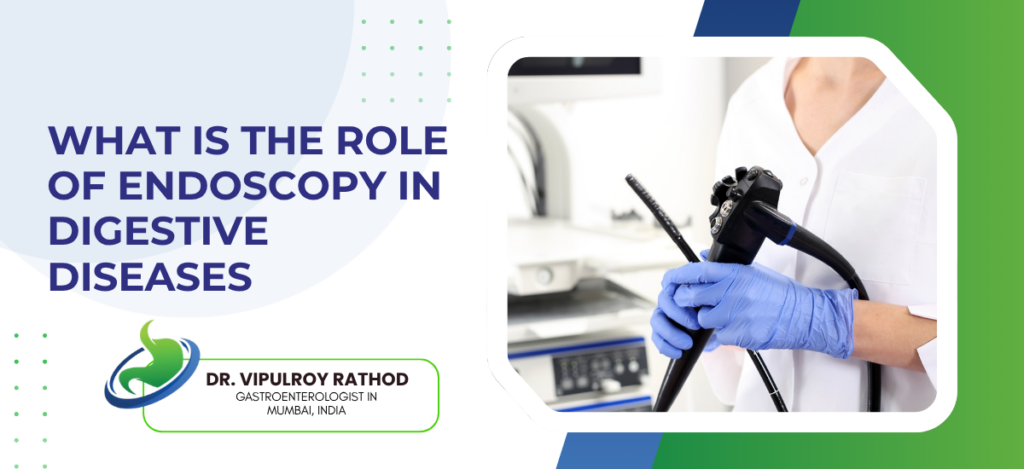
Endoscopy is a key part of modern gastroenterology, allowing doctors to directly examine the digestive tract using a flexible camera. It helps diagnose, stage, and treat conditions such as ulcers, inflammation, cancer, bleeding, and celiac disease, making it essential for both accurate diagnosis and minimally invasive treatment.
According to Dr. Vipulroy Rathod, Gastroenterologist in Mumbai, “Endoscopy changed digestive disease management completely because it moved diagnosis and treatment from assumption based on external imaging to direct visualisation and intervention inside the organ itself, and that difference in accuracy is not marginal.”
What Does Endoscopy Diagnose in Digestive Diseases?
Conditions missed entirely through scans get picked up through endoscopy. Not occasionally. Regularly. That’s the point.
- Early GI Cancers, Found Before Symptoms: Upper endoscopy and colonoscopy find mucosal cancers and precancerous changes before patients feel anything wrong, and superficial lesions found this way can be removed in the same session without surgery through EMR or ESD that option only exists because someone looked early enough.
- Ulcers and Gastritis: Direct visualisation of stomach lining finds ulcers, erosions, mucosal damage that CT misses routinely, biopsy confirms H. pylori or rules malignancy out on the spot.
- IBD Mucosal Picture: Colonoscopy with biopsy gives actual mucosal activity, extent, and treatment response for Crohn’s and ulcerative colitis, external imaging gives an approximation, this gives the real picture.
- EUS for Pancreas and Bile Duct: Pancreatic lesions, ductal changes, bile duct stones, nodal involvement all from inside the stomach wall at proximity no external scan comes close to for these structures.
Right tool for right clinical picture. Specialist in endoscopy treatment knows which one applies without sending patient through three investigations first.
What Does Endoscopy Treat in Digestive Diseases?
Not just diagnosis. Endoscopy treats. Same session, no surgery, patient goes home.
- Polyps Out Before They Turn: Colonoscopic polypectomy removes precancerous colorectal polyps before cancer develops, no incision, no recovery ward, no surgical risk, patient out same day this is standard practice and it consistently works.
- Bleeding Stopped on the Spot: Active GI bleeding from ulcers, varices, vascular lesions controlled through endoscopic clipping, injection, or argon plasma coagulation in same session as diagnosis, most cases no general anaesthetic needed.
- ERCP, No Surgery for Bile Duct Stones: Stones in common bile duct causing jaundice and pancreatitis removed endoscopically, stents placed for strictures same procedure, recovery days not weeks, open surgery avoided completely.
- Tumour Resection, No Knife: Early mucosal stomach and oesophageal cancers removed through ESD in one piece, margins confirmed histologically, patient avoids major surgery works only when cancer found early, which is the whole argument for surveillance.
Endoscopy is where digestive disease management actually happens for patients who get properly investigated. Read more on therapeutic endoscopy to understand what’s possible without surgery.
Why Choose Dr. Vipulroy Rathod
Dr. Vipulroy Rathod has performed tens of thousands of diagnostic and therapeutic endoscopic procedures over 30 years, with specific mastery in EUS, ESD, ERCP, and third space endoscopy that most gastroenterologists in India refer out rather than handle themselves. Trained physicians from 35 countries in advanced endoscopic techniques at Fortis Hospital Mulund. Patients who need endoscopy done properly the first time, not repeated after an incomplete attempt elsewhere, come here. Diagnosis confirmed, treatment done, same session. That’s the standard here.
Start Your Treatment Journey Today
Frequently Asked Questions
Upper endoscopy diagnoses ulcers, gastritis, GERD, oesophageal cancer, stomach cancer, and H. pylori related disease among others.
Endoscopy is performed under sedation and most patients experience minimal discomfort during and after the procedure.
Yes, early mucosal cancers of the stomach and oesophagus can be completely removed through endoscopic submucosal dissection without open surgery.
Most diagnostic upper endoscopies take 15 to 30 minutes and colonoscopies 30 to 45 minutes under sedation.
Reference links-
- Role of Endoscopy in GI Disease — American Society for Gastrointestinal Endoscopy
- Endoscopy Guidelines and Indications — World Gastroenterology Organisation