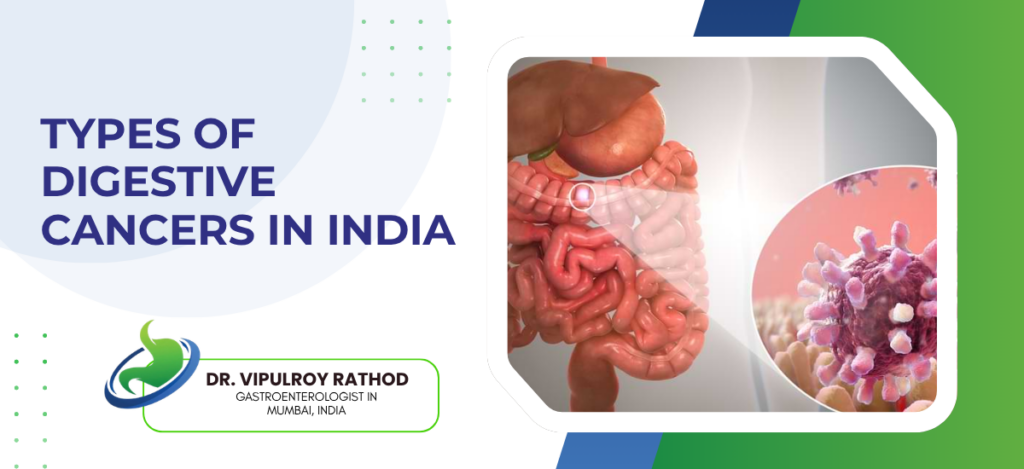
Digestive cancers in India: colorectal, stomach, oesophageal, liver, pancreatic, gallbladder, small intestine. Gallbladder cancer rates in northern and northeastern India are among the highest anywhere in the world. Most cases get picked up late. Early symptoms feel like acidity or IBS, patients wait, and by the time anyone investigates properly the window has already shifted.
According to Dr. Vipulroy Rathod, an experienced Gastroenterologist in Mumbai,
“Digestive cancers in India carry a disproportionate burden because most patients come in at stage three or four, and that happens simply because the early symptoms don’t feel serious enough to investigate properly.”
What Are the Main Types of Digestive Cancers?
Not one disease. Seven distinct cancers, different locations, different triggers, different investigation needs treating them as one category is where things go wrong clinically.
- Colorectal Cancer: Most preventable GI cancer if caught through colonoscopy, yet patients typically show up after months of rectal bleeding they kept hoping would sort itself out without anyone looking.
- Stomach Cancer: Linked to H. pylori, high salt intake, smoked food more common in South and Northeast India, almost always misread as chronic gastritis and treated with antacids until it’s well past early stage.
- Oesophageal Cancer: Tobacco chewing drives most cases here, progressive swallowing difficulty is the giveaway, and patients sit with that symptom for an embarrassingly long time before getting scoped.
- Gallbladder Cancer: Highest global rates in Gangetic plains, the gallbladder stays quiet until the tumour has spread to adjacent structures, so first presentation is almost always late. That’s just the clinical reality with this one.
Standard scans miss a lot across these types. Specialist in endoscopic ultrasound gets imaging clarity that external investigations don’t come close to.
Which Digestive Cancers Get Missed Most in India?
Some of these almost always come in late. Not occasionally. Almost always.
- Pancreatic Cancer: Sits behind the stomach, no early alarm symptoms, and by the time jaundice or real weight loss shows up it’s usually stage three or beyond this is not an exception, it’s the pattern.
- Small Intestine Cancer: Standard scope doesn’t reach it. CT misses small lesions. Patients get investigated for everything else for months before anyone thinks to specifically look there.
- Liver Cancer in Hepatitis Patients: Hepatitis B and C carriers have real liver cancer risk but many aren’t on any active surveillance programme, so it shows up incidentally rather than through planned monitoring when treatment still works well.
- Oesophageal in Tobacco Users: Public awareness of the chewing tobacco and oesophageal cancer link is poor, patients don’t volunteer the habit, and the full picture only emerges after the disease is already established.
Chronic heartburn isn’t always reflux. Sometimes it’s the beginning of something else. Read more on heartburn after every meal to know when it needs investigating rather than managing.
Why Choose Dr. Vipulroy Rathod
Dr. Vipulroy Rathod 30 years in gastroenterology. EUS since 1998. Trained physicians across 35 countries. Handles GI cancers from initial detection through staging and complex endoscopic intervention at Fortis Hospital Mulund, and has seen enough cases to know exactly where standard investigations stop finding things. Months of inconclusive reports. Vague symptoms nobody pinned down. Patients like that come in regularly and most leave with a clear diagnosis. Not a better guess.
Start Your Treatment Journey Today
Frequently Asked Questions
Colorectal, stomach, and gallbladder cancers are among the most commonly diagnosed digestive cancers in India.
Yes, EUS and colonoscopy can detect early-stage GI cancers before significant symptoms develop in high-risk patients.
Gallstones, genetic factors, and water quality in the Gangetic plains are linked to higher gallbladder cancer rates in northern India.
Yes, untreated chronic acid reflux can lead to Barrett’s oesophagus which significantly increases oesophageal cancer risk over time.
Reference links-
- GI Cancer Incidence in India — Indian Council of Medical Research
- Digestive Cancer Types and Risk Factors — World Gastroenterology Organisation