
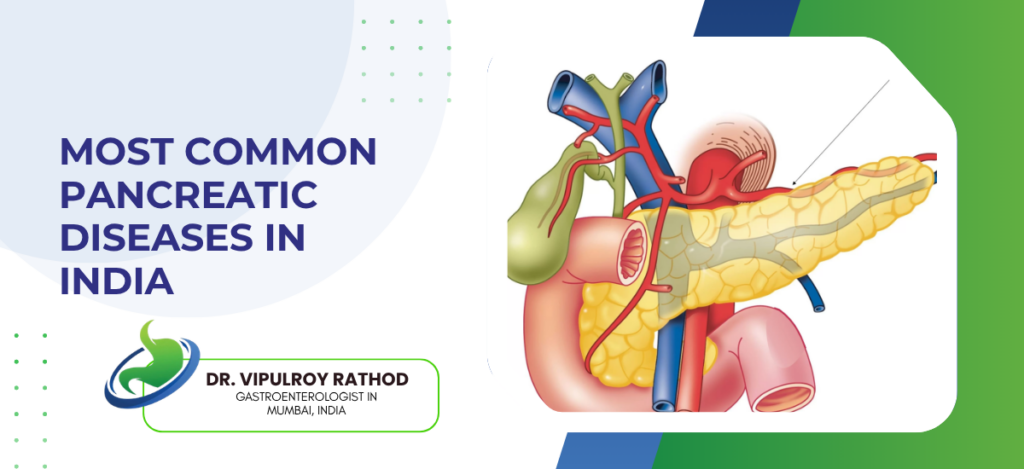
Pancreatic diseases in India range from acute pancreatitis triggered by gallstones or alcohol to chronic conditions like pancreatic cancer and cysts that develop silently over months. Several of these conditions share overlapping symptoms, get misdiagnosed repeatedly, and reach a specialist only after significant damage has already occurred.
According to Dr. Vipulroy Rathod, an experienced Gastroenterology specialist in Mumbai,
“Pancreatic disease in India is diagnosed late more often than it should be, and that gap between first symptom and right diagnosis is where the real damage happens.”
Common Pancreatic Diseases Seen in India
Same conditions, different patients, same story. Across Indian hospitals the pattern repeats a handful of pancreatic diseases showing up again and again, each one getting missed longer than it should.
- Pancreatitis: Gallstones and alcohol are behind most cases in India, and while the mild ones settle down with fluids and rest, the severe ones don’t wait necrosis, infected collections, organ stress, these move fast and need proper specialist care rather than general ward management.
- Chronic pancreatitis: What makes India different here is the high rate of tropical chronic pancreatitis, a variant that targets younger patients with no alcohol history at all, and progresses toward diabetes and severe malnutrition faster than the alcohol-related form seen in Western countries.
- Pancreatic cancer: Incidence is climbing, catch rate at a treatable stage is not, and the gap between those two things is where lives are lost upper abdominal pain, unexplained weight loss, new-onset diabetes after 50 all get explained away for months before anyone orders the right investigation.
- Cysts: Routine imaging is finding more of these than ever before, most are harmless, but the ones that aren’t need real EUS characterisation and a clear decision pathway rather than another CT in six months and a note saying monitor.
These conditions don’t announce themselves clearly and that’s precisely the problem. Getting a proper assessment early keeps treatment options open that simply won’t exist after the disease has had another six months to progress.
Why These Conditions Get Diagnosed Late in India
It’s not just one reason. It’s several things working together, and understanding them helps explain why pancreatic cases so consistently arrive at specialists in a state that’s already difficult to reverse.
- Symptoms: Pain, bloating, back ache, weight dropping none of these point specifically at the pancreas, so patients cycle through GPs and get treated for gastritis, stress, IBS, dietary issues, anything but the actual problem, sometimes for over a year before the right referral happens.
- Imaging: Standard abdominal ultrasound is where most Indian patients start, and it simply doesn’t catch a significant chunk of pancreatic pathology small tumours, early ductal changes, subtle structural shifts things that would show up immediately on EUS from inside the stomach but don’t register on an external scan at all.
- Access: EUS isn’t widely available outside major cities, and that’s not a small problem a patient in a smaller city with early pancreatic cancer has almost no realistic path to the right diagnosis before the disease moves past the point where treatment can make a meaningful difference.
- Awareness: New-onset diabetes after 50 should always mean checking the pancreas, painless jaundice should always mean urgent investigation, and neither of those things happens consistently enough across the Indian healthcare system, which is where weeks of delay become months, and months change outcomes.
You can read how drainage outcomes shift significantly when the right specialist is involved from the beginning rather than after things have already escalated.
- Pancreatitis: When the pancreas inflames, digestive enzymes activate inside the gland before reaching the intestine, causing severe upper abdominal pain that frequently ends in emergency admission, and in serious cases tissue breakdown follows requiring intensive management.
- Scarring: Each episode of pancreatitis deposits scar tissue, and over years that accumulation reduces enzyme output while destroying insulin-producing cells, pushing patients toward malabsorption and diabetes developing together rather than as separate problems.
- Cancer: Tumours in the head of the pancreas press on both ducts simultaneously, so jaundice and digestive failure tend to appear together as the first obvious signs, by which point the disease has usually been progressing for quite a while already.
- Cysts: Fluid collections after pancreatitis can grow large enough to compress the stomach and duodenum, leaving patients feeling full after barely eating and losing weight without any clear explanation, a presentation that often takes months to properly investigate.
And these don’t stay isolated. One problem pulls others in faster than patients expect. Read how pancreatic cancer gets missed before options start narrowing.
Why Choose Dr. Vipulroy Rathod for Pancreatic Diseases in Mumbai
Pancreatic disease sits at the intersection of gastroenterology, endoscopy, and hepatobiliary medicine, and managing it well requires a specialist with comprehensive expertise across this spectrum. Dr. Vipulroy Rathod, one of the leading Gastroenterologists in Mumbai, has been managing pancreatic conditions at Fortis Hospital Mulund for over 30 years, with more than 20,000 EUS procedures to his credit, and patients who arrive with months of vague symptoms despite normal CT reports regularly find that EUS in experienced hands detects what everything else missed.
Start Your Treatment Journey Today
Frequently Asked Questions
Acute pancreatitis from gallstones and alcohol leads the numbers, but tropical chronic pancreatitis is far more common in India than in Western countries and it hits younger patients with no drinking history, which makes it easy to miss early.
Less common than in the West, but rising, and the real problem isn’t the incidence it’s that almost every case gets found too late for surgery, which is a diagnostic failure more than anything else.
Many can, with acute pancreatitis managed medically, cysts and fluid collections handled through EUS without any incision, and chronic pancreatitis complications addressed endoscopically, though resectable pancreatic cancer and certain high-risk cysts still need surgical intervention.
EUS gives the most accurate picture by far, sitting close enough to the pancreas to pick up what CT and ultrasound routinely miss, though access outside major Indian cities remains a genuine problem that contributes directly to late diagnosis rates.
Reference links-
- Pancreatic Disease Epidemiology and Management — American Society for Gastrointestinal Endoscopy
- Pancreatitis and Pancreatic Cancer Guidelines — American College of Gastroenterology