

Gallbladder removal, or cholecystectomy, is a common surgical procedure to treat gallstones and other gallbladder-related issues. Usually this surgery makes people feel better. Sometimes people can have some issues after the surgery. For example they might get bile duct stones after gallbladder removal. This can happen when stones that were already in the gallbladder move to bile ducts. It can also happen when new stones form in the bile ducts.
Dr. Vipulroy Rathod, a leading gastroenterologist in Mumbai, explains, “While bile duct stones after gallbladder removal are not common, early detection and timely intervention are crucial in preventing complications such as bile duct blockage or infections.”
With over three decades of experience, Dr. Rathod provides expert care for patients experiencing complications after gallbladder removal. His approach to managing bile duct stones includes advanced diagnostic techniques and personalized treatment plans, ensuring optimal outcomes for his patients.
What exactly is AI in GI Endoscopy and how is it integrated into endoscopic procedures? Let’s break it down.
What Are Bile Duct Stones?
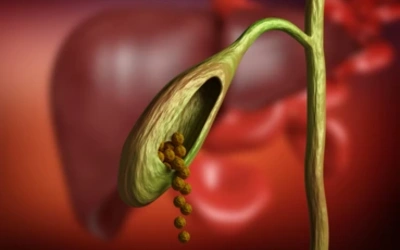
Bile duct stones, also known as choledocholithiasis, are stones that form in the bile ducts, the small tubes that carry bile from the liver and gallbladder to the small intestine. These stones can be made up of cholesterol, bile pigments, or a combination of both.
Types of Bile Duct Stones
Primary Bile Duct Stones
These stones form directly in the bile ducts and are often associated with conditions such asbiliary tract infections or inflammation.
Secondary Bile Duct Stones
These stones typically originate in the gallbladder and migrate to the bile ducts. They are the most common type found after gallbladder removal.
Is it possible to develop bile duct stones after gallbladder removal? Let’s discuss the likelihood.
Can You Get Bile Duct Stones After Gallbladder Removal?
Yes, you can develop bile duct stones after gallbladder removal. When the gallbladder is removed, bile continues to be produced by the liver and flows directly into the small intestine. In some cases, gallbladder stones or debris may migrate into the bile ducts, where they can cause blockages. Additionally, new stones can form in the bile ducts over time due to changes in bile composition and flow.
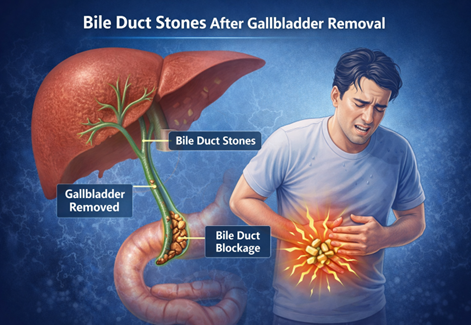
Some risk factors for developing bile duct stones after gallbladder removal include:
- Retained Gallstones: Stones left behind in the bile ducts during surgery.
- Bile Duct Narrowing: Narrowed or abnormal bile ducts can increase the likelihood of stone formation.
- Obesity or Rapid Weight Loss: Both can alter bile composition, increasing the risk of stone formation.
- Chronic Bile Duct Inflammation: Conditions like cholangitis can lead to the formation of new stones.
What symptoms should you look for if bile duct stones form after gallbladder removal? Let’s explore the signs to watch for and how early detection helps.
Symptoms of Bile Duct Stones After Cholecystectomy
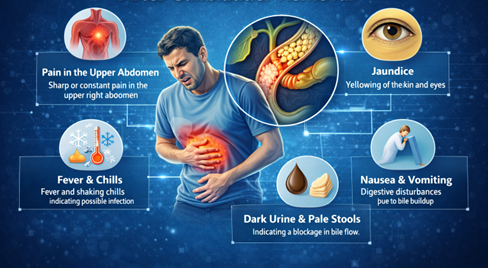
The symptoms of bile duct stones may be similar to those experienced with gallbladder issues before surgery, including:
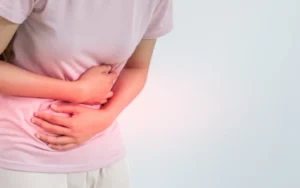
Pain in the Upper Abdomen
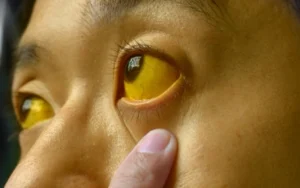
Jaundice

Dark Urine and Pale Stools

Nausea and Vomiting

Fever and Chills
How are bile duct stones diagnosed? Let’s explore the diagnostic options.
Diagnosis of Bile Duct Stones
When you have had your gallbladder removed, and bile duct stones are suspected, doctors usually perform a few tests to figure out what is going on. Diagnosing bile duct stones after gallbladder removal typically involves several steps to find out more, about the bile duct stones.
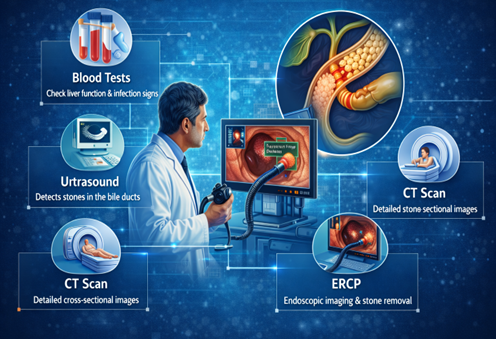
1. Blood Tests
To check for signs of infection or liver dysfunction.
2. Ultrasound
Often, it is the first imaging test to detect stones or blockages in the bile ducts.
3. CT Scan
It is really helpful because it gives detailed images of the bile ducts and the liver. This helps doctors determine whether there are stones or if the bile ducts are narrowed.
4. Magnetic Resonance Cholangiopancreatography or MRCP:
A non-invasive imaging technique that provides detailed pictures of the bile ducts.
5. Endoscopic Retrograde Cholangiopancreatography (ERCP):
A non-invasive imaging technique that provides detailed pictures of the bile ducts.
What are the treatments available for bile duct stones after gallbladder removal? Let’s explore the possibilities.
Treatment Options for Bile Duct Stones
The size, location, and severity of the blockage determine how bile duct stones are treated:
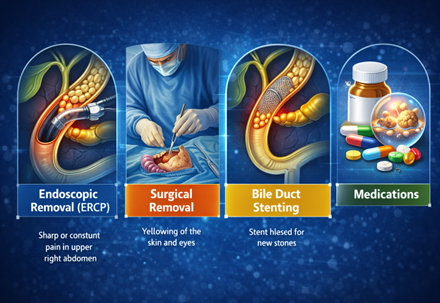
1. Endoscopic Removal (ERCP)
The most common and effective treatment. ERCP reduces the need for surgery by enabling the doctor to remove stones with a flexible tube equipped with a camera.
2. Surgical Excision
Surgery may be necessary to remove the stones or to clear the bile ducts if ERCP is ineffective or the stones are too large.
3. Stenting of Bile Ducts
A stent may be inserted to maintain the bile duct open and stop blockage if it has narrowed.
4. Drugs
Although less frequently used, drugs may occasionally aid in the dissolution of smaller stones.
Can bile duct stones be prevented after gallbladder removal? Let’s explore preventive measures.
How to Prevent Bile Duct Stones After Gallbladder Removal
Although it may not always be possible to prevent bile duct stones, certain lifestyle changes and precautions can reduce the risk:
Maintain a Healthy Weight
Avoid rapid weight loss or obesity, which can alter bile composition and increase stone formation.
Eat a Balanced Diet
A diet rich in fiber, low in fats, and balanced in nutrients can help prevent bile issues.
Stay Hydrated
Drinking plenty of water helps maintain bile flow and reduces the risk of stone formation.
Regular Checkups
If you've had a gallbladder removal, regular follow-up appointments with your doctor can help detect any early signs of bile duct problems.
Conclusion
Bile duct stones after gallbladder removal can lead to significant discomfort and complications, but with early detection and proper management, the risks can be minimized. The key to preventing and treating bile duct stones lies in early diagnosis, proper treatment and lifestyle modifications.
Dr. Vipulroy Rathod’s expertise in managing complex post-surgical complications ensures the best outcomes for his patients. For those experiencing symptoms or at risk, timely consultation is crucial for preventing further complications.
Frequently Asked Questions
Diagnosis is typically performed using imaging techniques such as ultrasound, CT scans, MRCP, or ERCP.
Symptoms include upper abdominal pain, jaundice, nausea, vomiting, fever, and dark urine.
Preventive measures include maintaining a healthy weight, eating a balanced diet, staying hydrated, and regular follow-up care.
Yes, if left untreated, bile duct stones can cause infections such as cholangitis, which require immediate medical attention.
While treatment is effective, recurrence is possible, especially if the underlying conditions are not addressed.
Reference links:
https://onlinelibrary.wiley.com/doi/full/10.1002/deo2.294
https://www.medicalnewstoday.com/articles/318941
Disclaimer: The information shared in this content is for educational purposes and not for promotional use.
